Master Artisans

Three generations in the same cave. Thirteen shepherds for over fifty years. A Roquefort aged on wooden travées — the way almost no one does anymore.
DelphineMaster Artisan · Third Generation

Chapter I · The heritage

Three generations
in the same cave

§ p. 04 · Chapter I— The heritage —

In 1927, François Carles ran several village dairies across various hamlets of the southern Aveyron. The smallholders, who still milked by hand, brought their churns of milk to him.

In 1957, Jacques Carles brought together the dairies run by François and chose to establish the Carles dairy in Martrin, a small village in the southern Aveyron. Faced with industrialisation, he chose to preserve a demanding artisanal craft, founded on mastery of the product and on quality.

In 1997, Delphine Carles joined the family Maison to carry on the venture begun by her grandfather and her father.

In 2012, Delphine Carles moved Maison Carles into its current dairy at Saint-Pierre-de-Rébourguil, not far from one of François Carles's first dairies. This return to its roots meets today's health requirements and improves working conditions, while scrupulously preserving the traditional methods that still make Roquefort Carles renowned today.

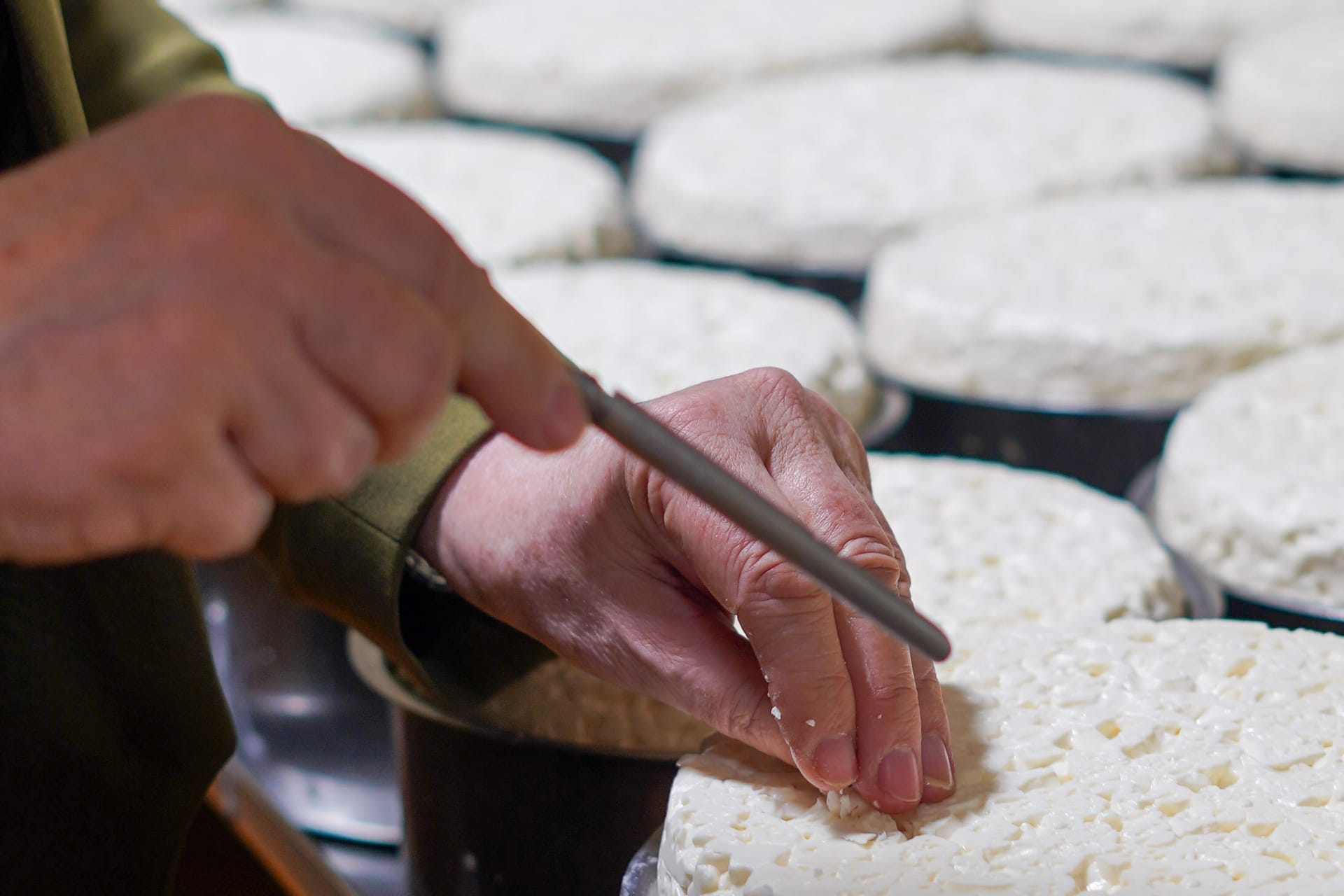
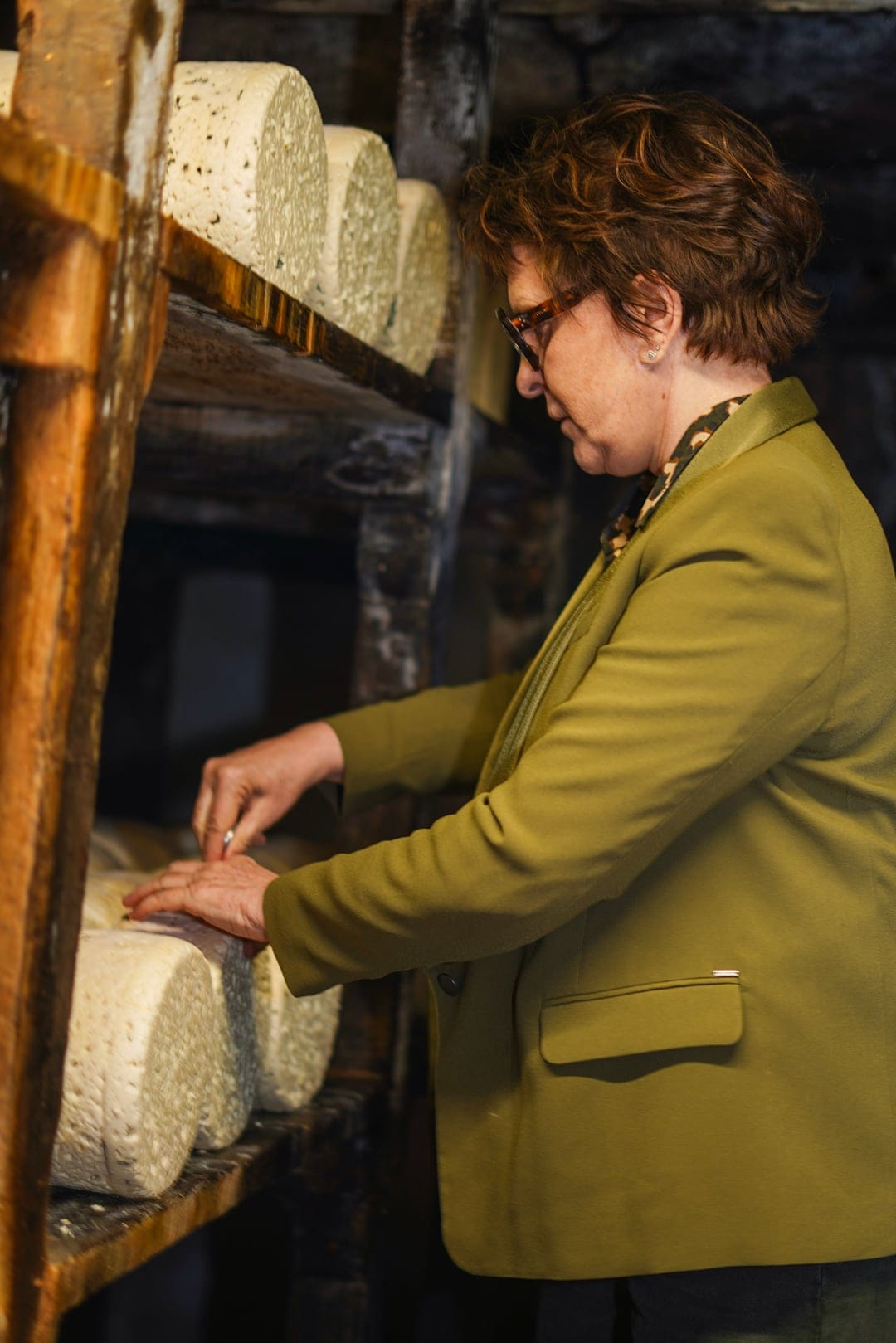
Delphine Carles, director and master artisan, turning a Roquefort on a wooden travée in the caves of Combalou
Three generations,
a single cave.

Delphine CarlesThird generation · 1997

  1. François Carles
    Founder
  2. Jacques Carles
    Master Artisan
  3. Delphine Carles
    Director and Master Artisan

Chapter II · The gesture

Rather than a machine,
the human hand.

§ p. 12 · Chapter II— The gesture —

The dairy

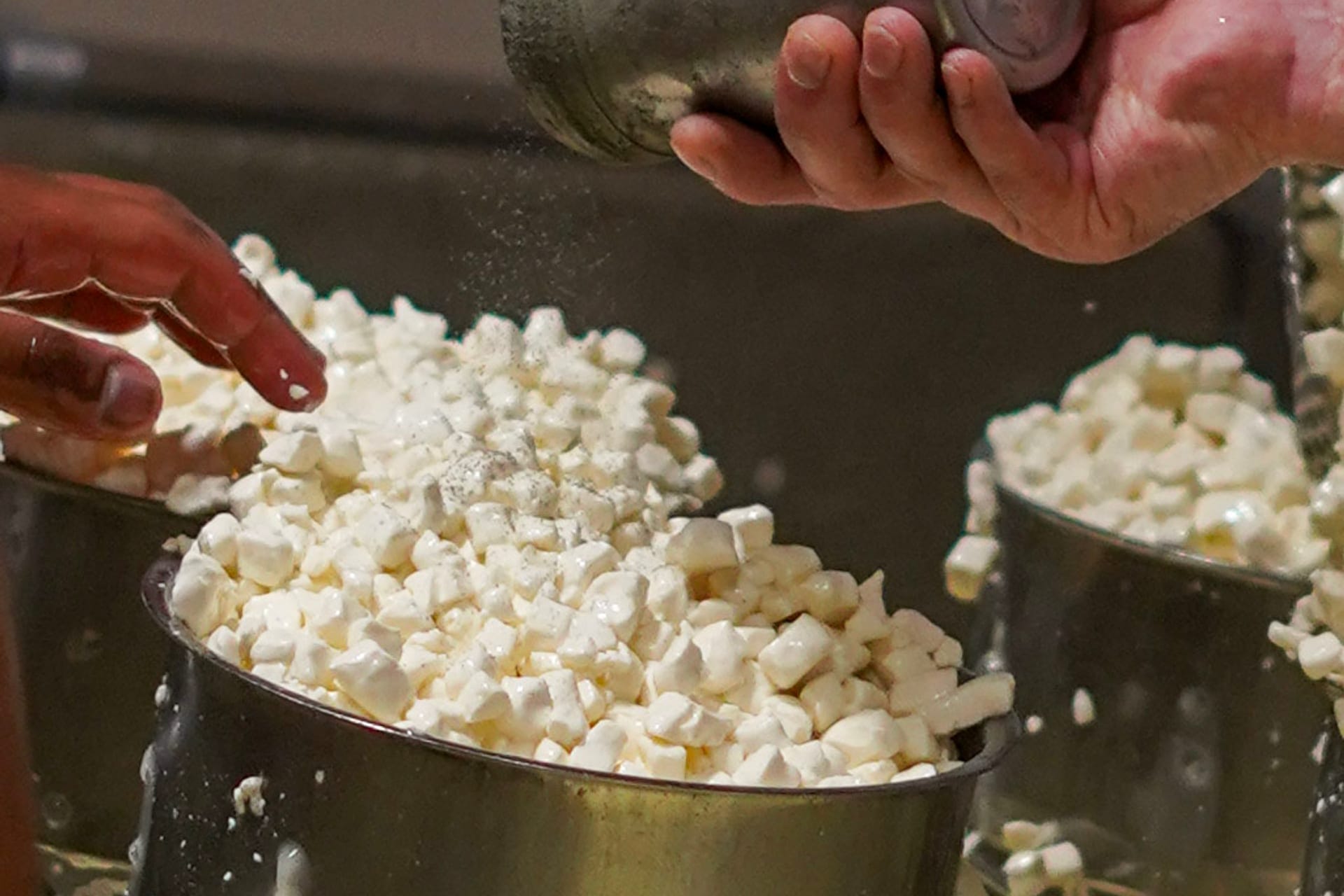
The raw sheep's milk that goes into Roquefort Carles is the milk of the very day it is collected. A living milk, worked quickly, with no buffer storage in the dairy. This precious raw material keeps the ferments to a minimum, for greater naturalness in the product. The curd, kept deliberately supple, lets the cheese be worked entirely by hand. The cutting of the curd, the moulding and the gestures of production are all done by hand. The house-cultivated Penicillium roqueforti and the hand-worked curd shape the texture, the aromas and the balance of Roquefort Carles.
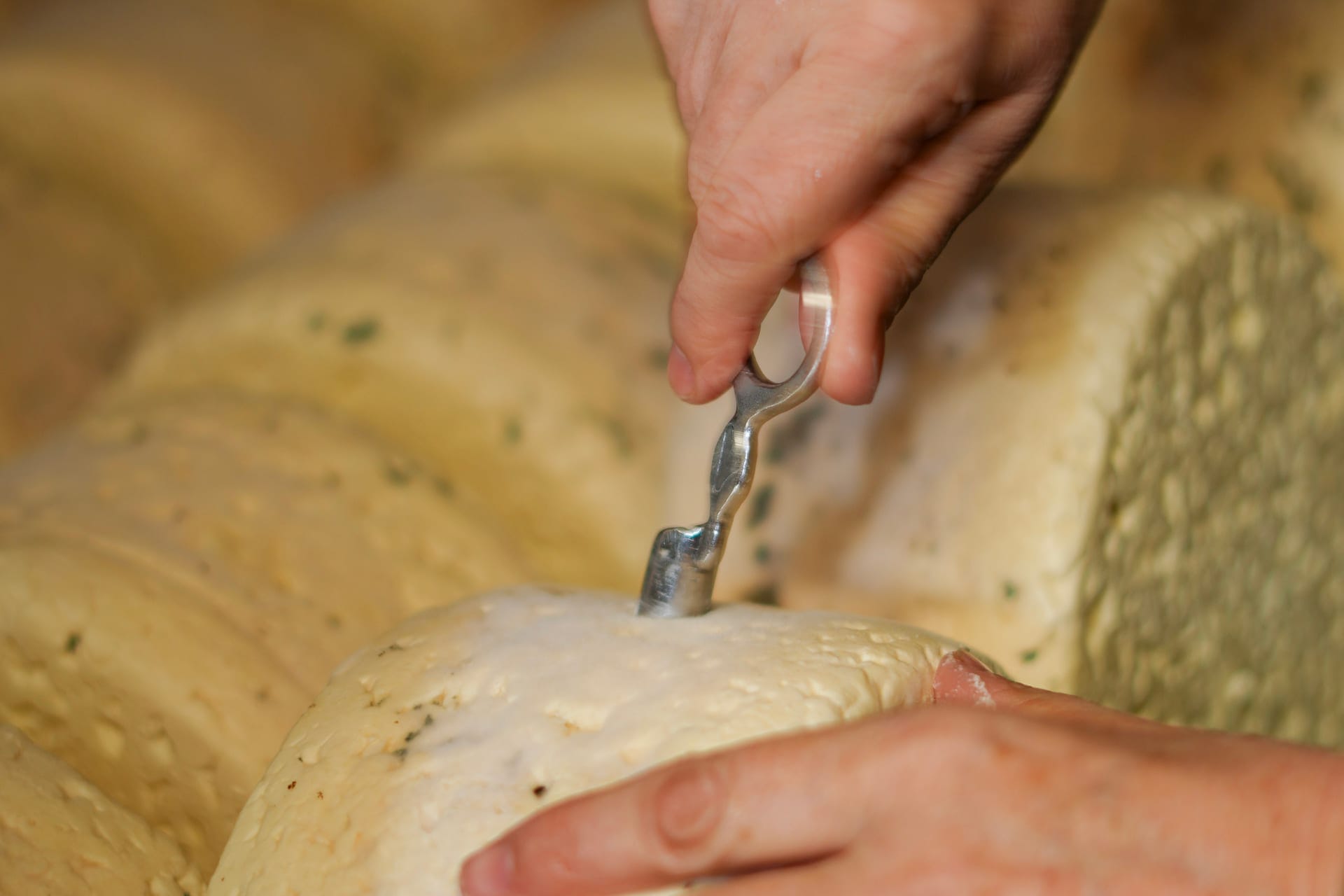
The culture

The Penicillium roqueforti of Roquefort Carles is cultivated in-house, on bread. The bread is baked at very high temperature, then set in the cave so the Penicillium can develop. It is then harvested, dried, ground, and seeded into the curd at moulding. From this culture come the veining, the aromas and the character of the cheese.

The caves and ageing

The cheeses continue their ageing in the natural caves of Combalou. Air circulates naturally through the fleurines, the natural fissures in the rock that keep the caves in balance. The cheeses rest on wooden boards and are watched over throughout their ageing. Time, the air of the caves and the work of the hand slowly shape Roquefort Carles.

Hand turning a cheese on a wooden travée
Penicillium roqueforti cultivated on rye bread
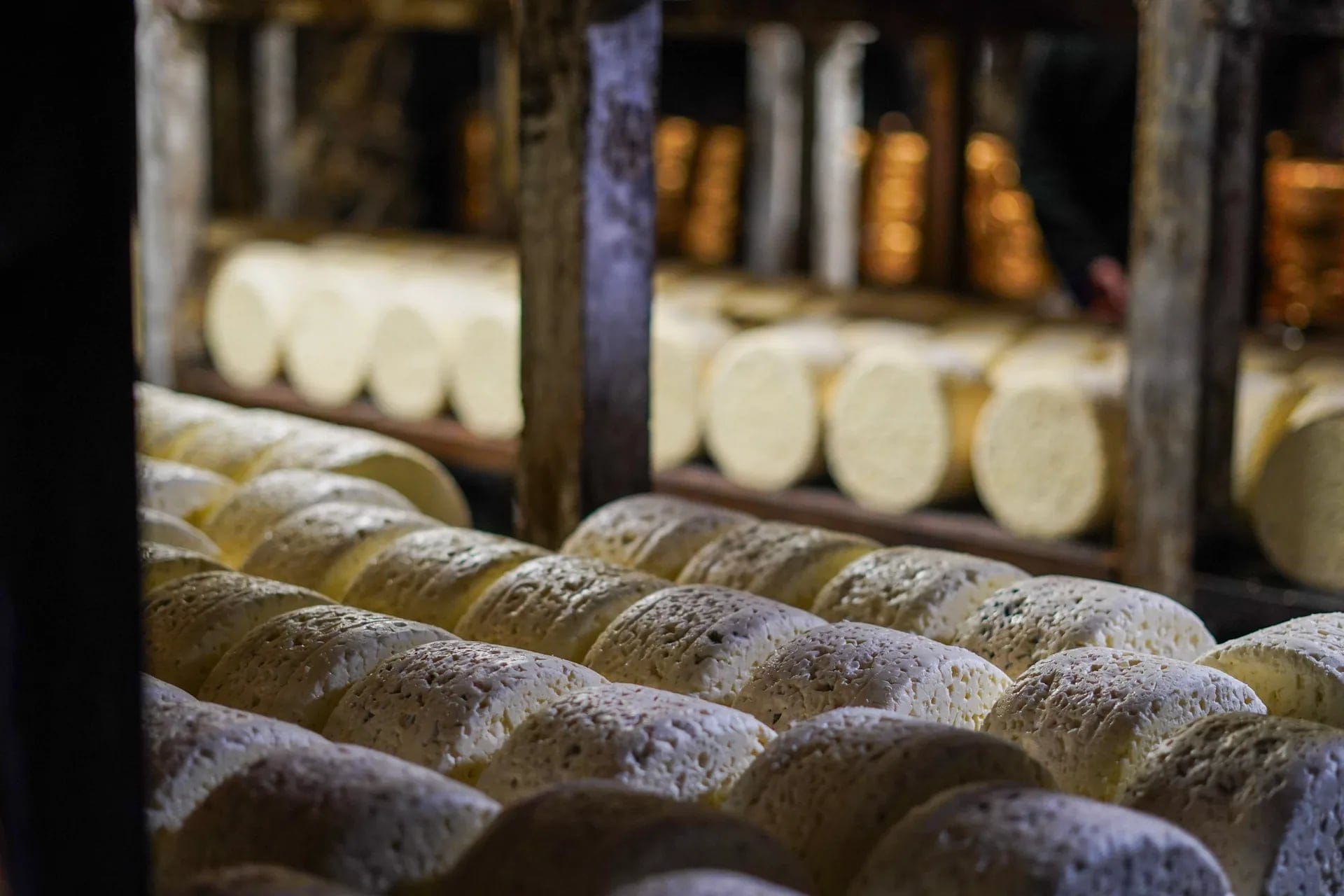
Wooden travée with Roqueforts ageing in the Combalou cave
1927
Founded
3
Generations
13
Partner farms
99
Years of history

Chapter III · The third generation

The third
generation

§ p. 24 · Chapter III— The third generation —
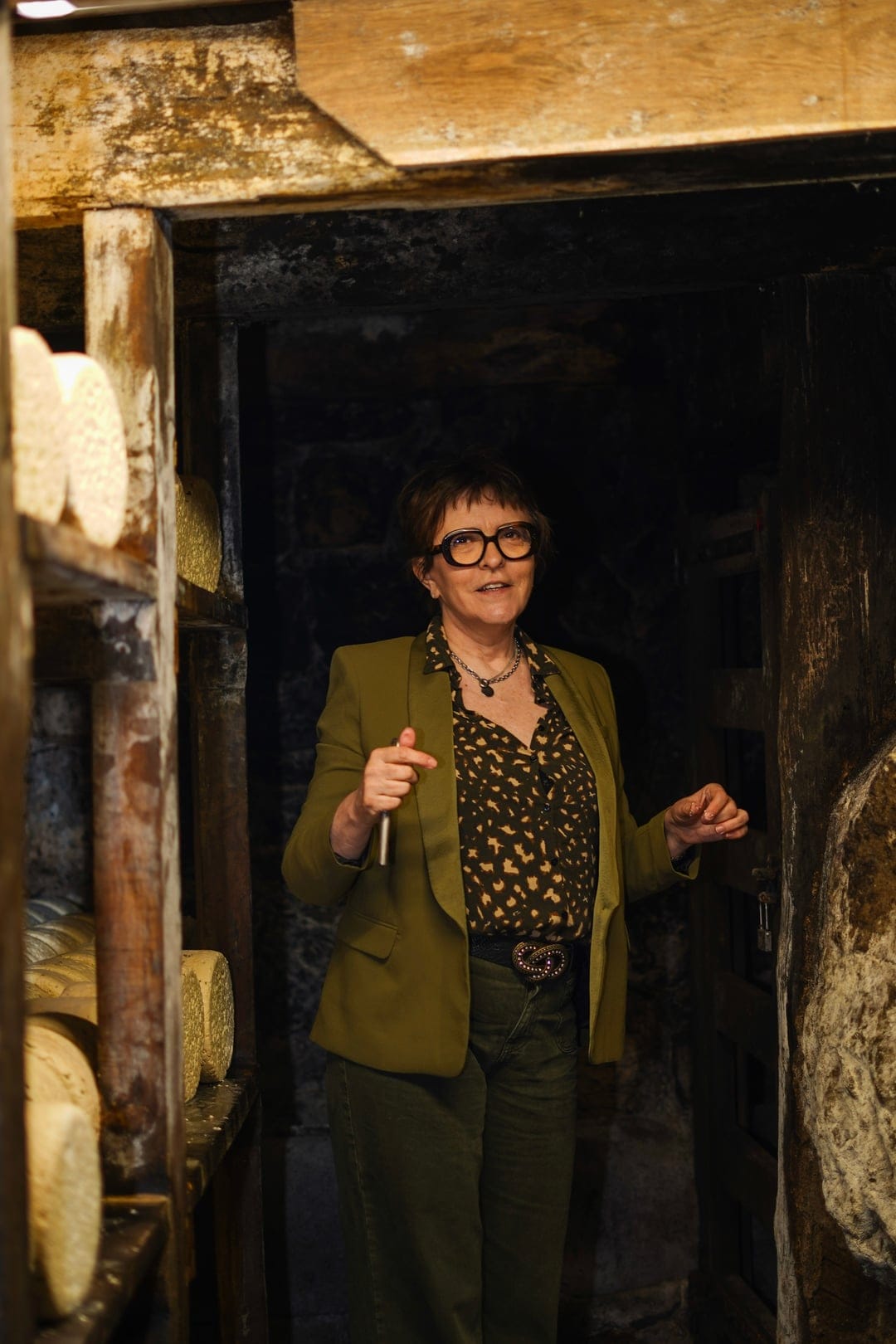
Delphine Carles, director and master artisan, in one of the caves of Combalou

Director · Master Artisan

Carles

Delphine Carles took over the family Maison in 1997. Third generation, she carries on the work begun before her, faithful to the cheesemaking tradition and to the same demand for quality. Today, the challenge lies elsewhere too: preserving a living artisanal craft while meeting modern food-safety requirements. Director and Master Artisan, she works to keep that balance, between cheesemaking tradition and contemporary rigour.

My grandfather, my father, me.
The same hands, the same cave.
Delphine Carles, director and master artisan

Chapter IV · Combalou

Beneath the Combalou rock,
the work of nature

§ p. 36 · Chapter IV— Combalou —

In the natural caves of Maison Carles, ventilated by the cool, damp air drawn from the fleurines, Roquefort Carles ages slowly on wooden boards. Year after year, the Maison carries on a traditional ageing on oak, naturally accompanying the exchange between the cheese and the living air of the caves. Here, time alone is master. Day after day, the magic happens. The Penicillium roqueforti develops. The fine ivory paste gradually takes on the deep blue-green veining so characteristic of Maison Carles.

Roqueforts ageing on wooden travées in the caves of Combalou
Milk of the day
100% handmade
Penicillium roqueforti
cultivated on bread
Ageing
on wooden boards

Chapter V · Two expressions

Convoitise
& Élégance

§ p. 48 · Chapter V— The ranges —

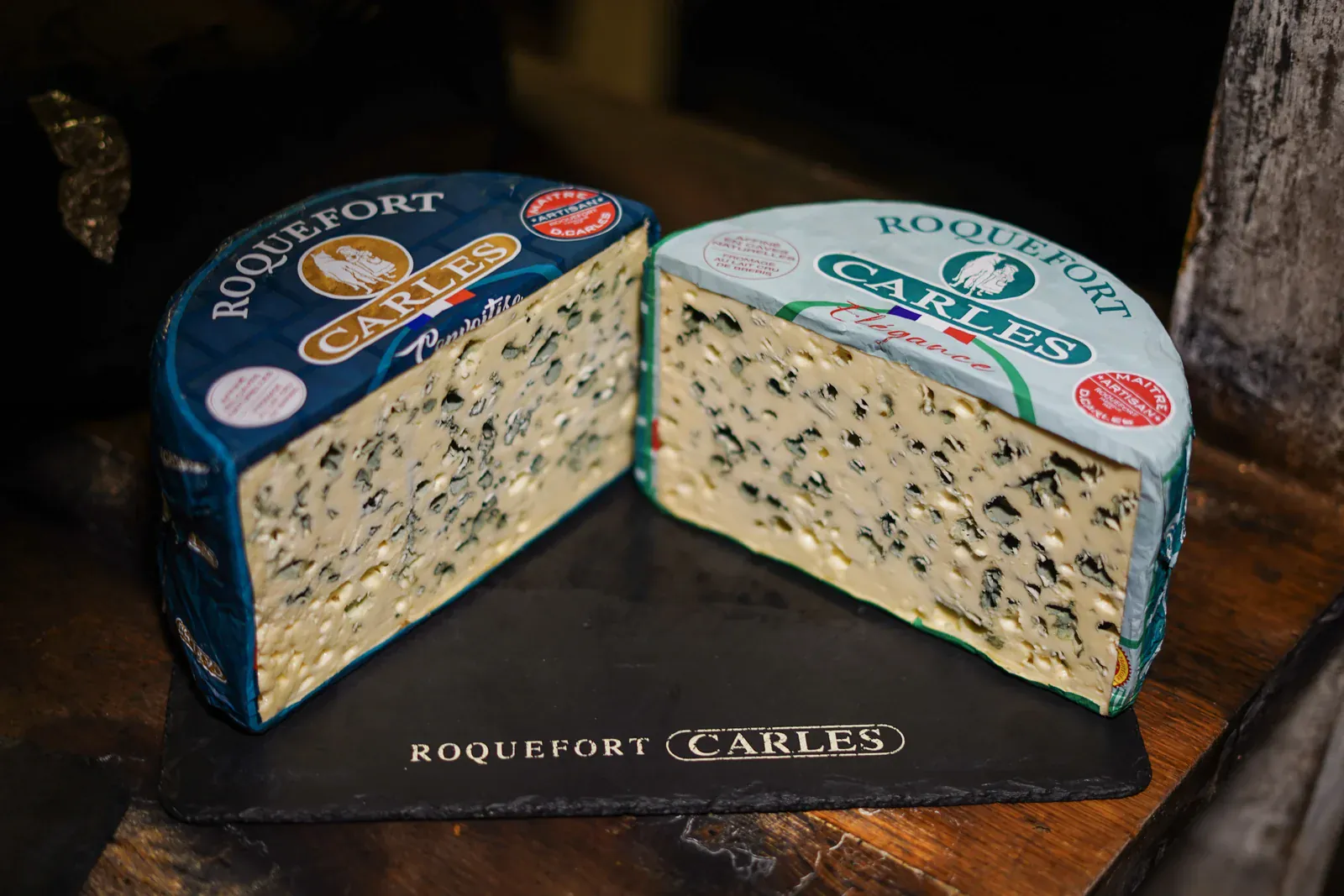
Two expressions born of the same artisanal craft. The same raw sheep's milk. The same handmade production. The same ageing on wooden boards in the natural caves of Combalou. Only the Penicillium roqueforti changes, giving rise to two different expressions of Maison Carles.

Roquefort Carles Convoitise and Élégance side by side on slate — Maison Carles shoot

Range · Convoitise

Convoitise

The reference — the traditional house Roquefort

The historic expression of Maison Carles. The Penicillium roqueforti used for Convoitise was selected and named 'Amandine' by Jacques Carles. It gives the cheese a more assertive expression, a more characterful paste and a more intense aromatic palette.

Range · Élégance

Élégance

Premium entry-level — accessible to all

A softer, more mellow expression of Maison Carles. The Penicillium roqueforti used for Élégance, named 'Maxime' by Delphine Carles, is drawn from the 'Amandine' strain. It brings the cheese more softness, more roundness and more silkiness.

Chapter VI · The emblem

The Chaperon
Rouge

§ p. 60 · Chapter VI— The emblem —

As a child, François Carles listened to his grandmother tell the old tales by the fireside. Among them, Little Red Riding Hood remained his favourite.

Some years later, he made it the emblem of the Maison. At the time, the cheese was sold under the name 'Roquefort Chaperon Rouge'.

In the 1980s, Jacques Carles chose to bring the Carles name more to the fore, asserting the identity of the family Maison.

Today, Delphine Carles gives the Chaperon Rouge its full place once more, the historic emblem of the Maison.

For three generations, the Chaperon Rouge has accompanied the story of Roquefort Carles.

Chapter VII · Roquefort-sur-Soulzon

Six, avenue
de Lauras

§ p. 72 · Chapter VII— The shop —
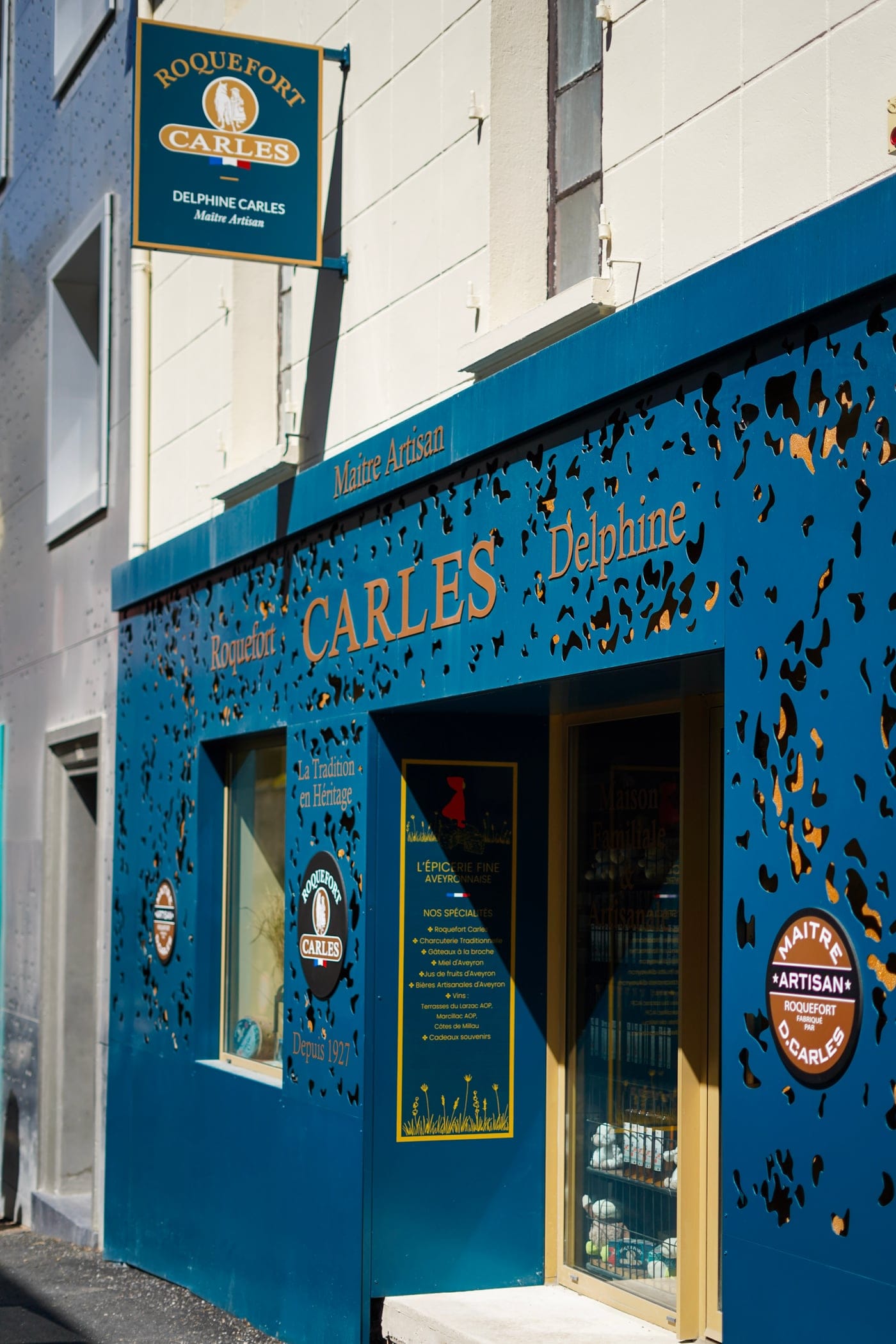
Shopfront of the Delphine Carles Master Artisan shop, 6 avenue de Lauras

6, avenue de Lauras
12250 Roquefort-sur-Soulzon

Direct sales

Monday — Friday

8:15 am — 5:30 pm

Access

A75 exit 46

15 km from the Millau Viaduct

The shop sits right next to the workshop. You meet the team, choose your range, leave with a piece cut to order. Advice is shared without an appointment.

Chapter VIII · Words

What they
say about us

§ p. 84 · Chapter VIII— Reviews —

From Michelin-starred chefs to food lovers. What they say speaks for us.

Chapter IX · @roquefortcarles

Visual
journal

§ p. 92 · Chapter IX— Instagram —

Behind the scenes, the gestures, the seasons. The Maison's daily journal.

@roquefortcarles · Maison journal

Chapter X · Find us

Useful
information

§ p. 100 · Chapter X— Contact —

Shop

6, avenue de Lauras

12250 Roquefort-sur-Soulzon

Hours

Mon — Fri · 8:15 am — 5:30 pm

Saturday & Sunday — closed

Access

A75 exit 46

15 km from the Millau Viaduct