
The journal · Pairing notebook
Which wine with Roquefort? The complete pairing guide
Sweet wines, fortified wines, bold reds and even a few non-wine options: raw sheep’s milk Roquefort welcomes many partners once you understand the logic.
The journal · Pairing notebook
Sweet wines, fortified wines, bold reds and even a few non-wine options: raw sheep’s milk Roquefort welcomes many partners once you understand the logic.
In short
Chapter I
Three forces in every bite put a wine to the test.
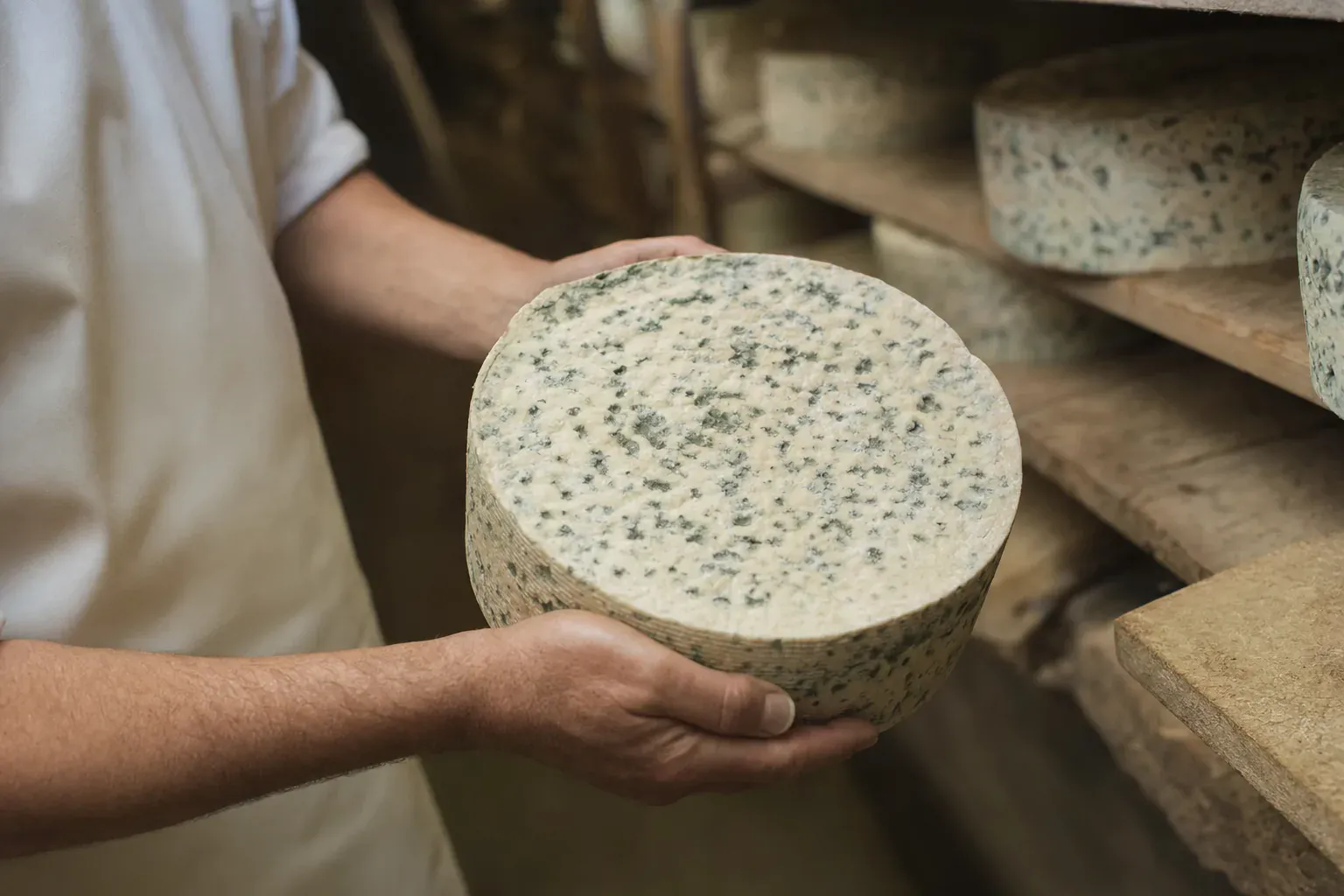
The house-grown Penicillium roqueforti brings intense blue aromas that erase discreet wines.
Salt sharpens tannins and bitterness, while the rich raw sheep’s milk calls for acidity.
Sugar softens salt, acidity cuts the fat.
A full, ripe red of equal intensity.
Roquefort does not choose its wine: it sorts out those that can stand beside it.
Chapter II
Sugar for the salt, acidity for the fat, aromatic depth for the blue.
Honeyed, candied apricot notes wrap the salt. Read our Sauternes and Roquefort article.
Same logic, with more roundness or sharper freshness.
Chapter III
Fortified wines keep grape sugar and gain power: a warmer, darker contrast.
Grenache-based wines of Roussillon. See Banyuls and Roquefort and Maury and Roquefort.
A Tawny’s nutty notes suit aged Roquefort. See our Port and Roquefort guide.
Rancio
Oxidative notes of walnut and prune echo the blue. Serve at 14–16 °C.
A fortified wine turns the duo into a winter fireside moment.
Chapter IV
Yes, but only a full, ripe red with soft tannins. Light or very oaky reds turn bitter.
Ample, fruity reds with mellow tannins.
Light reds, young tannic or oaky reds.
Chapter V
An ample white can suit the finer Élégance range; otherwise return to sweet wines.
Chapter VI
A few drinks follow the same logic of contrast or power.
Roasted malt plays the role of sugar.
A soft, fruity dram echoes fortified wines.
Chapter VII
Each wine family has its ground.
Serve a sweet wine and an ample red side by side. See also our wine pairing notes.
Chapter VIII
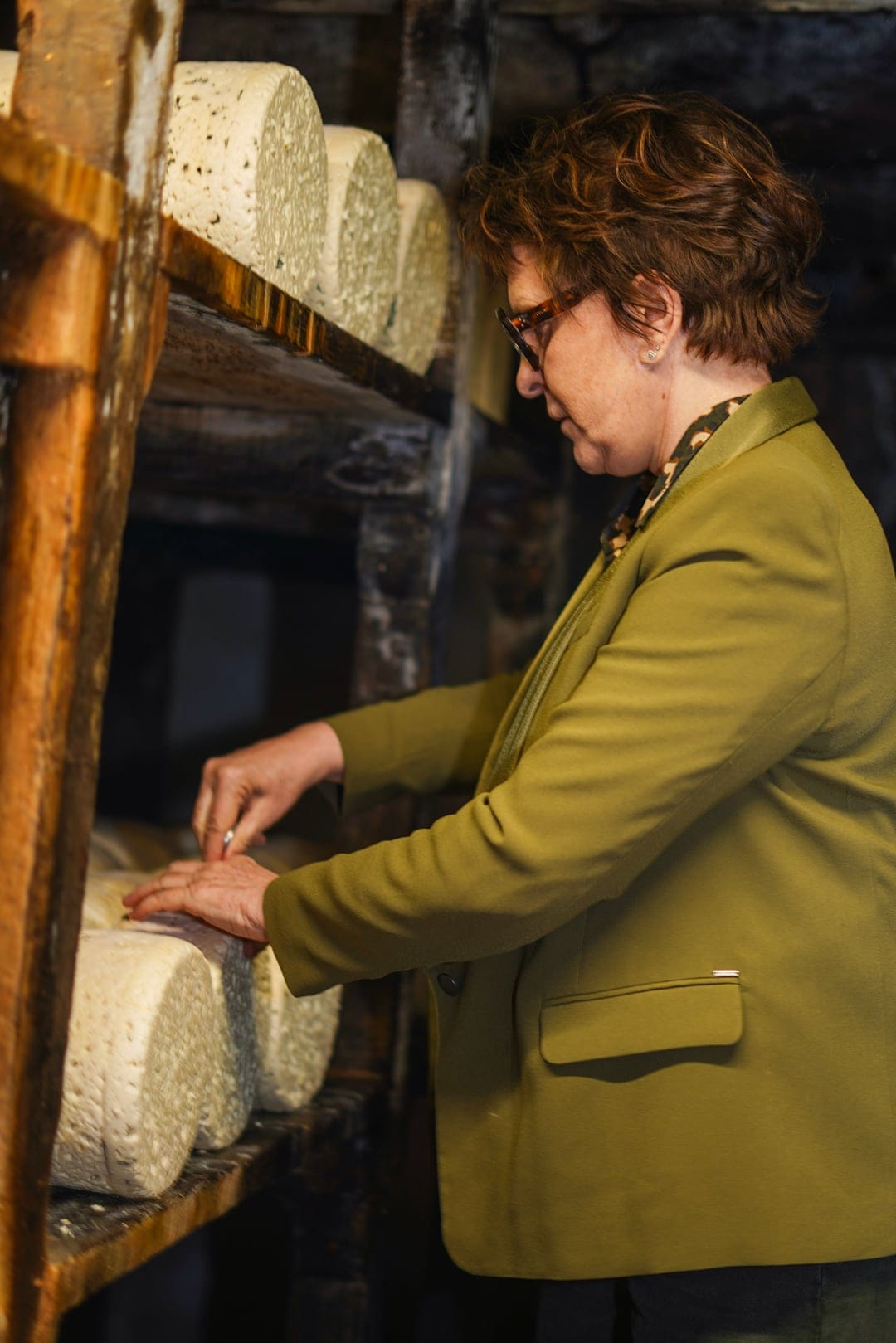
A few simple gestures make all the difference.
Take Roquefort out an hour before serving (16–18 °C). Learn how to store your Roquefort.
Wine, then cheese, then wine again. See which bread to serve.
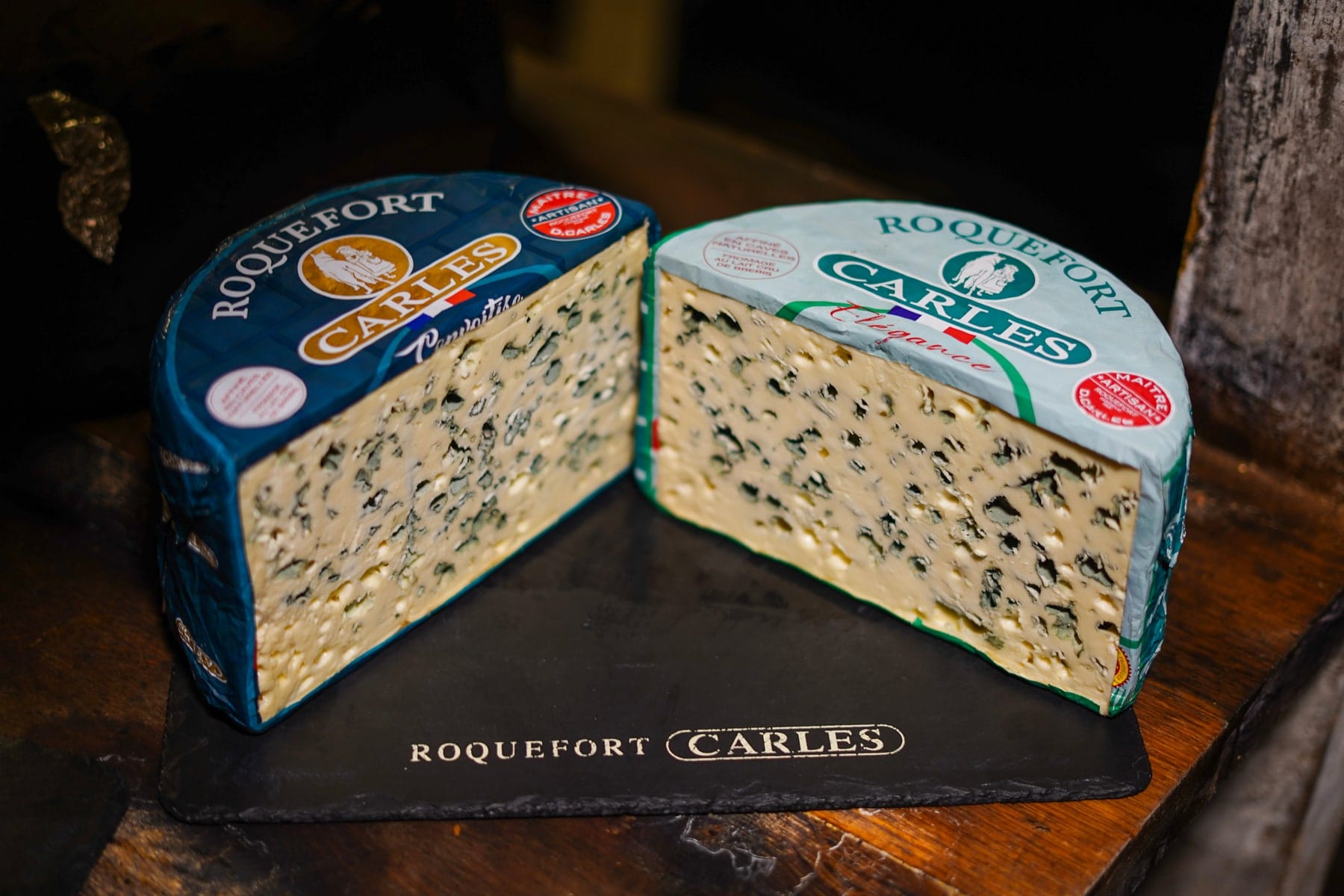
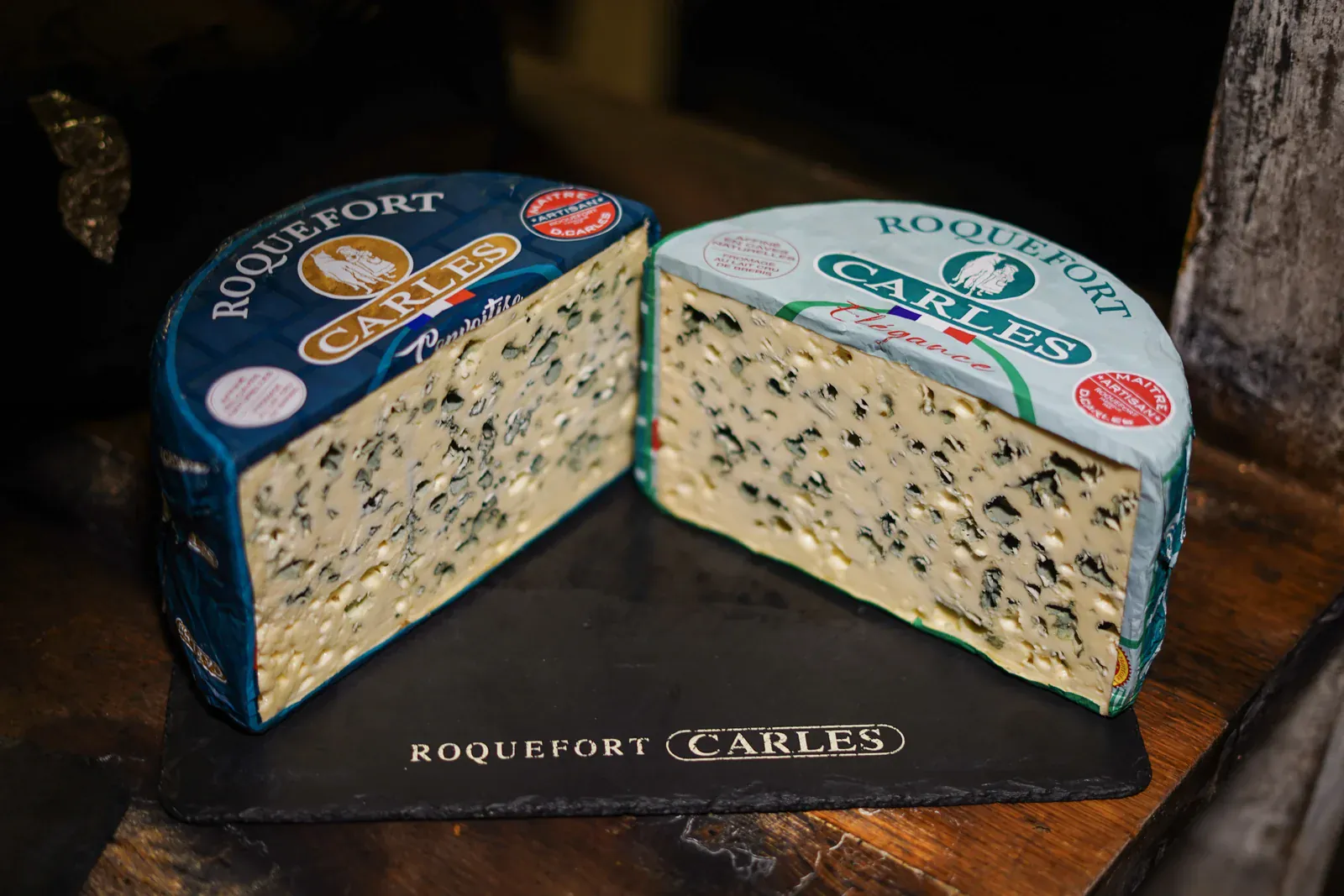
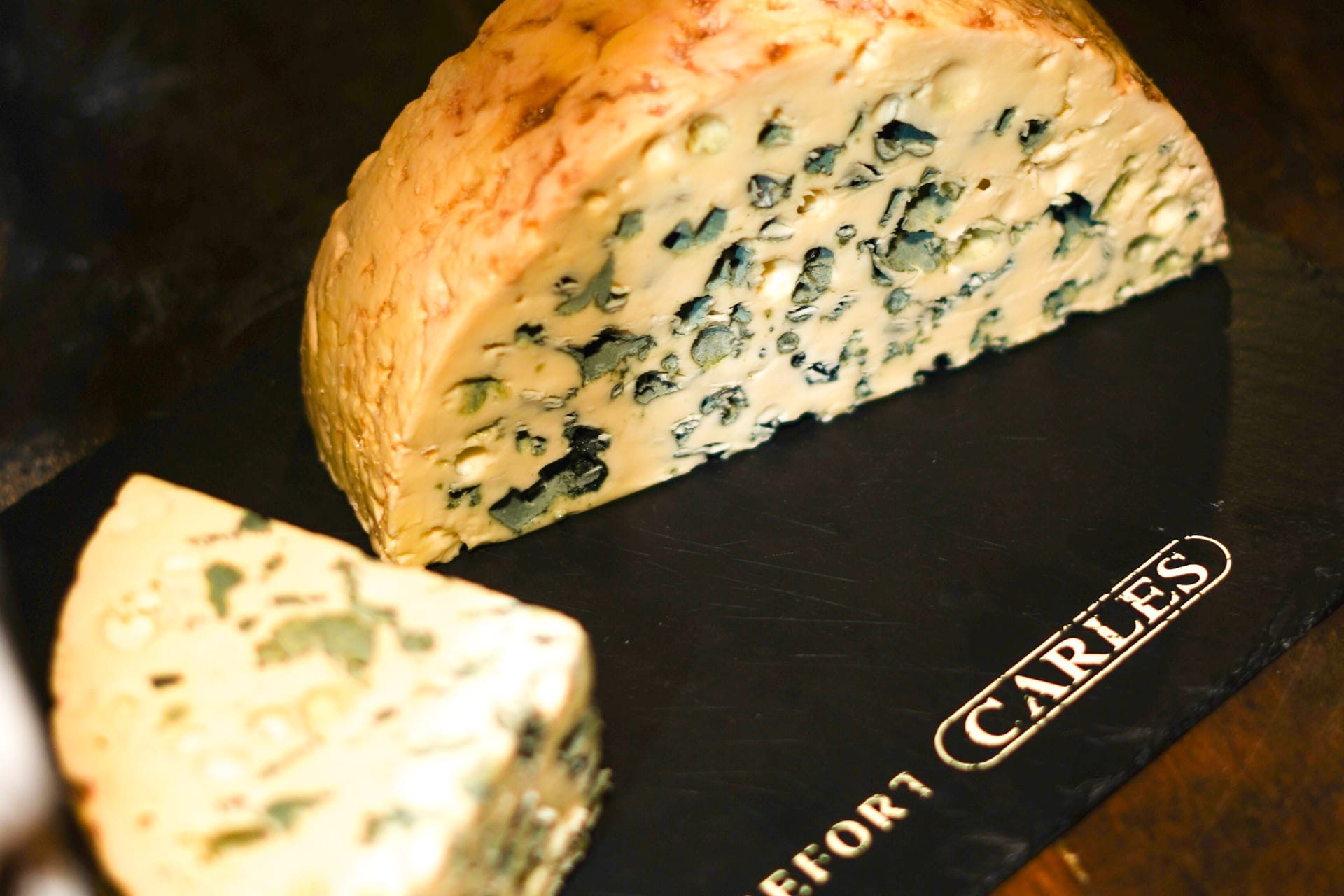
Convoitise for bold wines, Élégance for finer ones.
Wine brings the sweetness, Roquefort sets the tempo.
FAQ
01.
A sweet botrytised wine such as Sauternes; Banyuls, Maury and Port are great alternatives.
02.
Preferably a sweet white; a dry red only if it is full and ripe.
03.
Monbazillac, Jurançon, or a young Banyuls or Maury.
04.
A balanced sweet wine, or two glasses for a festive meal.
05.
Around 16–18 °C; sweet wines at 8–10 °C.
06.
A brut is often disappointing; a sweeter style fares better.
Going further
To learn how to taste Roquefort beyond the glass, visit our tasting page.
Compose your pairing
Choose Convoitise for power or Élégance for finesse at the shop.