Combalou caves · Oak boards

Traditional ageing
of Roquefort

Deep within the rock of the Combalou, Roquefort Carles is aged according to the gestures inherited from 1927. A cave, a wood, a house Penicillium, and the time each wheel demands.

House method

Four pillars
of an ageing that has not changed

The traditional ageing of Roquefort Carles rests on simple, steadfast choices: raw sheep's milk delivered the same day, a house Penicillium roqueforti cultivated on bread, oak boards in the natural caves of the Combalou, and the hand of a family that has been at work for three generations.

  1. The Combalou caveFleurines, humidity, natural coolness
  2. The oak boardsThe wood that breathes with the paste
  3. The house PenicilliumAmandine and Maxime strains on bread
  4. The affineur's timeThe rhythm of the wheel, not the calendar

Pillar I · The rock

The natural cave, first signature

§ I · Traditional ageingThe Combalou
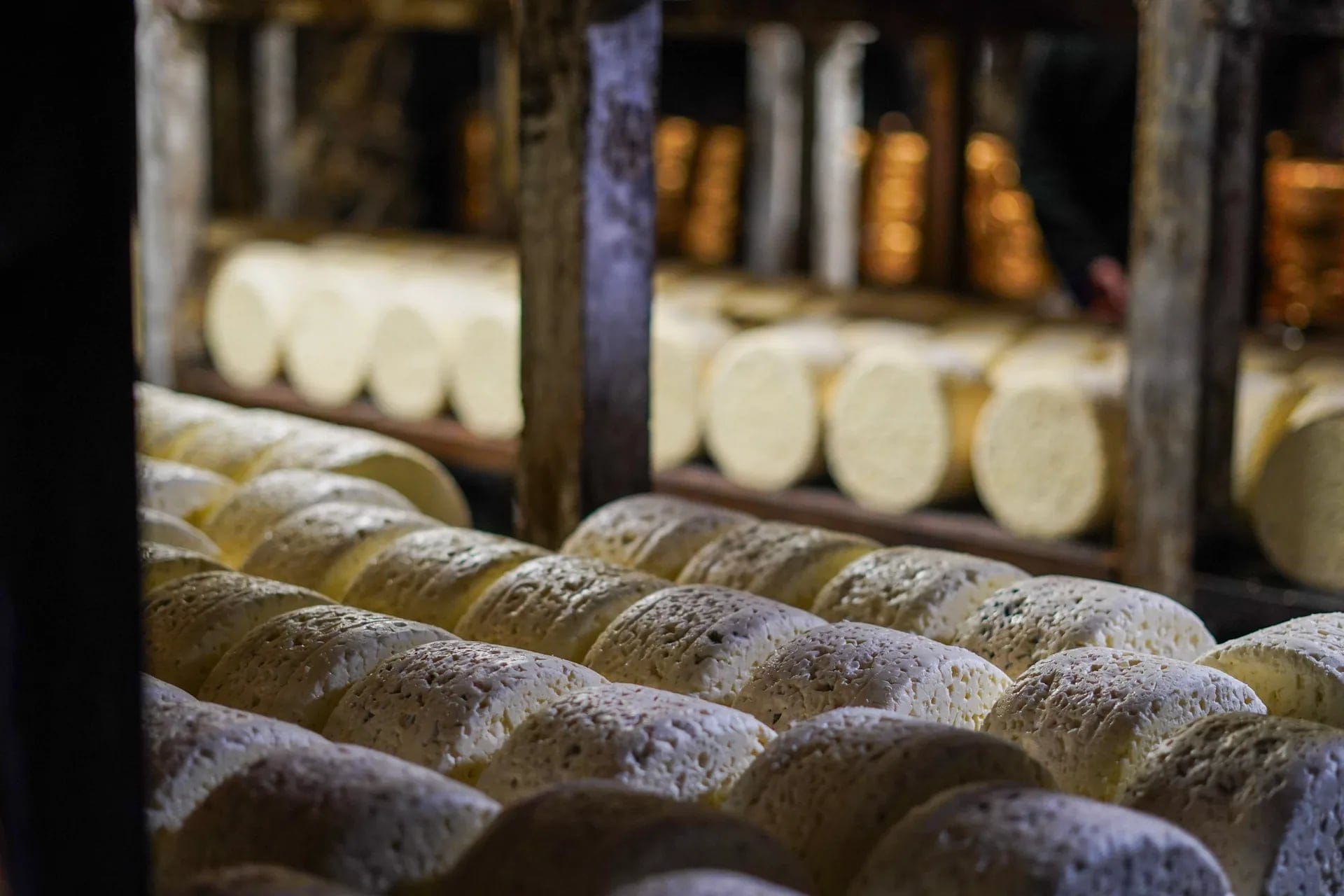
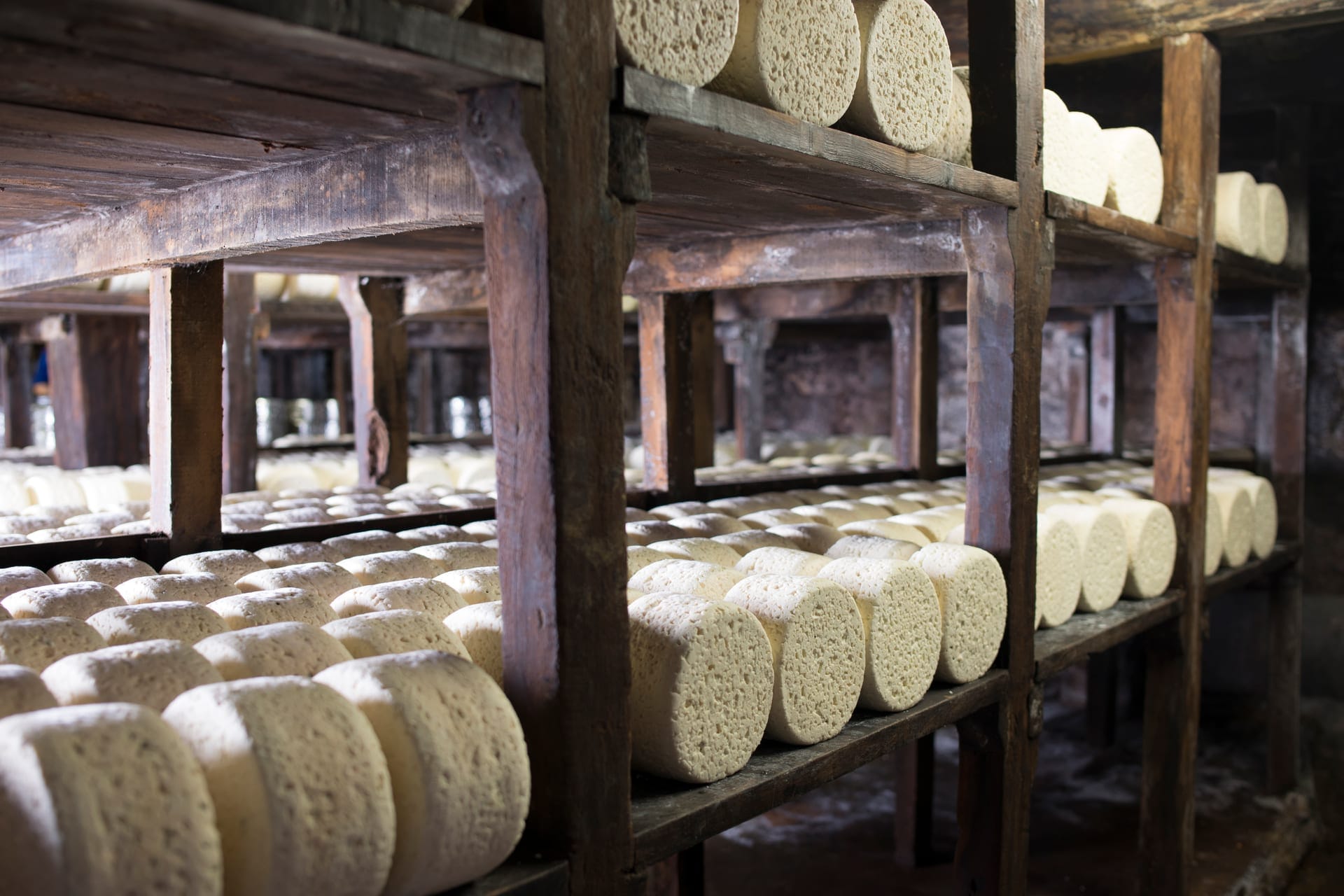
Ageing boards of Roquefort Carles in the natural cave of the Combalou
  • 1927Family house
  • 3Generations in the same cave
  • 13Partner farms

T

The traditional ageing of Roquefort does not begin in a refrigerated workshop, it begins in a mountain. The rock of the Combalou, beneath Roquefort-sur-Soulzon, is riddled with fissures known as fleurines: these air channels breathe, letting in the coolness from outside and the humidity from within, and create the unique atmosphere that the blue-veined paste needs to live. The role of the natural fleurines in this climatic balance is fundamental to understanding traditional ageing.

Roquefort Carles has been ageing cheese in these caves since 1927. The house does not control a climate, it attunes itself to one. No machine comes to replace what the stone, the water and the air do naturally. The temperature shifts with the seasons, the humidity moves with the rain, and every wheel hears this language of the rock better than any sensor could measure it.

It is this geological uniqueness that gives traditional ageing its depth. Roquefort Carles is not simply made in Roquefort-sur-Soulzon: it is slowly shaped by it, in a cave where three generations have carried out the same gestures in the same place.

Pillar II · The wood and the ferment

The oak that breathes,
the Penicillium that speaks

§ II · Traditional ageingWood & ferment
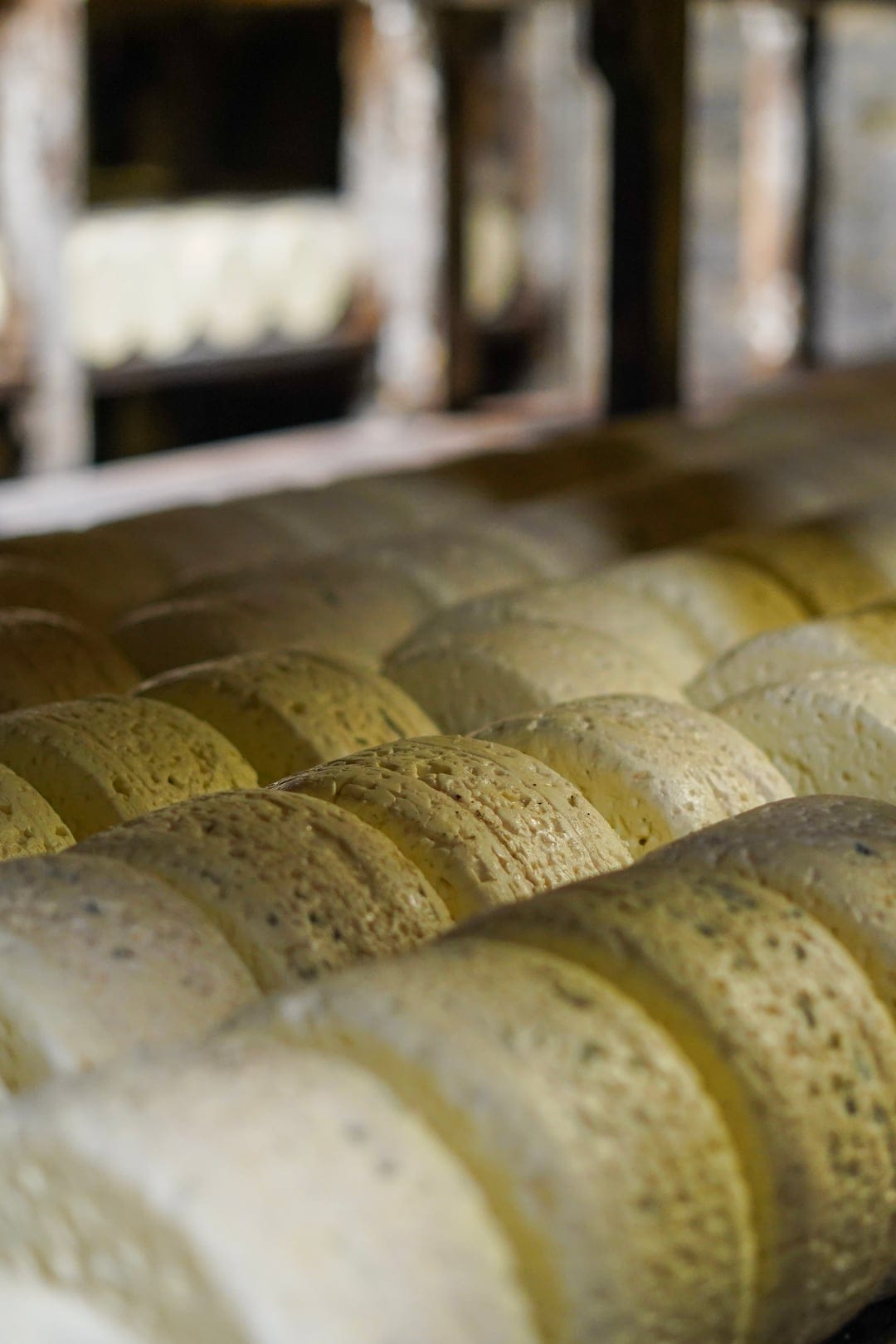
Wheel seeded with house-cultivated Penicillium roqueforti at Roquefort Carles

Amandine & Maxime

Two strains,
one wheel

The traditional ageing of Roquefort Carles is written with a ferment of the house's own making. The Penicillium roqueforti is cultivated on bread, the old way, from two strains identified under the names Amandine and Maxime. It is they who trace the blue-green veining and that aromatic signature recognisable among all others.

A rare practice today, kept alive because it marks every wheel with the signature of the cave.

The choice of oak

The boards are made of oak wood. This is not a detail: oak absorbs and releases the humidity of the cave, accompanies the natural rind of the Roquefort and supports the wheels throughout their ageing. Where stainless steel would simply return a uniform cold, oak enters into dialogue with the cheese, carrying it without haste. This is the role of oak that the house of Carles has preserved since its origins.

Seeding

At the heart of the curd, the house-cultivated Penicillium roqueforti is introduced after curdling. It waits for its moment, lying dormant in the raw sheep's milk. When the wheel enters the cave, the ferment unfurls, traces its blue veins and gives traditional ageing its colour, its texture and its bite.

The affineur's hand

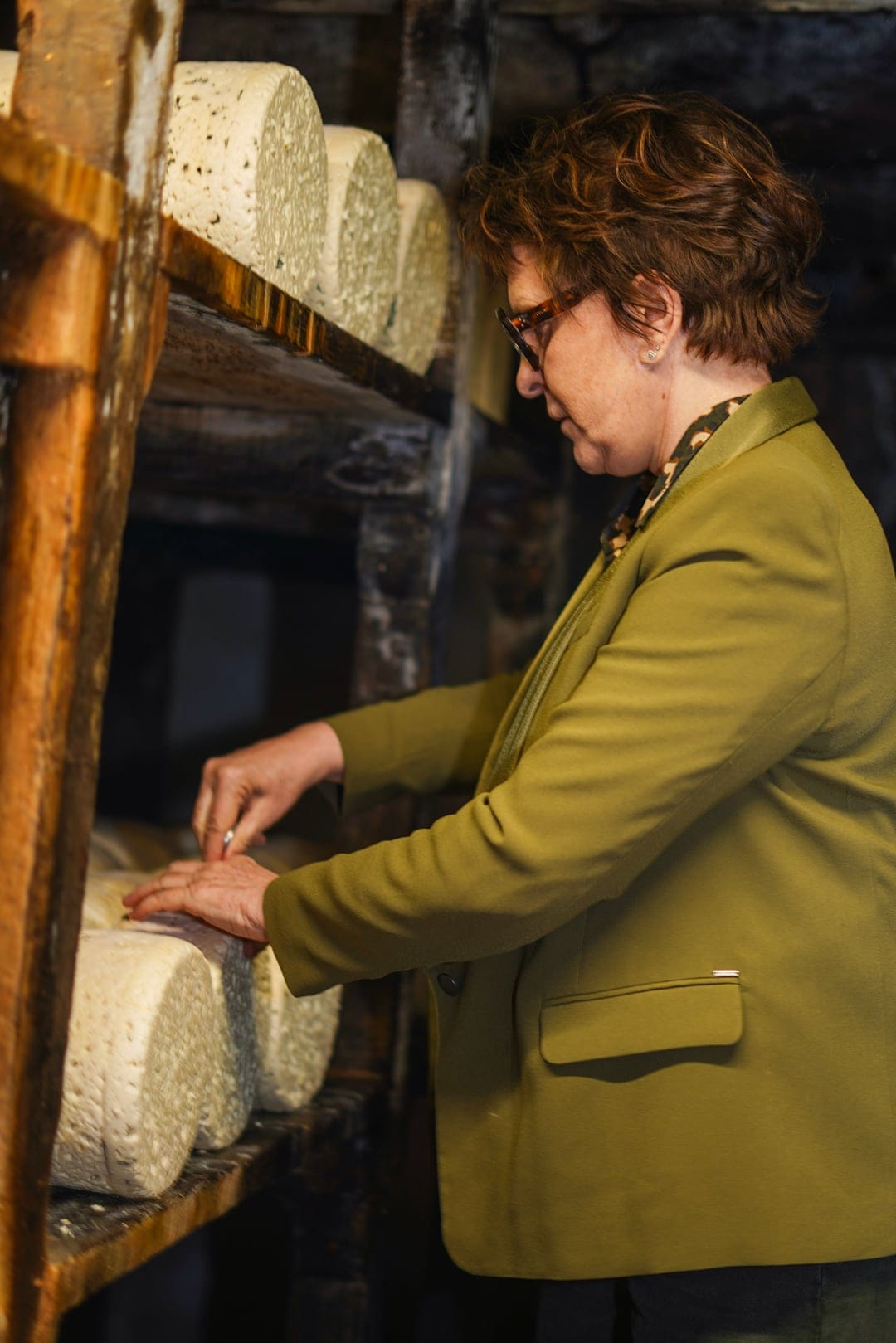
Every wheel is watched, turned, rubbed, listened to. The affineur of the house of Carles walks the same passages of the Combalou again and again, generation after generation. It is this human eye that decides the moment the Roquefort is ready, far more than any industrial calendar.

Hand of the affineur turning a wheel of Roquefort on an oak board
Oak board lined up in the natural cave of the Combalou
Sheep's milk curd before seeding with house Penicillium roqueforti
The wood breathes, the ferment speaks.
The affineur’s role is to listen.
Maison Carles, affineurs since 1927

Pillar III · Time

Ageing follows the wheel,
never the other way round

§ III · Traditional ageingPatience
Row of traditional ageing boards in the Carles cave

Traditionally aged Roquefort does not answer to a stopwatch. It answers to a dialogue between the cave, the wheel and the affineur. As long as the ferment is at work, the rind is forming, the aromas are falling into place, the wheel stays in the gallery. It leaves when the house judges that it has found its balance.

House founded in
1927

Three generations in the same cave of the Combalou.

Generations
3

The same hand, the same eye, the same wood.

Partner farms
13

Sheep's milk delivered the very day it is milked.

Time is not a marketing argument at Roquefort Carles. It is a working condition. Raw sheep's milk arriving in the morning demands immediate action; a wheel in the cave, for its part, demands patience. Neither is compatible with haste, and it is this tension that traditional ageing maintains.

Over the weeks, the house Penicillium roqueforti colonises the paste, opens its blue-green veins and lays down its aromas. The rind forms at its own pace, under the eye of the affineur. The wheel is never rushed to meet a volume or a schedule: it is simply followed through to its full expression. The ageing time is thus dictated by the cave, never by an industrial calendar.

Focus · The Combalou, mother cave of Roquefort

The caves of the Combalou are not a backdrop. They are the very infrastructure of traditional ageing: an ancient microclimate, natural fleurines, a humidity that nothing reproduces elsewhere. This is why Roquefort, AOP, can only be aged here, under this precise rock.

The house of Carles has worked here since 1927 in the same gallery, without moving its workshop. This geographic continuity, rare in the cheese landscape, is an integral part of the final taste: the wheel comes out of the cave that saw it take shape, not from a generic ageing site.

This is how traditional ageing becomes more than an argument: a way of life for the cheese, shared by every wheel in the cave, from the most modest wheel of the Convoitise range to the longer finish of Élégance.

You do not rush a wheel.
You accompany it until it is ready.
Roquefort Carles · Caves of the Combalou

Two expressions of Carles’ traditional ageing

Convoitise range

The benchmark
of the house

Convoitise is the traditional Roquefort of the house of Carles: a wheel of raw sheep's milk aged on oak boards in the caves of the Combalou, true to the method upheld since 1927. It is the most direct expression of the house's traditional ageing.

Carles, true to the method

Élégance range

The gesture taken
further

Élégance extends the same traditional ageing with particular care given to wheels selected by the house. Same cave, same wood, same house Penicillium: this is the premium reading of Carles’ savoir-faire, for epicureans and starred chefs.

Carles, the premium expression

Continue the visit

Around Carles’
traditional ageing

To understand the traditional ageing of Roquefort Carles, several threads must be drawn together. The method is rooted in a history: that of a family house founded in 1927, three generations in the same cave, committed to the same gesture. It is anchored in a very precise place, this village of the Aveyron set upon the rock of the Combalou, from which the terroir of Roquefort-sur-Soulzon is inseparable.

The method itself reads in two parts: the production and ageing as practised by the house of Carles for nearly a century, and the particular role of ageing on oak wood, this choice of material that changes everything. At the table, traditional ageing is enjoyed as much in a simple tasting as in recipes built around Roquefort.

If you want to taste the result at home, the Roquefort Carles online shop offers the Convoitise and Élégance ranges, from the very same ageing caves. And to speak directly with the house about traditional ageing, a visit or a project for your table, the team answers you from Roquefort-sur-Soulzon.

Talk about traditional ageing

Talk with the house
about traditional ageing

A question about the traditional ageing of Roquefort Carles, a project for your table, an order for a restaurant or a visit to Roquefort-sur-Soulzon? The team answers from the shop, 6 avenue de Lauras, Monday to Friday from 8h15 to 17h30.

Questions fréquentes

L’affinage traditionnel
du Roquefort en clair

What is the traditional ageing of Roquefort?

The traditional ageing of Roquefort consists of letting the wheels of cheese made from raw sheep's milk mature in the natural caves of the Combalou, laid out on oak wood boards. The damp cold, the fleurines and the house Penicillium roqueforti slowly orchestrate the development of the blue-veined paste, without accelerants or artifice.

How long does traditional ageing take at Carles?

At Roquefort Carles, each wheel takes whatever time the cave asks of it. Ageing follows the rhythm of the Combalou and the patience of the affineurs, generation after generation since 1927, rather than an imposed industrial pace.

Why oak wood for the ageing boards?

Oak breathes with the cave: it absorbs moisture, releases it slowly and accompanies the natural rind of the Roquefort. It is a living material, chosen for its stability and its dialogue with the Penicillium, where stainless steel would simply return the cold without nuance.

Is the Penicillium used really cultivated on bread?

Yes. Roquefort Carles cultivates its own house Penicillium roqueforti on bread, with two identified strains, Amandine and Maxime. This practice, rare today, gives the blue veining its own aromatic signature and marks every stage of the traditional ageing.

What is the difference with an industrially aged Roquefort?

Traditional ageing works with the cave, not against it: no forced standardisation, no artificial atmosphere, simply the air of the Combalou and the hand of the affineur. The result is a more expressive Roquefort, true to its milk, its season and its board.

Where can I taste or buy traditionally aged Roquefort?

You can discover the Convoitise and Élégance ranges directly at the shop in Roquefort-sur-Soulzon, 6 avenue de Lauras, or order them online. Every wheel shipped comes from the same ageing caves as those open for visits.