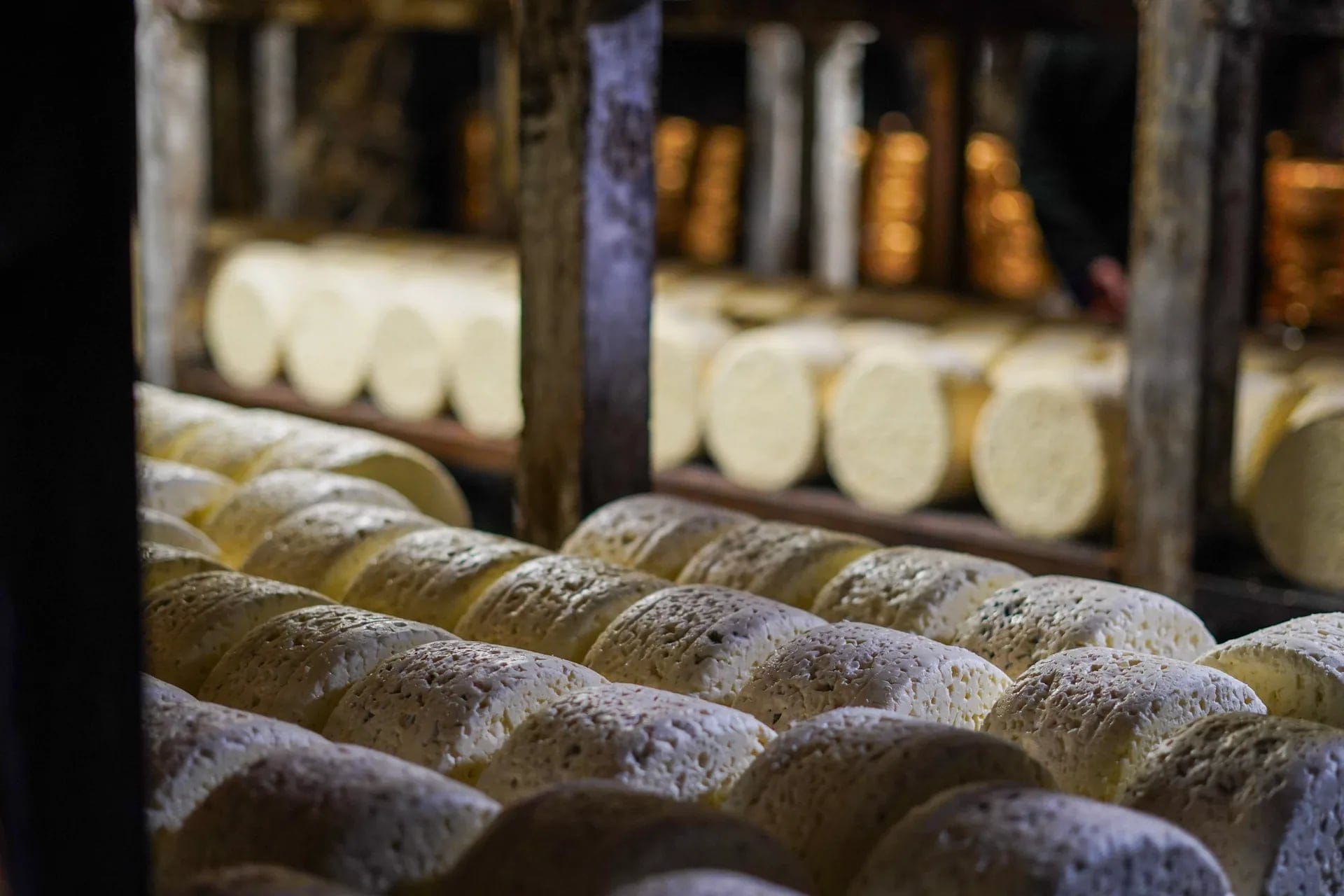
Combalou caves, long ageing

Ageing time
for Roquefort

From leaving the dairy to the wheel ready for tasting, the time spent in the cave entirely shapes the profile of a Roquefort. Here is how Maison Carles has composed its ageing time on oak boards, since 1927.

AOP marker

A question
of cave time

Roquefort's ageing time is not a technical detail: it is what transforms a fresh wheel of cheese into a recognised Roquefort AOP, with its blue veining, its soft paste and its unique aroma.

L

Every Roquefort worthy of the name has spent several months in the natural caves of the Combalou, in Roquefort-sur-Soulzon, in the Aveyron. Ageing time is governed by the appellation's specifications, but in its detail it remains the signature gesture of each family house. At Roquefort Carles, this time in the cave is conceived as a slow story, from the raw sheep's milk collected from our thirteen partner farms to the cheese ready to be sliced by the affineur.

Understanding Roquefort's ageing time means entering the secret of a cheese built over a long time. This feature brings together what you need to know about the stages, the role of the oak boards, the influence of the fleurines in the Combalou caves, and the choices that set our Convoitise and Élégance ranges apart.

Stages of long ageing

The main stages of ageing a Roquefort

§ I · ChronologyFrom fresh wheel to AOP cheese

Roquefort's ageing time cannot be reduced to a simple day count. It breaks down into several phases that the affineur reads by eye, by touch and by smell. First stage: leaving the dairy. The wheel, still white and rich in moisture, has just been seeded with our house-cultivated Penicillium roqueforti, itself grown on bread according to the Amandine and Maxime strains. It joins the cave within hours, with no break in the chain.

Second stage: piercing and moving into the cave. The cheese is pierced to let in the cold, damp air of the fleurines, those natural currents that run through the Combalou scree. The Penicillium then begins to colonise the paste, gradually opening up the cavities and forming the blue veining. This phase moves fast and calls for daily monitoring: too much air and the cheese dries out; not enough, and the mould fails to establish itself properly.

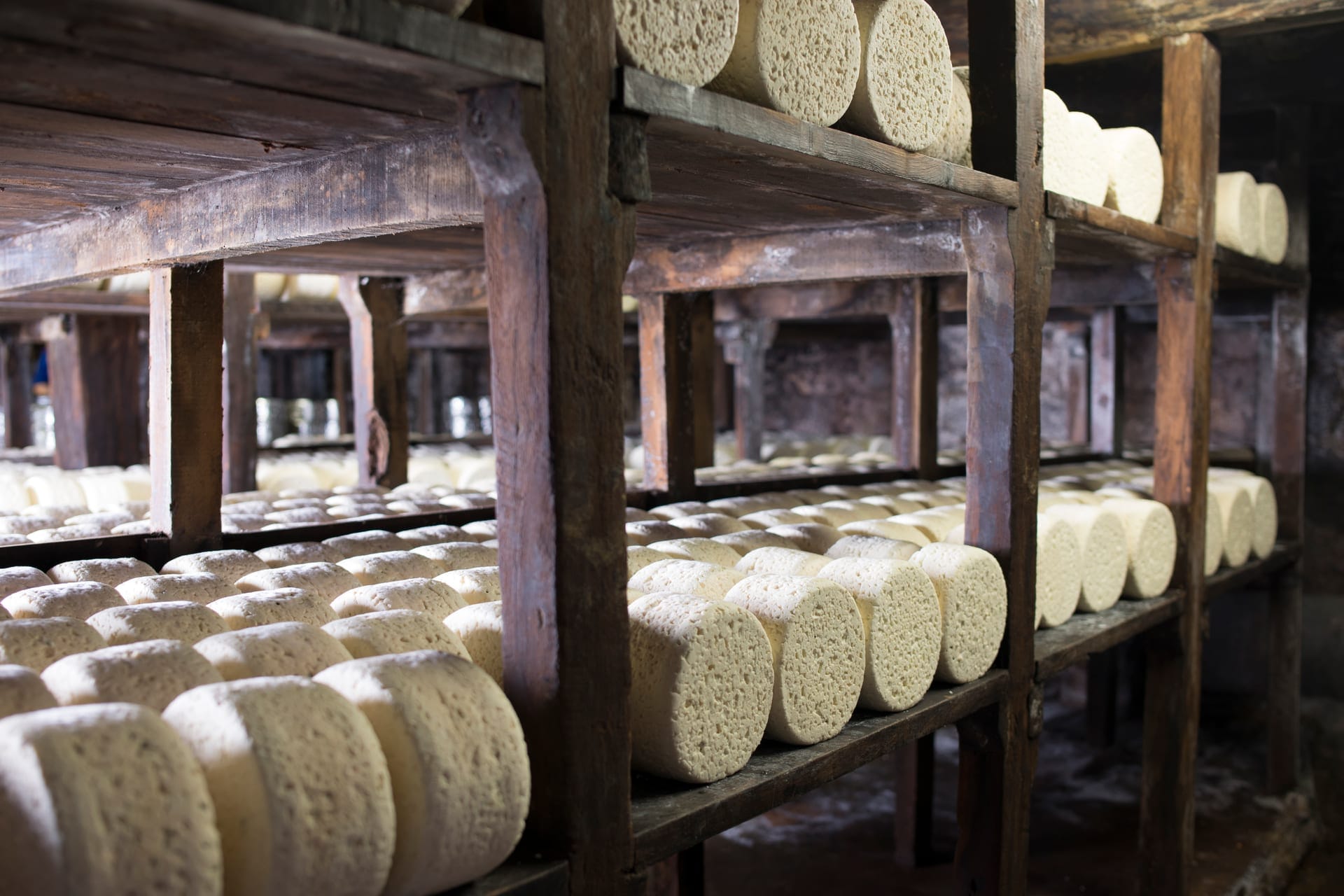
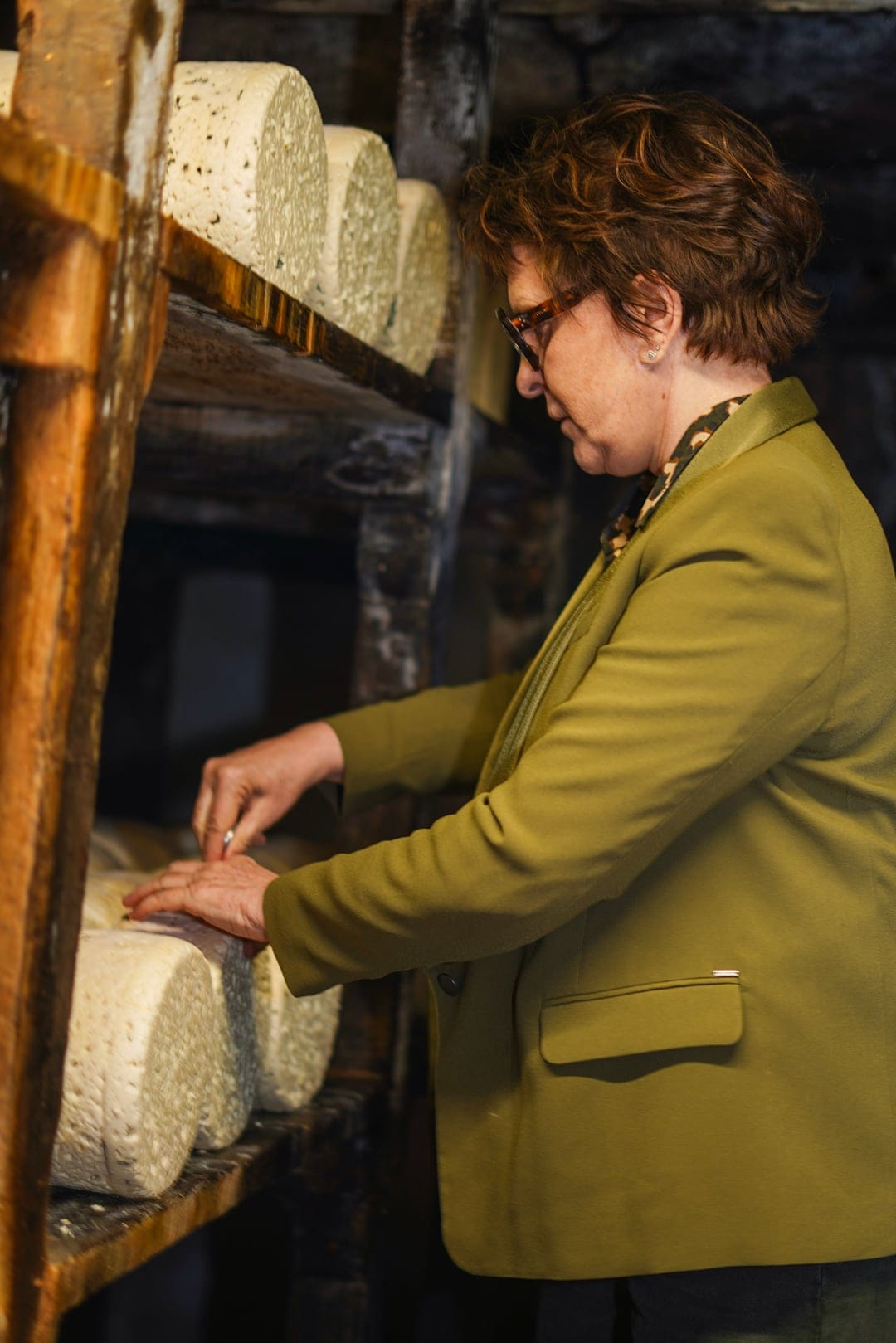
Third stage: long ageing on oak boards. The wheels then rest for several weeks, sometimes several months, on the raw wood that regulates humidity in direct contact with the cheese. The paste matures, gaining in softness and complexity. Finally comes the departure from the cave, decided wheel by wheel, once the blue veining, the rind and the aroma match the profile of the intended range.

Oak boards, fleurines

Why the wood and the cave
dictate the ageing time

§ II · Micro-climateThe Combalou as a clock

O

Ageing time is often talked about as if it depended solely on the calendar. In reality, in the natural caves of the Combalou, it is the combination of oak wood and the air of the fleurines that paces the maturing process. The oak, chosen for its porosity and thermal inertia, captures and releases moisture right at the surface of the rind. A neutral, industrial board would not interact with the cheese in the same way, and would narrow the range of possible aromas.

The fleurines, for their part, are the natural air passages that run through the scree of the Combalou mountain. They maintain a cool, stable temperature and supply the oxygen that Penicillium roqueforti needs to breathe. Their intensity varies with the seasons, and the affineur adjusts the position of the wheels to preserve consistent ageing. It is this micro-climate that makes every cave unique, and that explains why Roquefort's ageing time cannot be replicated outside the Combalou.

Ageing time
cannot be invented, it is read in the cave.
Maison Carles, since 1927

Convoitise & Élégance

Ageing time according to our two ranges

§ III · ApproachTwo readings of Roquefort

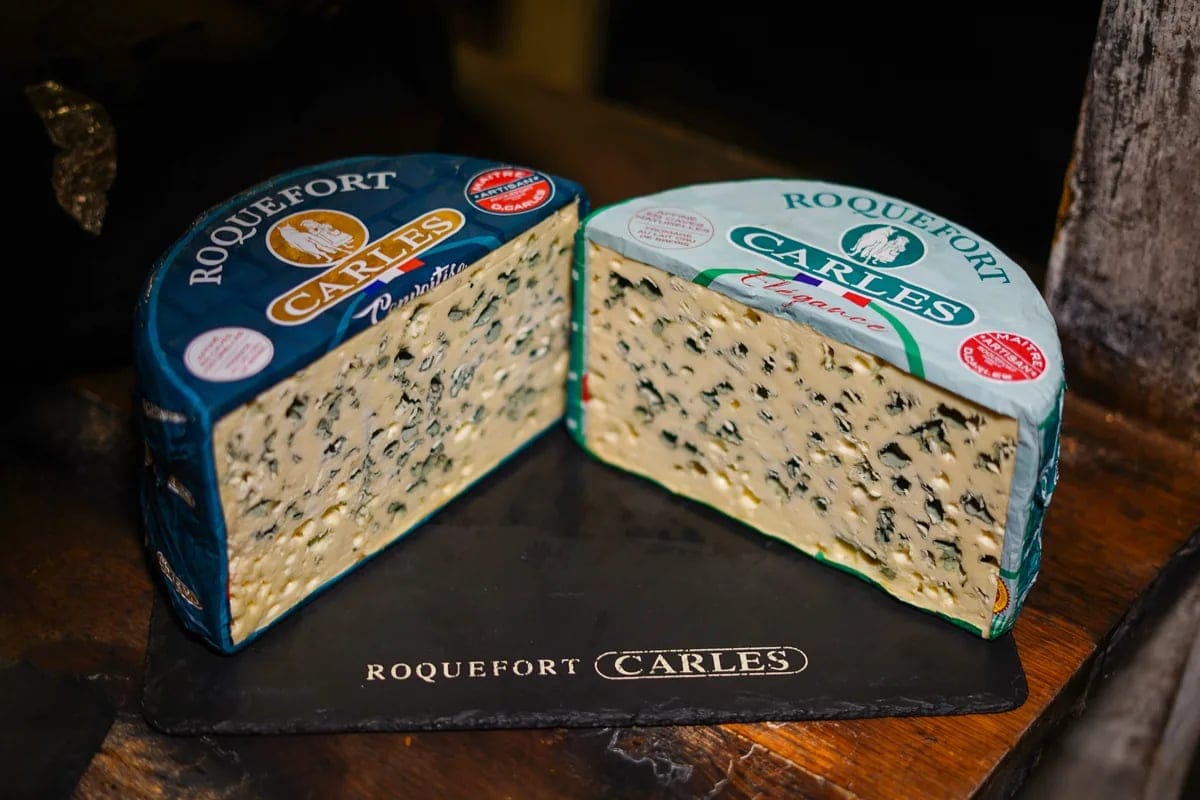
Maison Carles offers two readings of Roquefort, and each calls for its own time in the cave. The Convoitise range, the house's traditional reference, seeks length on the palate, a balance between pronounced blue veining and the roundness of raw sheep's milk. This calls for patient ageing, with the cheese left on the oak boards until its paste reaches the expected softness and the aromas of the damp cave fully unfold.

The Élégance range, an accessible premium option, is designed for those discovering artisanal Roquefort or looking for a more immediate profile. Its ageing time is adjusted to preserve a pronounced softness, clearly defined blue veining and a well-controlled hint of salt, without ever stepping outside the strict AOP framework or the handcrafted approach that defines the house. It is this dialogue between long ageing and range profile that sets an affineur's Roquefort apart from a calibrated industrial cheese.

Tasting cues

How ageing time can be seen and tasted

§ IV · ReadingThe wheel as witness

For the connoisseur, several signs make it possible to recognise a Roquefort whose ageing time has been respected. Visually, the paste should be ivory-coloured, crossed by regular blue veining forming clean veins, neither overpowering nor faint. The rind stays slightly moist, a sign that the cheese left the cave at the right moment, without excessive drying. To the touch, the paste yields without collapsing, evidence of a softness built up over time.

On tasting, a sufficiently aged Roquefort first develops a milky freshness, then builds towards notes of hazelnut, butter, mushroom and woodland undergrowth, carried by a salty edge. It is this length on the palate, inherited from the raw sheep’s milk and the time spent on the oak boards, that sets a traditional Roquefort apart. To find out more about these sensations, our feature dedicated to tasting Roquefort details the right gestures for cutting and serving.

To find out more

Continue the visit of the Carles caves

§ V · Related readingThe full feature

Roquefort’s ageing time takes on its full meaning when set within the complete chain, from pasture to cave. To understand how the milk collected from our thirteen partner farms becomes a wheel ready for ageing, our production and ageing feature retraces Maison Carles’s process step by step. The key role of our house-cultivated Penicillium roqueforti is also covered in detail.

To find out more about the setting of this ageing process, the Combalou caves page tells the story of the scree, the fleurines and the geological history that make this place unique in France. Finally, to discover how these ageing times come to life in our two signatures, explore the Convoitise range and our Our Roquefort page.

Talk to the house

A question about the ageing time
of your Roquefort?

The Carles team is happy to answer questions about time in the cave, choosing between ranges, or storage conditions on receipt. Write to us to prepare your order or your visit to the shop in Roquefort-sur-Soulzon.