The journal · Nutrition & balance

Roquefort calories: nutrition facts, protein and benefits

How many calories in Roquefort, what does it really contain, and how does it fit a balanced diet? A factual nutrition guide, without health hype or scaremongering.

In brief

The essentials

  • Roquefort AOP is about 370 kcal per 100 g, but a realistic 30 g serving is closer to 110 kcal (indicative, varies with ageing).
  • It is rich in fat and salt, yet a good source of complete protein and calcium.
  • Long ageing leaves almost no lactose, so it is often better tolerated than milk.
  • As a raw-milk cheese, it calls for care during pregnancy: ask your doctor.
  • Naturally gluten-free, it is best enjoyed in small amounts, for pleasure first.
Editorial illustration: calories, protein and benefits of Roquefort, the complete nutrition guide

Chapter I

How many calories in Roquefort?

§ i. · EnergyPer 100 g & per serving
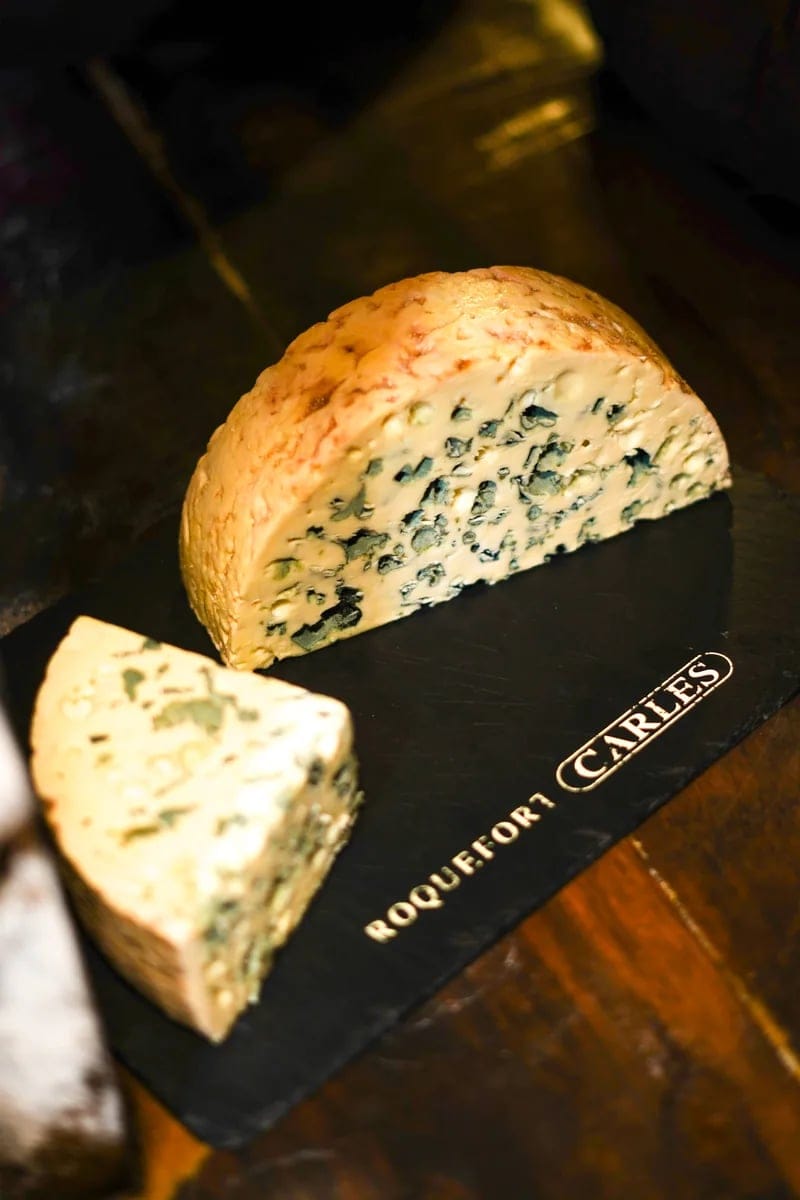
A piece of persillé Roquefort Carles on an engraved slate, ready to enjoy in a small serving

Yes, Roquefort is a rich cheese — but almost no one eats 100 g at once.

Roquefort is about 350–370 kcal per 100 g, an impressive figure that fuels its “heavy” reputation but reflects a quantity rarely eaten in one go.

A sensible 25–30 g serving is closer to 100–110 kcal — barely more than a yoghurt. The gap between “per 100 g” and the real plate is huge.

These values are indicative and vary with ageing: the longer the ageing, the denser and slightly more energetic the cheese.

Indicative nutrition values for Roquefort AOP (varies with ageing)
NutrientPer 100 g30 g serving
Energy≈ 370 kcal≈ 110 kcal
Fat≈ 32 g≈ 9.5 g
Protein≈ 19 g≈ 5.7 g
Calcium≈ 600 mg≈ 180 mg
Salt≈ 3.5 g≈ 1 g

Why Roquefort is rich but enjoyed in small amounts

Its richness is its nature: fat carries the aromas, salt structures the taste, a tiny amount flavours a whole dish.

A well-chosen sliver brings pleasure, protein and calcium without unbalancing the day. The idea is not to count every calorie, but to respect its place: little, but good.

Chapter II

Roquefort vs other cheeses

§ ii. · ComparisonA matter of context

Most hard or blue cheeses sit between 330 and 400 kcal per 100 g, so Roquefort is close to comté or parmesan and richer than fresh cheeses.

It stands out mainly on salt and intensity — which naturally limits how much we eat.

An isolated figure means little: what matters is the real serving and how often.

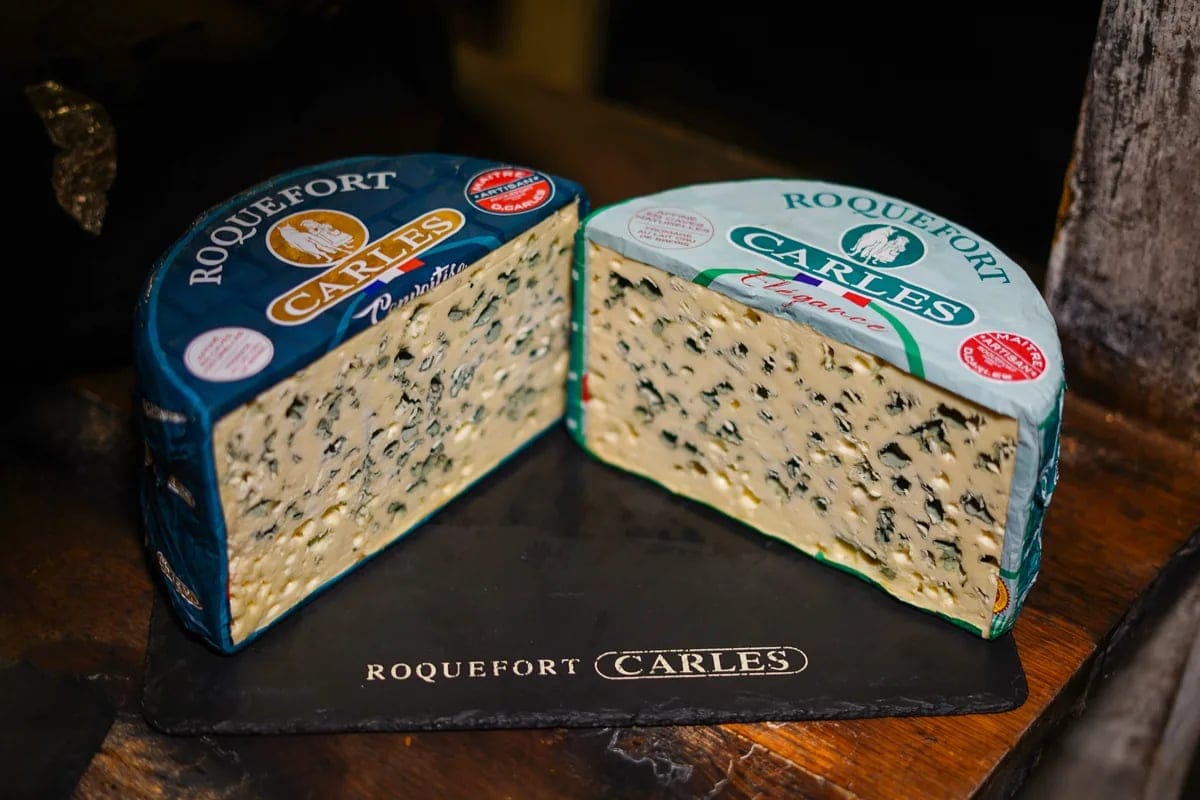
Two halves of Roquefort Carles on an engraved slate, showing the density of the paste

Chapter III

What Roquefort contains

§ iii. · CompositionProtein, calcium, sodium

Beyond calories, Roquefort concentrates nutrients from a rich raw ewe’s milk.

Protein is a key asset: about 19 g per 100 g, of high biological value with all essential amino acids.

Fat provides most of its energy, mainly saturated — the mark of whole-milk cheeses. Enjoy in reasonable amounts.

Calcium is abundant (about 600 mg/100 g), useful for bone health. Sodium is the main point to watch.

A flock of ewes grazing in an Aveyron meadow, the source of Roquefort’s raw milk

The role of raw ewe’s milk

Ewe’s milk is naturally more concentrated than cow’s milk — richer in fat, protein and calcium.

Raw milk also preserves live ferments and complex aromas. Learn more on our page about raw ewe’s milk.

Chapter IV

Benefits in a balanced diet

§ iv. · BenefitsProtein, calcium, ferments

Enjoyed in moderation, Roquefort has real nutritional strengths — three main ones.

Complete protein

Quality protein rich in essential amino acids, supporting muscle and satiety.

Well-absorbed calcium

A high calcium content that supports bone health and is easily used by the body.

Ferments from ageing

Ageing develops a characteristic microbial flora; an aged, fermented food.

None of this is a health claim: Roquefort is a treat, not a supplement.

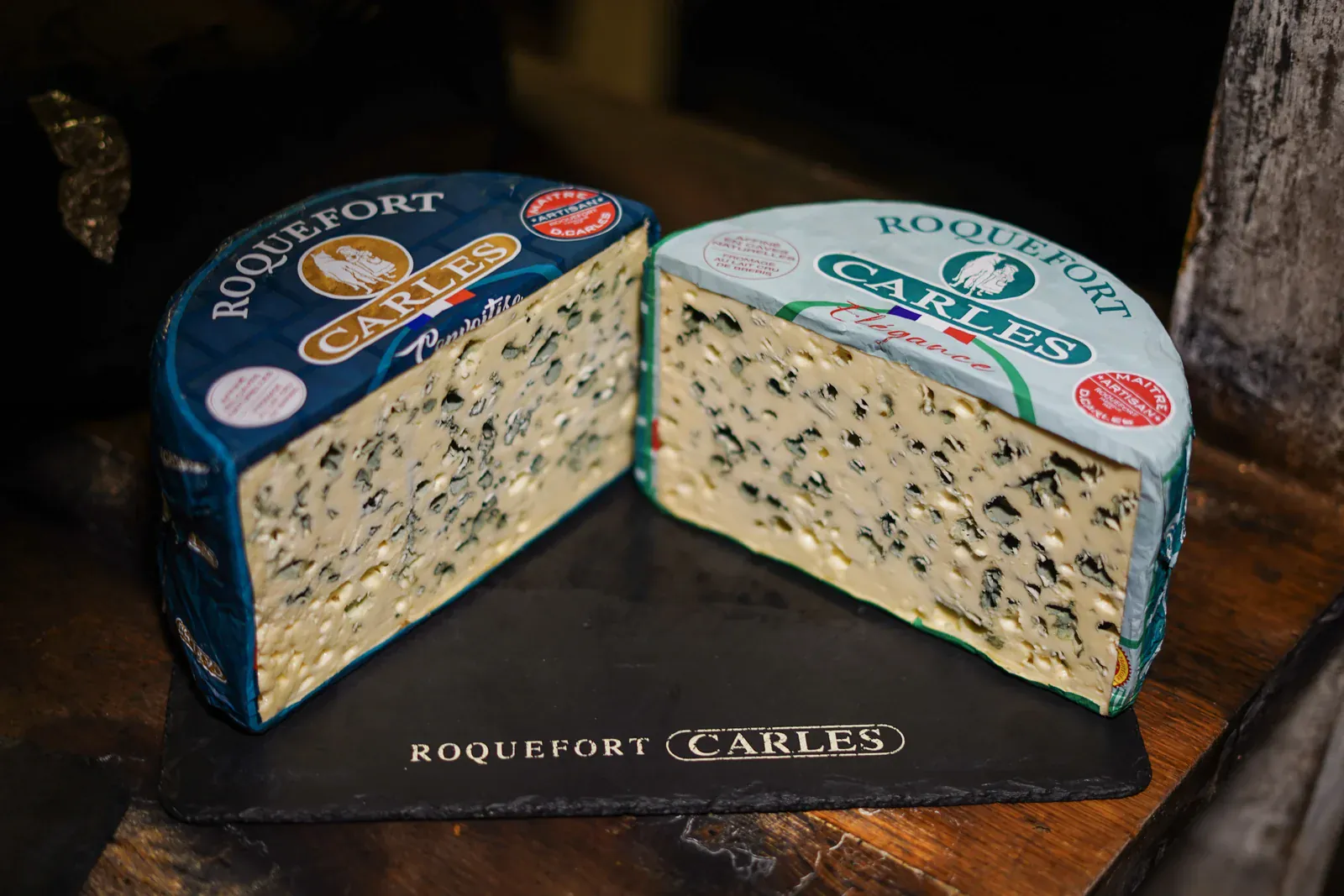
Two wheels of Roquefort Carles cut open, revealing the blue-green veining

The right serving and frequency

A 25–30 g serving, a few times a week, is plenty — taste, protein and calcium without weighing on balance.

Pleasure over quantity: a little Roquefort transforms a salad or a sauce.

Chapter V

Roquefort in a balanced day

§ v. · BalanceWhere to place it

Roquefort fits at the end of a meal or at the heart of a dish, where a little replaces a lot of added fat.

Balance the rest of the meal with vegetables and whole grains, and let the cheese be the flavour signature.

Learning to portion beats depriving yourself — Roquefort belongs in a balanced week.

A cheese of character is measured in pleasure, not only in calories.
Maison Carles · Combalou caves

Chapter VI

Roquefort and lactose: an aged cheese, very low in lactose

§ vi. · DigestionThe role of ageing

Long ageing leaves almost no lactose in Roquefort.

Ageing breaks down milk sugar over the weeks, so aged cheeses are among the lowest in lactose.

Many lactose-sensitive people tolerate it far better than milk — though sensitivity varies.

If in doubt or on a special diet, ask a doctor or dietitian. This article gives general guidance only.

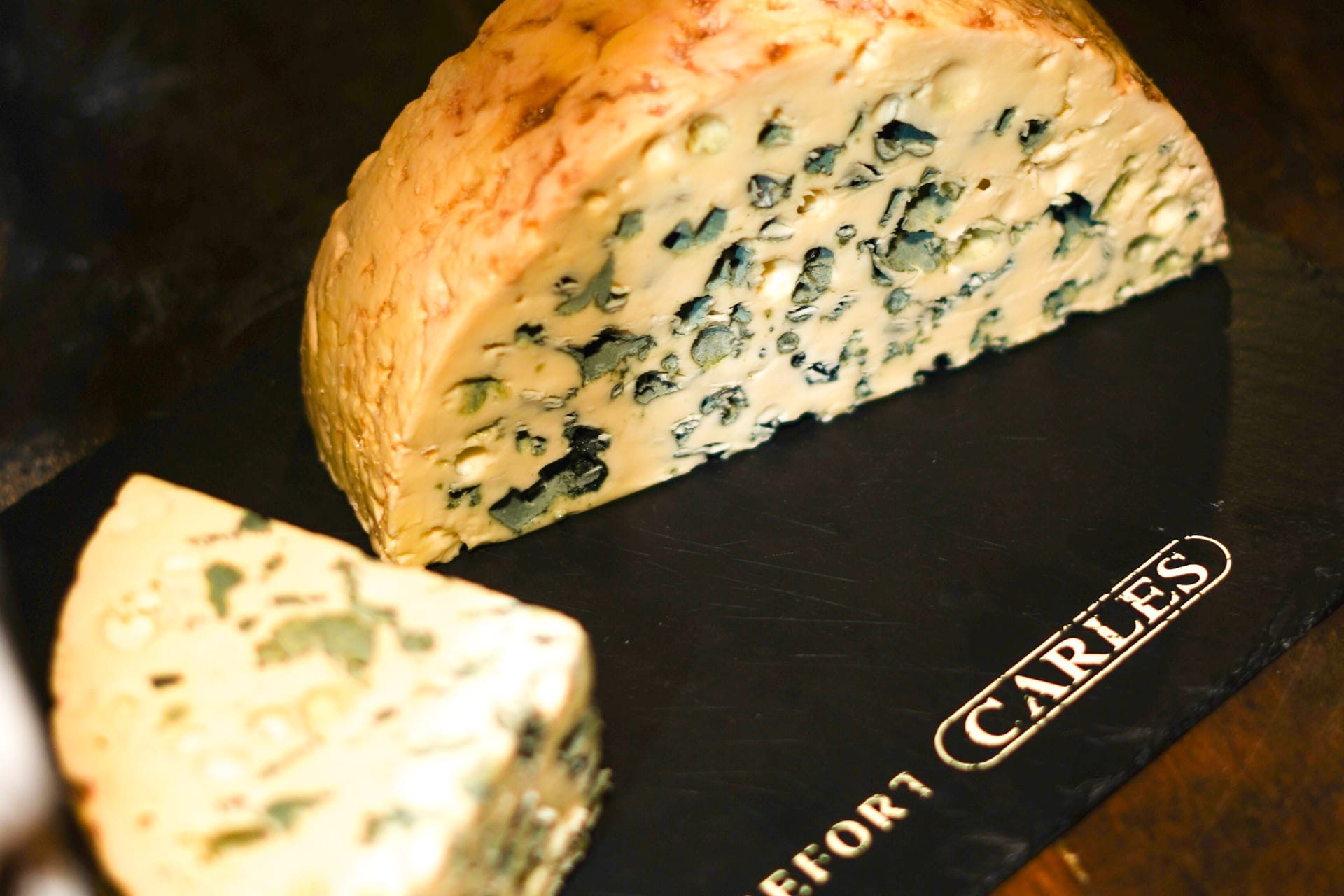
A cut wheel of Roquefort Carles on a black slate — a long-aged, low-lactose cheese

Chapter VII

Roquefort and pregnancy: raw-milk precautions

§ vii. · PrecautionsRaw milk & pregnancy

Roquefort and pregnancy: raw-milk precautions

Roquefort is a raw-milk cheese; general guidance advises pregnant women to be cautious with raw-milk and blue cheeses.

This is a shared precautionary principle, not a reason to dramatise.

Each situation is unique: speak to your doctor or midwife for tailored advice.

Chapter VIII

Roquefort and gluten: naturally gluten-free

§ viii. · CompositionGluten-free

Made from ewe’s milk, ferments, Penicillium and salt, Roquefort contains no gluten.

Only the accompaniments — bread, crackers, prepared sauces — may bring gluten; check them on a strict diet.

Chapter IX

In summary: mindful pleasure

§ ix. · ConclusionLittle, but good

Rich but enjoyed in small portions, Roquefort offers complete protein, calcium and unmatched flavour; low in lactose, gluten-free, with raw-milk care in pregnancy.

Good nutrition is about portion, frequency and balance — not a single label figure. In its place, Roquefort ticks the boxes.

Frequently asked

Your questions about Roquefort calories

§ x. · FAQNutrition, made clear

01.

How many calories in a serving of Roquefort?

A realistic 30 g serving is about 110 kcal (indicative, varies with ageing) — far more useful than the “per 100 g” figure.

02.

Does Roquefort contain lactose?

Very little. Long ageing removes almost all lactose, so it is often better tolerated than milk. Sensitivity varies — ask a health professional if unsure.

03.

Can you eat Roquefort while pregnant?

It is a raw-milk cheese; guidance advises caution with raw-milk and blue cheeses during pregnancy. Speak to your doctor or midwife.

04.

Is Roquefort gluten-free?

Yes, naturally. Only accompaniments such as bread or sauces may contain gluten.

05.

Is Roquefort too salty?

Salt is part of its making; it is among the saltier cheeses. The small usual serving keeps the intake modest.

06.

Can Roquefort fit a balanced diet?

Yes — a 25–30 g serving a few times a week brings protein, calcium and pleasure without unbalancing the day.

Go further

These figures make sense against a real artisan raw-milk cheese. To go beyond calories roquefort, discover our raw-milk Roquefort, then keep reading.

From numbers to pleasure

Taste a real artisan Roquefort

The best way to grasp these figures is to taste a raw-milk Roquefort aged in the Combalou caves. Choose your piece in the shop, or get to know our cheese.