Aveyron · Combalou plateau

Visiting a Roquefort cellar: what to expect at the heart of the Combalou

A practical, epicurean guide to visiting a Roquefort ageing cellar in Roquefort-sur-Soulzon: what you see inside, how to get there from the A75 and the Millau Viaduct, and where to meet a producer for direct sale.
In short

A Roquefort cellar visit takes place in Roquefort-sur-Soulzon, southern Aveyron, minutes from the Millau Viaduct and the A75. Inside the Combalou plateau you discover natural caves ventilated by the fleurines, oak boards holding raw sheep-milk cheeses, and the affineurs at work. At Maison Carles, a family house founded in 1927, the shop offers direct sale on avenue de Lauras, Monday to Friday from 8:15 to 5:30 pm, where you taste the Convoitise and Élégance ranges.

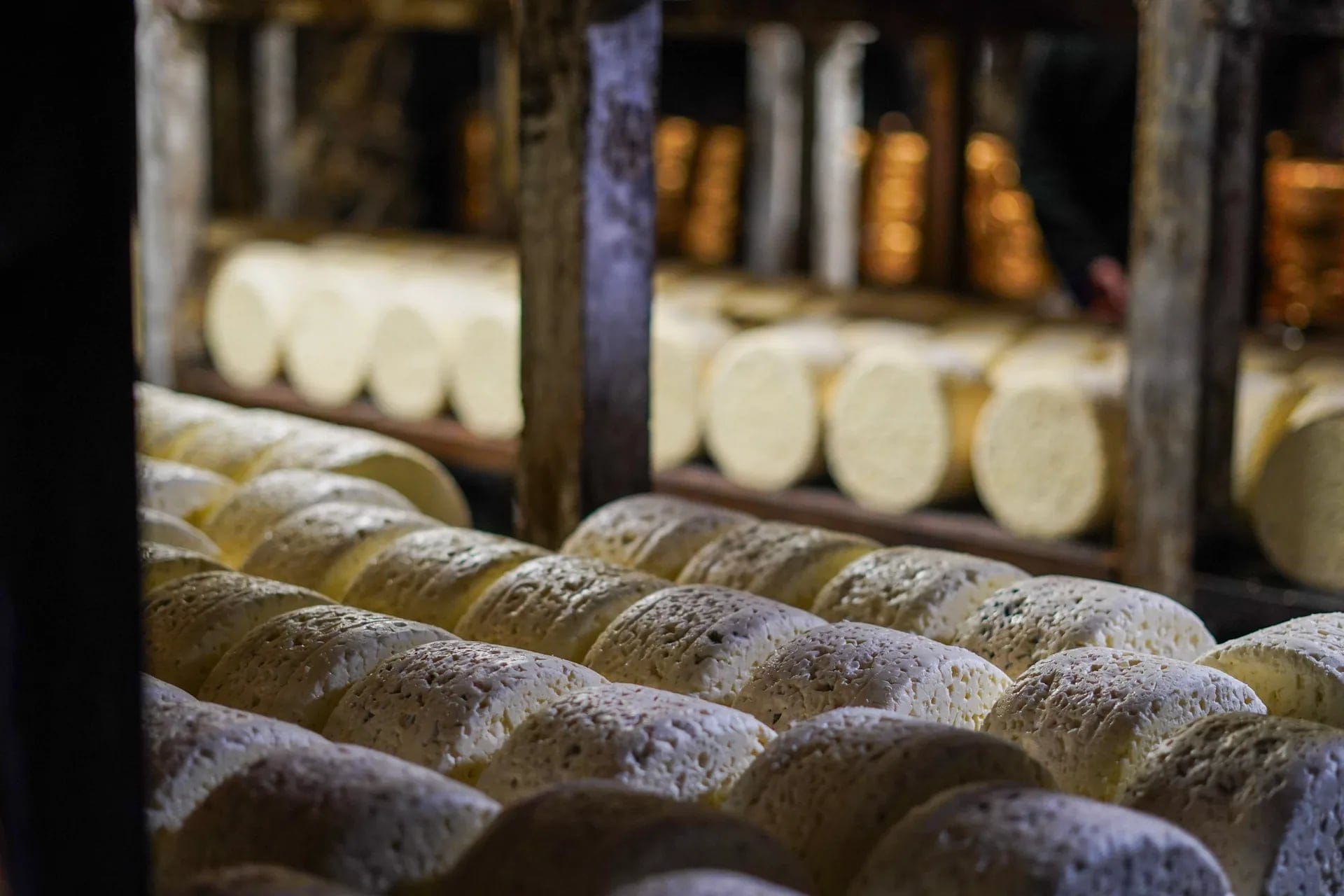
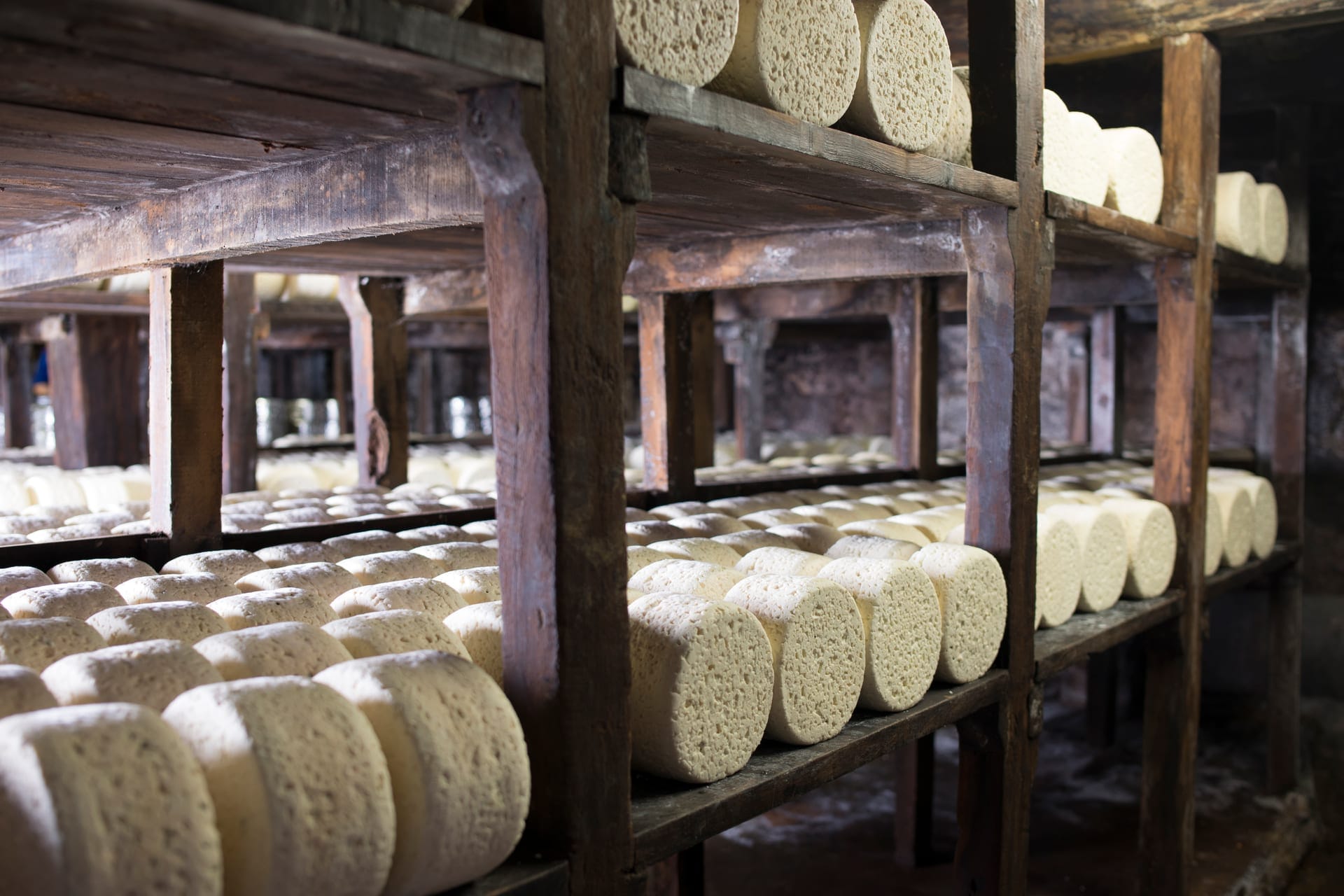
Roquefort wheels ageing on oak shelves in a natural Combalou cave

Chapter I

Why Roquefort ages only here

§ i. · The CombalouA collapsed cliff

No other place on earth can produce a Roquefort AOP — law and geology agree.

Roquefort-sur-Soulzon clings to the Combalou plateau, part of which collapsed millennia ago, leaving natural caves and airy faults. See our plateau du Combalou for the full story; the key point is simple: the cheese is shaped by the place itself.

So you visit not a factory but a lived-in slice of mountain, tended since 1927 by the Maison Carles.

Every gesture you see answers what the rock demands — that humility gives Aveyron Roquefort its depth.

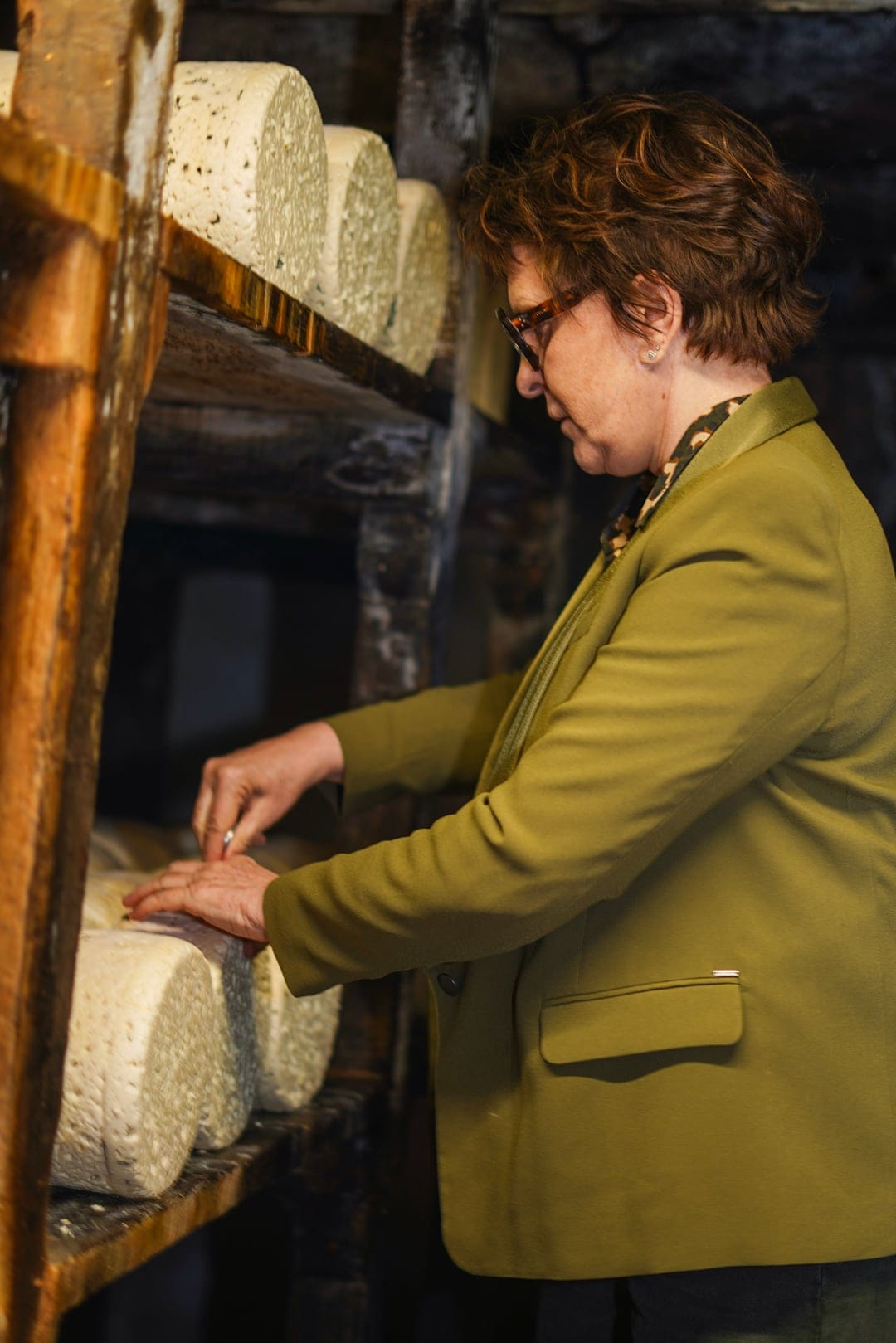
Affineur in a green jacket inspecting Roquefort wheels on oak shelves
You do not make the Combalou: you learn to work with it.
Maison Carles, since 1927

Chapter II

Fleurines, humidity, coolness

§ ii. · GeologyThe fleurines

A fleurine is a natural fault, a chimney through which outside air enters, gathers humidity and circulates between the cheeses, regulating the cave without any machine.

The result is a stable underground microclimate that Penicillium roqueforti loves. More on this in our article on the fleurines des caves naturelles.

Maison Carles has aged in these same galleries for three generations: the cave itself is the cheese’s first signature.

Inside the cave

No thermostat here — the cliff sets the temperature and humidity. The chill and the faint draught mean the fleurines are working.

Chapter III

Oak boards and hand ageing

§ iii. · The caveThe affineur’s gesture
Rows of cheeses ageing on wooden racks in a traditional cave

Long oak boards hold the loaves; the living wood breathes with the cave and accompanies the natural rind, where steel would stay cold and mute.

Everything is done by hand: the affineur turns, watches and listens to each loaf, deciding when balance is reached.

For visitors this is the most striking moment — a daily human presence deep in the cool, damp rock.

Chapter IV

Veining and piercing explained on site

§ iv. · The pasteThe blue-green veins
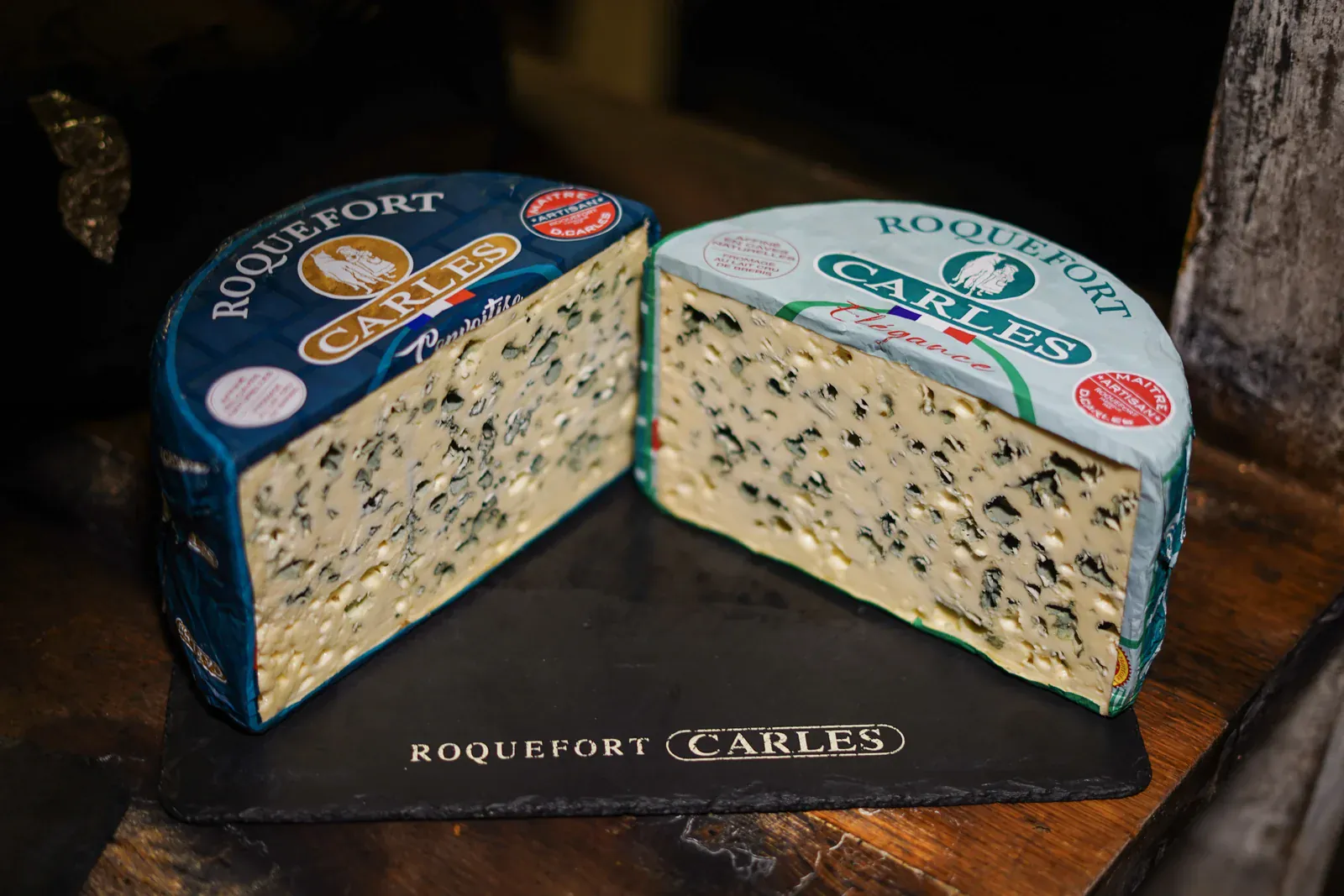
Two Roquefort Carles wheels cut open, showing the blue-green veined paste

The blue-green veining is Roquefort’s signature — in the cave you finally see how it is born.

Penicillium roqueforti waits in the raw milk; piercing the loaves with fine needles lets cave air in so the mould can spread, vein by vein.

An affineur can read a half-wheel like a map: density and colour tell the loaf’s life in the cave.

Maison Carles grows its own Penicillium on bread — a rare gesture that gives its veining a house signature.

Chapter V

Tasting: Convoitise and Élégance

§ v. · The tableTwo profiles

A visit ideally ends with a tasting. Two ranges read the same craft in two ways.

Convoitise

The traditional Roquefort of the house: a bold, frank paste marked by raw milk and house-grown Penicillium, true to the 1927 method.

Élégance

The same ageing taken further into finesse: a more contemplative paste for those who seek nuance before power.

Take the cheese out of the fridge about thirty minutes before tasting so the raw-milk paste releases its aromas.

Chapter VI

Coming via the Millau Viaduct and the A75

§ vi. · AccessA road-trip stop

Roquefort-sur-Soulzon sits in southern Aveyron, minutes from the Millau Viaduct and the A75 — an ideal stop on an epicurean road trip.

From the viaduct, a short road leads to the foot of the Combalou and its mineral village.

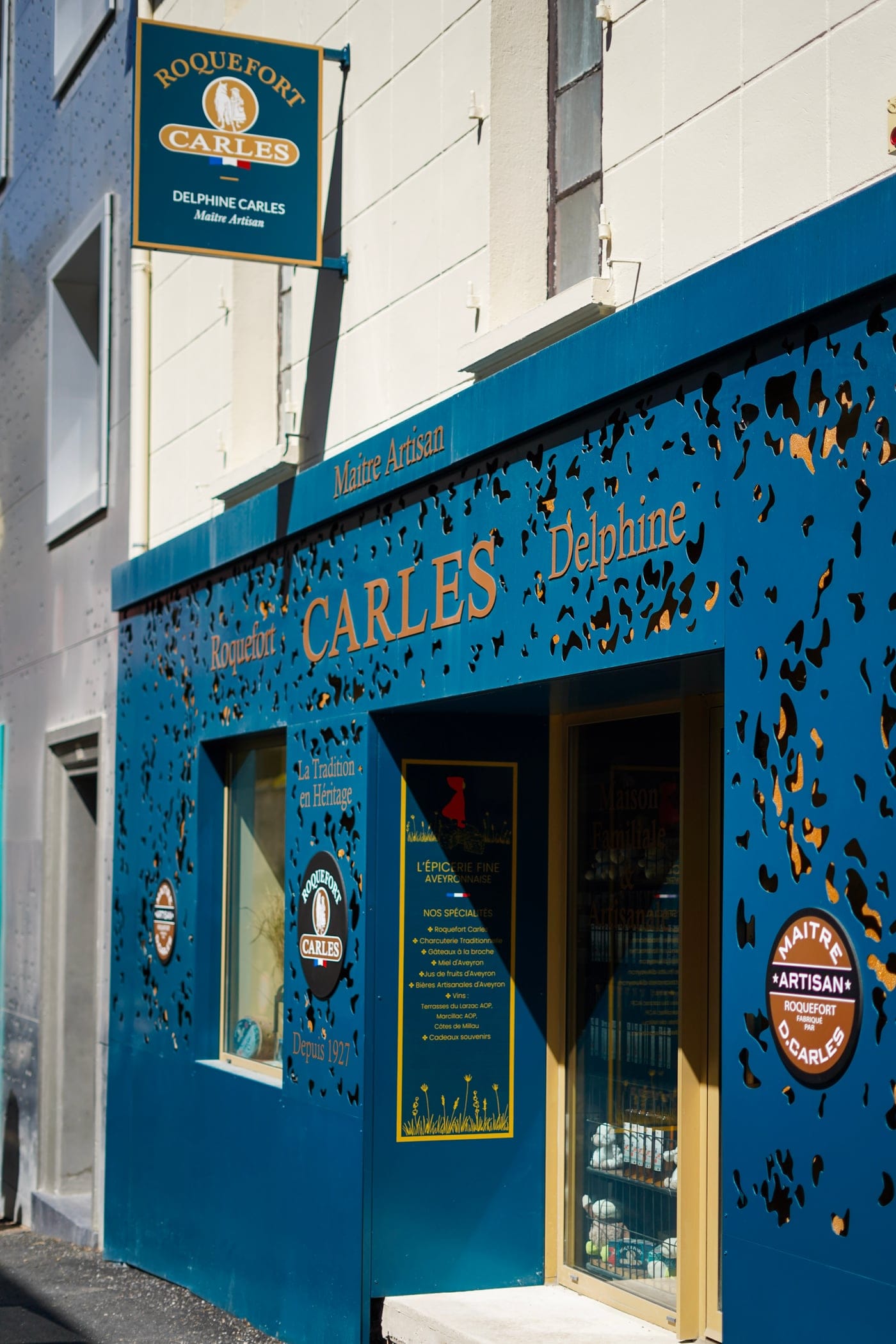
Maison Carles welcomes you on avenue de Lauras, in the heart of the historic village.

Blue façade of the Roquefort Carles shop in Roquefort-sur-Soulzon, cheese artisan since 1927

Chapter VII

What to see nearby in Aveyron

§ vii. · AroundExtend the trip

Aveyron offers many stops around your visit — the Millau Viaduct, the causses and character villages. See our guide to visiter l’Aveyron et le Viaduc de Millau.

The region’s thread is the sheep grazing the causses, source of all the milk. Learn more in our article on fromage de brebis en Aveyron.

Chapter VIII

Meeting a producer for direct sale

§ viii. · The encounterHand to hand

At a family affineur you speak to people whose name is on the cheese — a transmission you won’t find in a supermarket.

Maison Carles is exactly that: three generations at the same address, devoted to raw milk and the Combalou caves.

To know the family better, our page notre histoire tells the story since 1927.

Chapter IX

Direct sale at the shop

§ ix. · PracticalAvenue de Lauras
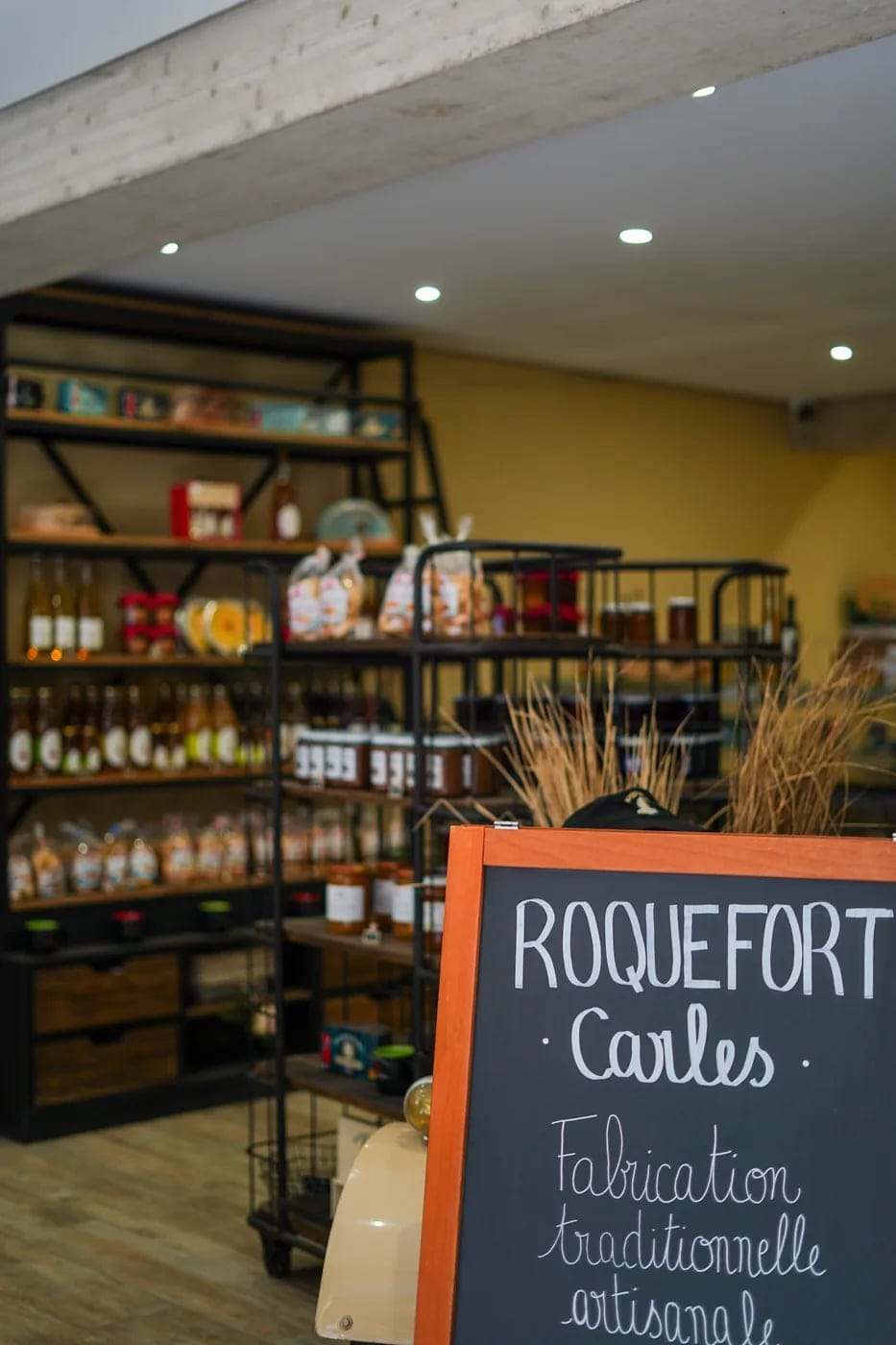
Inside the Roquefort Carles shop, with its shelves of local produce

The Maison Carles shop offers direct sale in the heart of Roquefort-sur-Soulzon.

Address to note: avenue de Lauras. The shop welcomes visitors for direct sale Monday to Friday, 8:15 am to 5:30 pm, with the Convoitise and Élégance ranges to choose and taste.

Beyond direct sale, plan ahead if you wish to see the cellars themselves: access to the ageing galleries varies by period, so check before travelling.

Either way, the shop is the best starting point to taste, chat and plan the rest of your Aveyron trip.

Chapter X

Leaving with your raw-milk Roquefort

§ x. · The souvenirA cheese to take home

The best souvenir is a piece of raw-milk Roquefort aged in the Combalou caves, carrying the freshness of the galleries home.

For transport, keep it cool for a few hours, then let it return to room temperature; serve with rustic bread and, why not, a sweet wine.

A piece of Roquefort in your bag, and the whole Combalou comes with you.
Maison Carles · Combalou caves

FAQ

Your questions about the visit

§ xi. · FAQThe visit made clear

01.

Can the caves be visited all year round?

The Combalou caves exist year-round with a stable microclimate, but access to the ageing galleries can vary by period, so check before coming. The Maison Carles shop welcomes visitors for direct sale Monday to Friday, 8:15 am to 5:30 pm, on avenue de Lauras in Roquefort-sur-Soulzon.

02.

Is Roquefort-sur-Soulzon far from the Millau Viaduct?

No — the village lies in southern Aveyron, just minutes from the Millau Viaduct and the A75, an ideal stop on a road trip.

03.

Can you buy directly from the producer?

Yes. Maison Carles offers direct sale at its shop on avenue de Lauras, Monday to Friday from 8:15 am to 5:30 pm, with the Convoitise and Élégance ranges and the chance to taste before buying.

04.

What is the best season to come?

The caves can be visited in any season as they keep a constant coolness and humidity. Spring and autumn offer pleasant roads; summer suits a road trip via the A75. Bring a jumper: it is cool in the cave all year.

05.

What do you actually see during a visit?

You discover the natural caves ventilated by the fleurines, the oak boards holding the loaves, and the master affineurs turning and tending the cheeses by hand, before an ideal tasting of the house ranges.

06.

Can you leave with raw-milk Roquefort?

Of course — the best souvenir. Raw-milk Roquefort travels well if kept cool for a few hours; let it return to room temperature before tasting.

Keep exploring

Around your visit to the Combalou

A Roquefort cellar visit is best understood through the whole terroir. Continue with the linked pages below.

Plan your visit

Plan your visit and your direct-sale purchase

Choose your Convoitise and Élégance ranges at the Roquefort-sur-Soulzon shop, or reach out to Maison Carles to plan your stop on the Millau Viaduct road.

Go further

The pillar behind all of this is the terroir roquefort sur soulzon: one page gathering the village, its cliff, its fleurines and raw sheep’s milk.