Founding stage

Curdling the milk
for Roquefort

Before the cellars of the Combalou, before ageing on oak, there is the vat. It is there, in the silence of raw sheep's milk just delivered, that the paste of Roquefort Carles is born.

Contents

From the day's milk
to curd ready to mould

Five stops to understand how milk curdling carries Roquefort from vat to board, without giving up any of the maison's artisanal savoir-faire.

  1. The raw milk of Lacaune ewesA living material delivered daily
  2. Rennet and fermentsThe start of curdling
  3. The in-house Penicillium roquefortiAmandine & Maxime grown on bread
  4. Cutting the curd and mouldingThe curd becomes a loaf
  5. From curd to the Combalou cellarThe threshold of traditional ageing

Pillar I

Raw sheep's milk, alive, delivered daily

§ 01 · CurdlingThe raw material
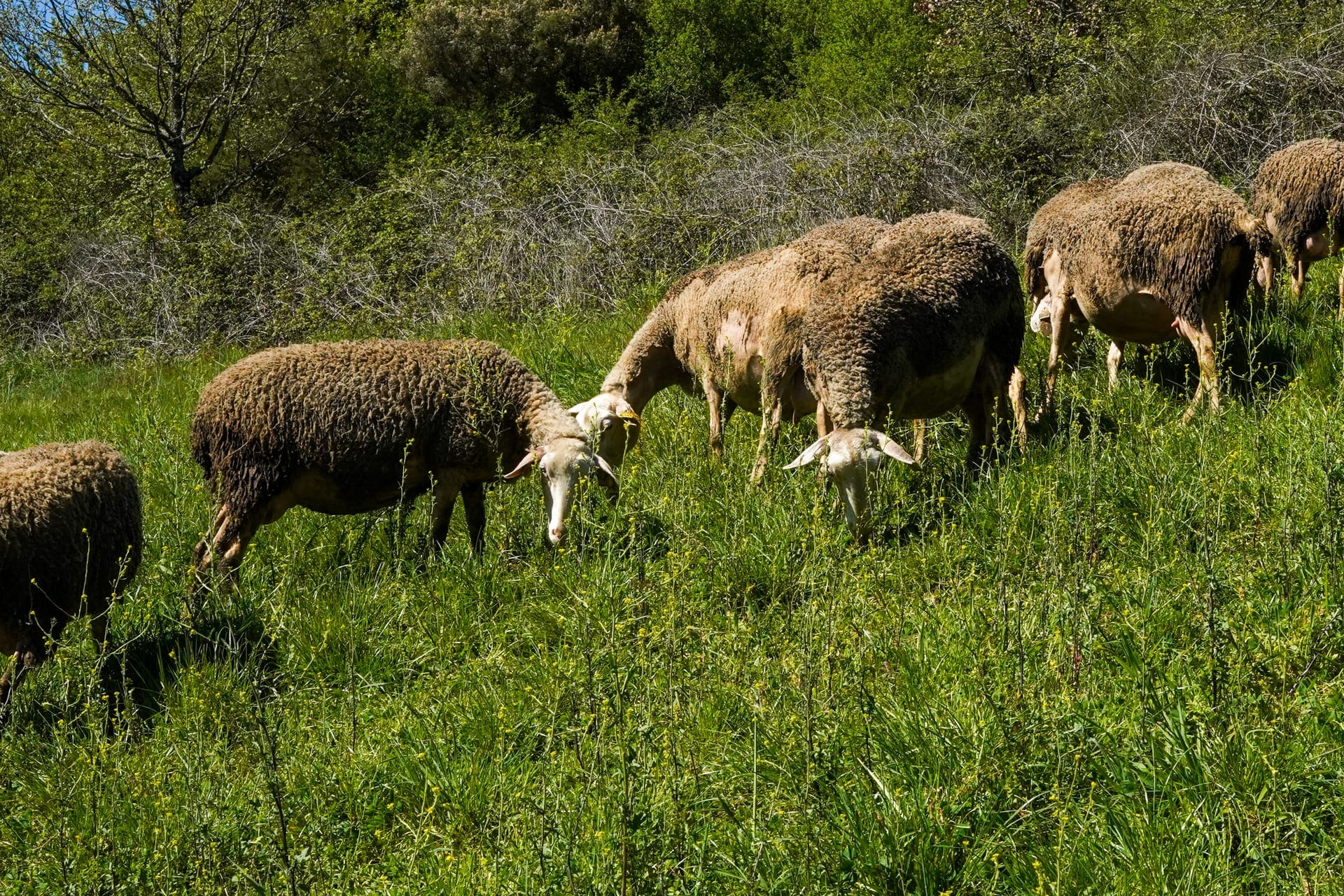
Partner shepherd of Roquefort Carles with his flock of Lacaune ewes
  • 13partner farms
  • J+0milk delivered the same day
  • 1927family maison

E

Every curdling of milk for Roquefort begins before the vat, in the sheepfolds of the Larzac and the Aveyron. There, the raw milk of Lacaune ewes is drawn then carried without delay, in order to preserve its native flora and its delicate aromas. At Roquefort Carles, thirteen partner farms deliver milk from the very same day, which radically changes the quality of the set in the vat.

This raw milk, never standardised by intense heat treatment, keeps the lactic bacteria naturally present. They will accompany the rennet, speed up or slow down curdling depending on the temperature, and lay down in the paste the first aromatic notes. It is here that much of the character of the future Roquefort loaf is already at play.

The family maison, founded in 1927 and now carried by the third generation in the same cellar, chooses to respect this living material rather than to constrain it. Curdling thus becomes a stage of listening, where the cheesemaker's gesture adjusts to a milk that is never quite the same from one season to the next.

Pillar II

The curdling gesture,
by hand, in the vat

§ 02 · CurdlingRennet & ferments
Cheesemaking gesture around the curdling of sheep's milk

The knack

When the milk
leaves the liquid

When the raw milk reaches the right temperature and the right acidity, the rennet is added in the vat. A few minutes are enough for coagulation to begin, and for the milk to set little by little into a supple, glossy curd, still bathed in whey.

The curdling of Roquefort milk is not a timed protocol: it is a reading, done by eye and by finger by the cheesemakers of the maison.

Milk maturation

Before renneting, the raw milk rests and ripens gently. The native lactic ferments become active, the acidity rises with precision, and the milk gets ready to receive the rennet. This waiting phase entirely determines the quality of the curdling to come, without any haste.

Renneting in the vat

The rennet is added, then the milk is left undisturbed. In a few minutes, the proteins knit together: this is coagulation. The curdling of milk for Roquefort becomes fully real here, in this silent passage from liquid to gel.

Reading the curd

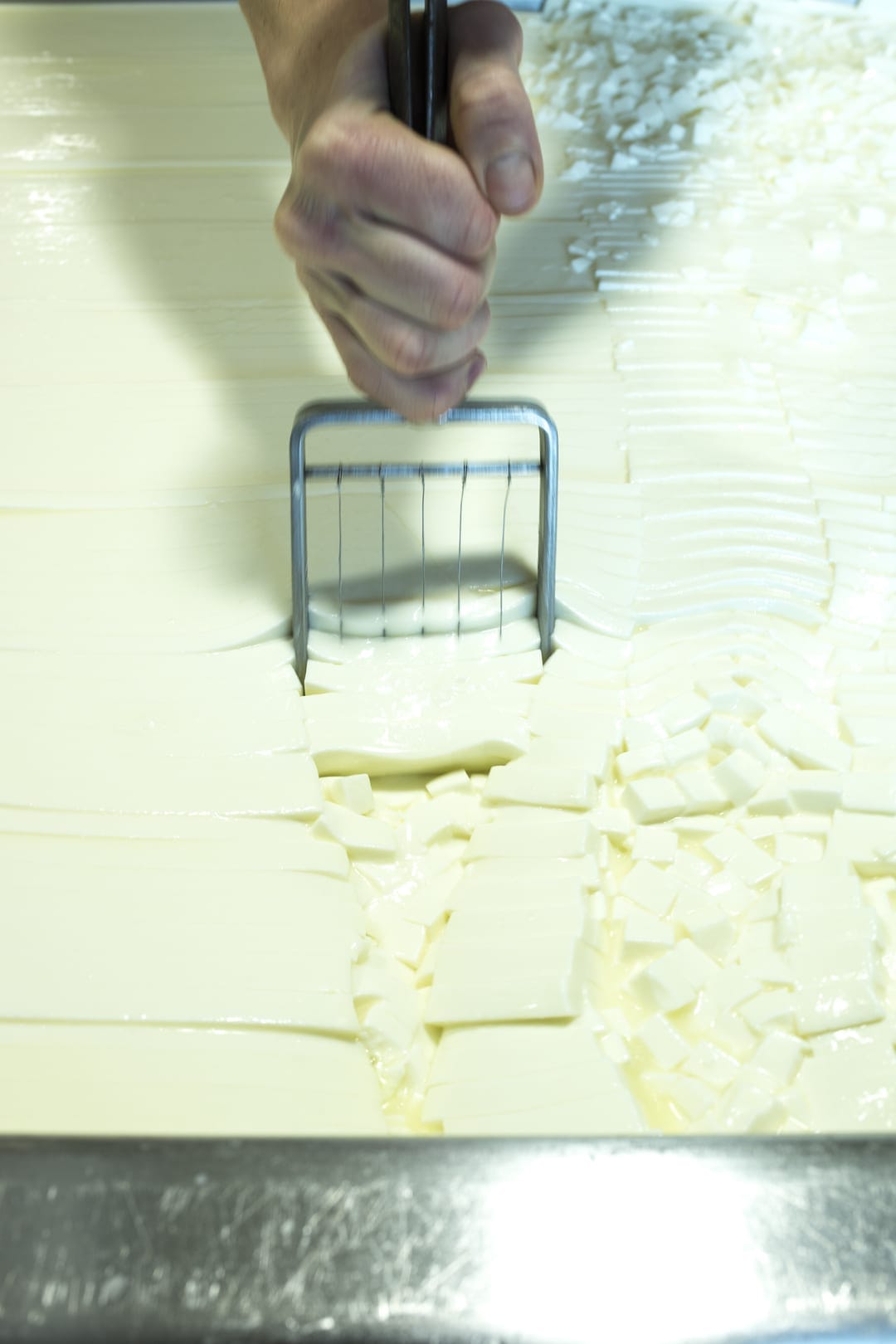
The cheesemaker comes to probe the vat, dips a finger, watches the clean cut of the curd. When the texture is right, he decides the moment for cutting. This gesture, handed down in the maison for three generations, is the soul of artisanal curdling.

Cheesemaker's hand in the vat where sheep's milk is curdled
Sheep's-milk curd ready to be cut
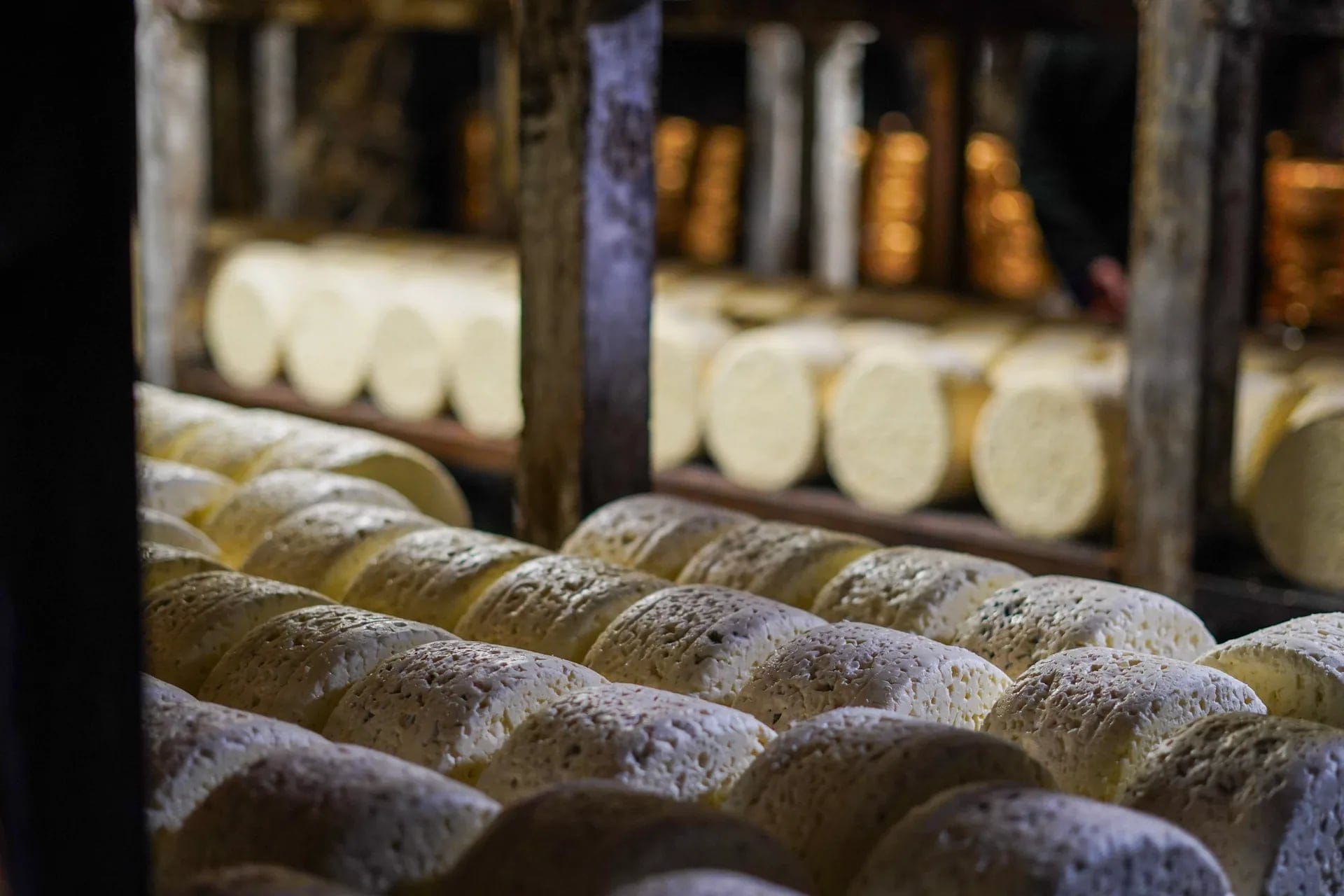
Oak board in the cellars of the Combalou
Milk curdling
is the silent promise of the Roquefort to come.
Maison Roquefort Carles

Pillar III

Penicillium roqueforti
seeded into the milk

§ 03 · CurdlingNoble mould
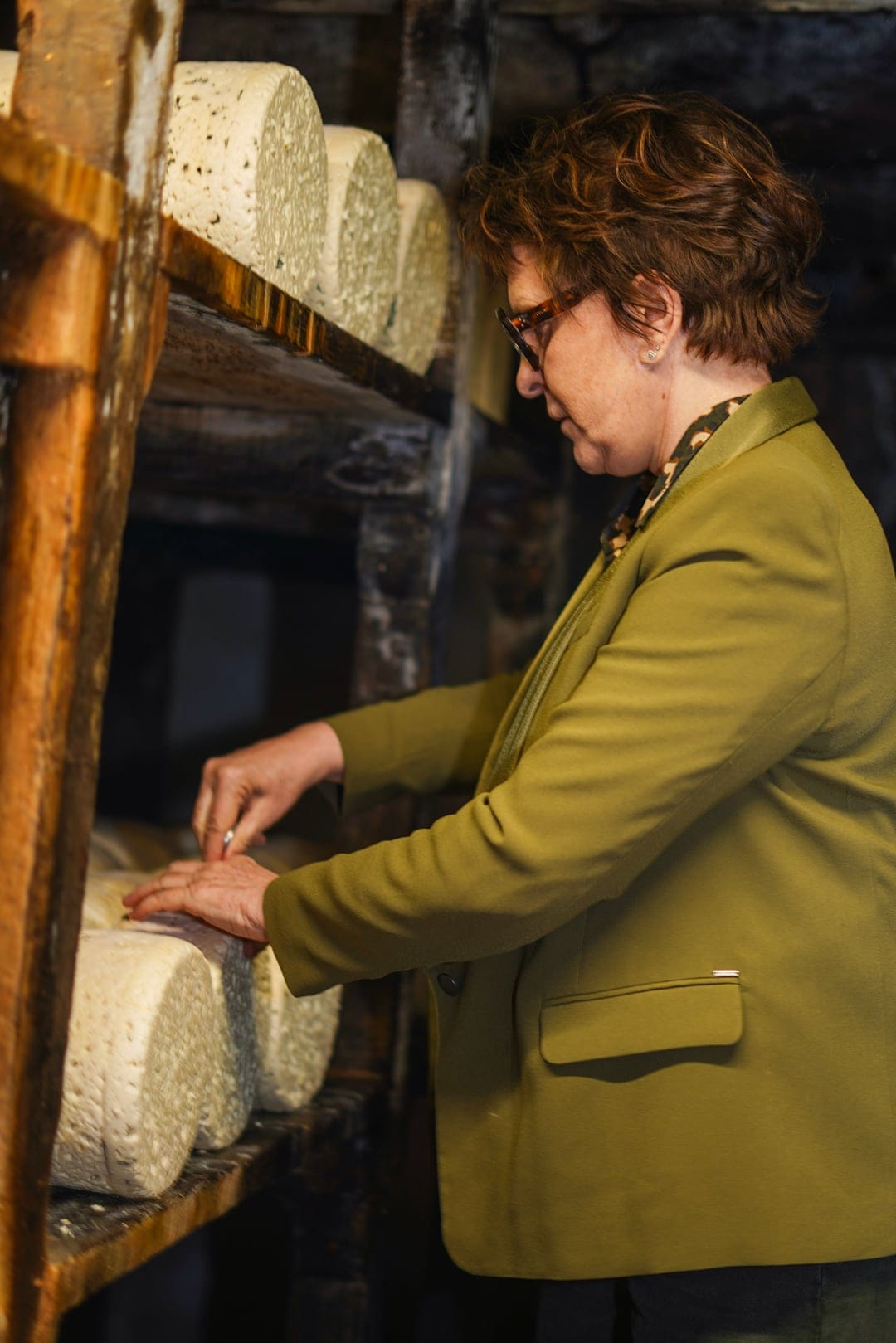
Oak boards in the natural cellars of the Combalou

Even before the rennet acts, Penicillium roqueforti is invited into the vat. Grown in-house on bread from the historic Amandine and Maxime strains, it blends into the milk to accompany the whole setting of the curd. This choice of early seeding is one of the signatures of Roquefort Carles: the noble mould is not a late addition, it is a travelling companion of the milk from the very first curdling.

In-house strains
2

Amandine and Maxime, grown on bread

Family maison
1927

Three generations in the same cellar

Milk collected
13

Partner farms, daily

Once the curd has set, it is gently cut to release the whey, then stirred without rushing the material. The gesture stays measured: pulling too hard on the curd risks closing the paste and slowing the future opening of the Roquefort in the cellar. The maison prefers a supple curd, one that can welcome salt, air and the Penicillium.

Next comes moulding by hand into the traditional forms. Each loaf is built with care, salted then needled to open channels where oxygen will reawaken the Penicillium dormant since curdling. It is at this precise moment that curdling fully becomes Roquefort, ready to descend into the cellars of the Combalou.

Curdling, the root of the Roquefort taste

The whole identity of an artisanal Roquefort is prepared at the moment of curdling: choice of raw sheep's milk, rennet dose, early seeding of the Penicillium, reading of the set. If one of these decisions drifts, even the most patient ageing will not be able to make up for it.

This is why Roquefort Carles takes care to preserve a wholly artisanal gesture, from the day's milk to moulding, before entrusting the loaves to the oak boards and the natural fleurinage of the cellars.

When the loaf of Roquefort finally leaves the workshop for the cellar, curdling is over, but its imprint goes on living in the paste throughout the traditional ageing.

From the day's milk to the needled loaf,
curdling holds the memory of the Roquefort.
Maison Roquefort Carles

Curdling: AOP tradition and the maison's signature

AOP tradition

A curdling
rooted in the AOP

Roquefort is protected by a Protected Designation of Origin that governs the origin of the sheep's milk, the processing area and the main principles of production. Milk curdling falls within these specifications, whose requirements the maison Carles has respected for nearly a century.

Roquefort AOP

The maison's signature

An artisanal gesture
upheld since 1927

At Roquefort Carles, curdling is not industrialised. It remains manual work, carried out in a cheese vat where one observes, touches, adjusts. Three generations have followed one another to hand down this gesture, without ever entrusting it to a machine.

Maison Carles, since 1927

The maison's key facts

The curdling of Roquefort
in a few key facts

1927
Family maison founded
3
Generations in the same cellar
13
Partner farms
2
In-house Penicillium strains

To go further

Explore the making
and ageing of Roquefort

Milk curdling is only a threshold. To understand the whole journey of the maison's artisanal Roquefort, continue reading toward our pages devoted to the milk, the Penicillium, the cellars and the ranges signed Carles.

Frequently asked questions

Curdling Roquefort milk,
what people ask us

What is milk curdling in the making of Roquefort?

Curdling is the stage during which raw sheep's milk turns into a semi-solid mass called curd, under the combined action of rennet and lactic ferments. It is the founding moment when the milk leaves its liquid state to become the base of the future Roquefort paste. Without well-controlled curdling, none of the following stages (moulding, salting, ageing) can produce a harmonious cheese.

Why is raw sheep's milk essential to the curdling of Roquefort?

The raw milk of Lacaune ewes brings a rich, living material, populated by a native microflora that takes part in curdling and in the development of aromas. At Roquefort Carles, this milk is delivered the same day by thirteen partner farms, which makes it possible to begin curdling on a fresh raw material, never standardised by heat treatment. The character of the future Roquefort is prepared here, right from the vat.

When is Penicillium roqueforti added to the milk?

Penicillium roqueforti, grown in-house on bread from the Amandine and Maxime strains, is seeded into the milk before curdling. It thus accompanies the whole setting of the curd and is later reawakened by the needling before ageing. This early integration ensures an even distribution of the noble mould throughout the paste.

How long does milk curdling take for Roquefort?

The curdling phase itself is generally counted in hours and depends on several parameters: milk temperature, rennet dose, natural acidity and season. At Roquefort Carles, the gesture remains artisanal, judged by eye and by touch by the cheesemakers rather than timed to the second, in order to respect the living material of the day's milk.

What becomes of the curd after curdling?

Once the curd has set, it is gently cut to release the whey, then stirred before being moulded by hand into the traditional forms. Next comes salting, then the needling that aerates the paste and reawakens the Penicillium. Finally, the loaves join the natural cellars of the Combalou for traditional ageing on oak boards.

Does curdling follow precise specifications for the Roquefort AOP?

Yes, Roquefort is protected by a Protected Designation of Origin that governs the origin of the milk, the production area and the main principles of the transformation, including the curdling phase. At Roquefort Carles, the family maison founded in 1927 places its work within this framework while perpetuating an artisanal savoir-faire handed down over three generations in the same cellar.

Discover the maison

Talk with the maison
about the curdling of our Roquefort

Would you like to know more about the curdling of Roquefort milk, visit the shop or ask your questions about our Convoitise and Élégance ranges? The team of the maison Carles answers you from Roquefort-sur-Soulzon, at the foot of the Combalou.