Roquefort-sur-Soulzon · Maison Carles

Roquefort cheese dairy
a family house since 1927

Behind the word dairy there is a place, a rock and a family. At Roquefort-sur-Soulzon, Maison Carles has been making its Roquefort by hand since 1927, from raw sheep's milk to the oak boards of the Combalou caves.

Chapter I · The house

A dairy at the foot of the Combalou

§ I · Roquefort dairySince 1927
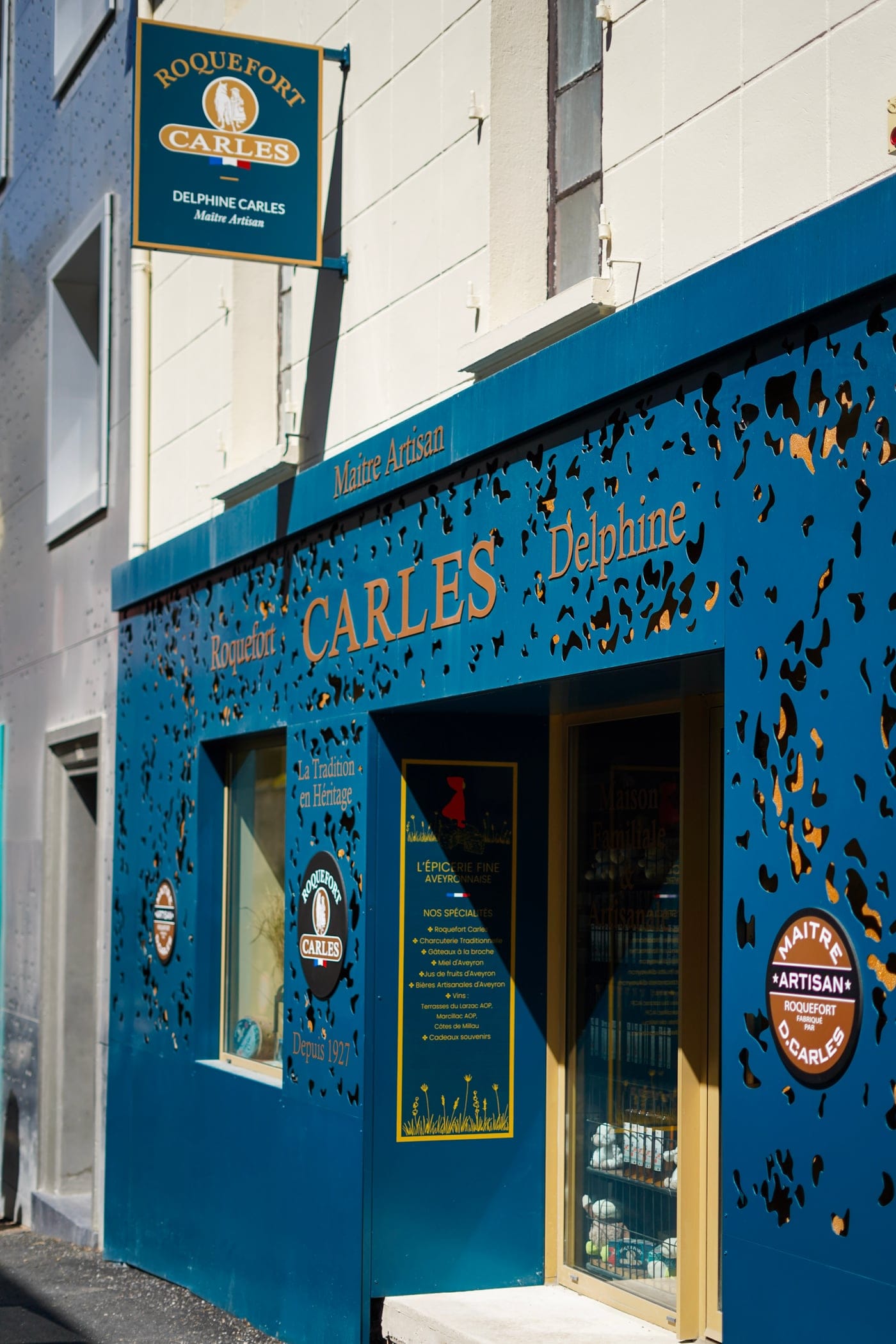
Blue frontage of the Roquefort Carles dairy shop, master artisan cheesemaker since 1927

A

A Roquefort dairy is not an interchangeable workshop. It is a house set upon a precise rock, that of the Combalou, whose fissures — the fleurines — breathe the coolness and humidity that the blue-veined paste needs. Maison Carles has been working here since 1927, in the same gallery, without ever moving its tool.

Three generations of the same family have followed one another here. The gestures have not been rewritten: the milk is still chosen, the curd still handled, the wheels still watched one by one. What an industrial line calls a process, the dairy calls a trade — and that trade is passed from hand to hand.

To follow this thread, the history of the family house tells how a Roquefort dairy has held its line for nearly a century, against every temptation to speed things up.

Chapter II · The trade

What is made,
every morning, by hand

§ II · Roquefort dairyMilk, ferment, hand

The milk

Thirteen partner farms deliver their milk on the very day of milking. This raw sheep's milk is never pasteurised: the dairy keeps its natural flora intact, because that is where the future aromas of the paste are already written.

The ferment

The house cultivates its own Penicillium roqueforti on bread, from two identified strains, Amandine and Maxime. A rare practice today, kept alive because it gives the dairy a blue veining and an aromatic signature that belong to no one else.

The hand

Moulding, salting, piercing, turning: everything is done by hand, wheel by wheel. No automatic line decides in place of the cheesemaker, whose eye and touch remain the only instruments that judge whether a paste is ready to go down into the cave.

Flock of ewes grazing the plateaus that supply the Carles dairy with milk
Wheels wrapped in foil, lined up in the Carles dairy
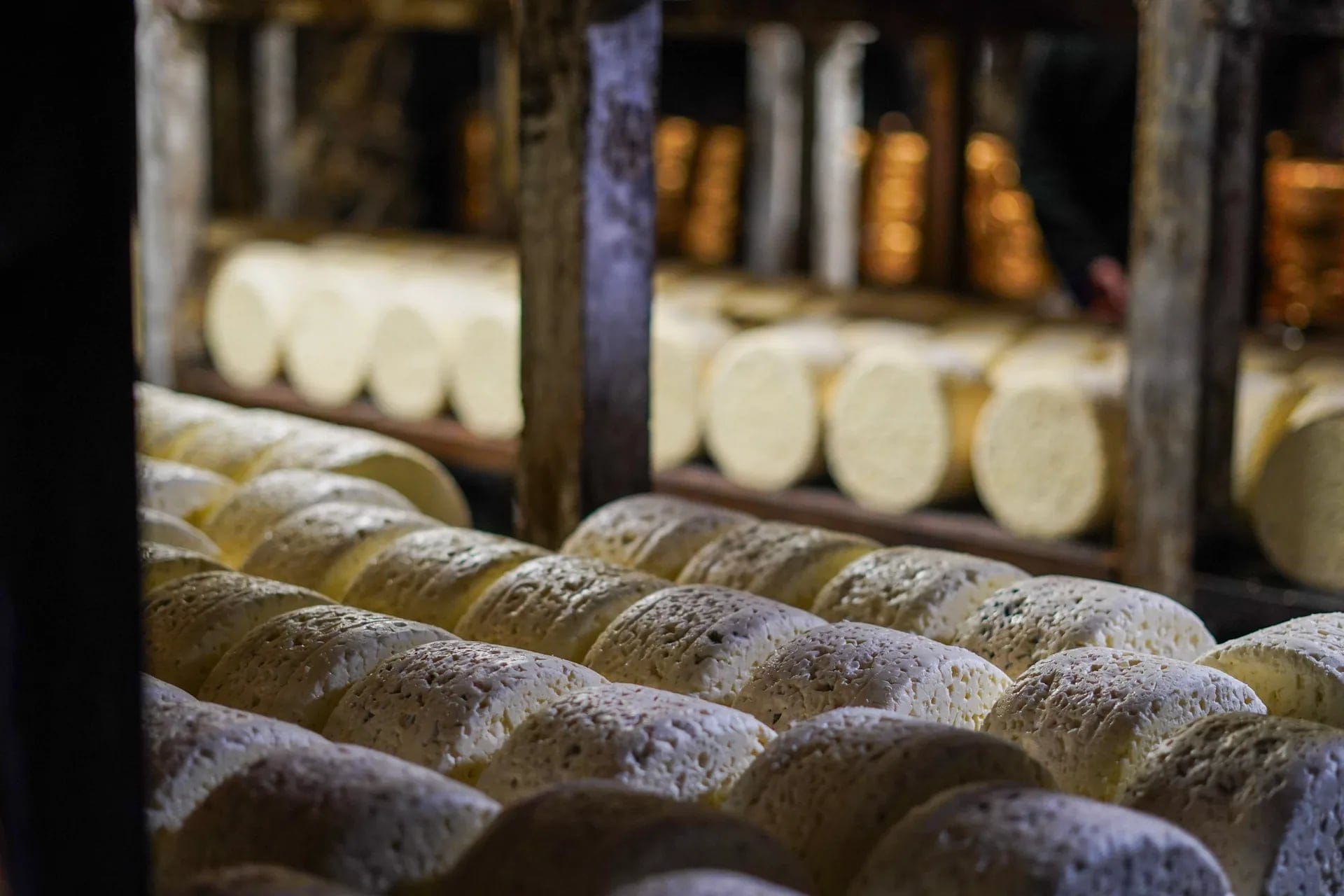
Rows of cheeses ageing on wooden boards in the traditional cave
A dairy is not a factory.
It is a place where someone still decides.
Maison Carles, cheesemakers since 1927

Chapter III · The path

From the milk to the wheel

§ III · Roquefort dairySix gestures

Everything at the dairy follows the same order, day after day. Nothing is skipped, nothing is accelerated: each stage prepares the next, and a shortcut taken in the morning would be paid for weeks later, down in the cave.

  1. Collection of the raw sheep's milk from thirteen partner farms, delivered on the day of milking.
  2. Curdling, then seeding with the house Penicillium roqueforti cultivated on bread.
  3. Hand moulding of the wheels, one by one, without an automated line.
  4. Dry salting and piercing, so that the air can reach the heart of the paste.
  5. Descent into the natural caves of the Combalou, onto the oak boards.
  6. Ageing under the eye of the affineur, until the house judges the wheel balanced.

Each of these gestures is detailed on our page devoted to production and ageing, and the cave work is taken further in traditional ageing.

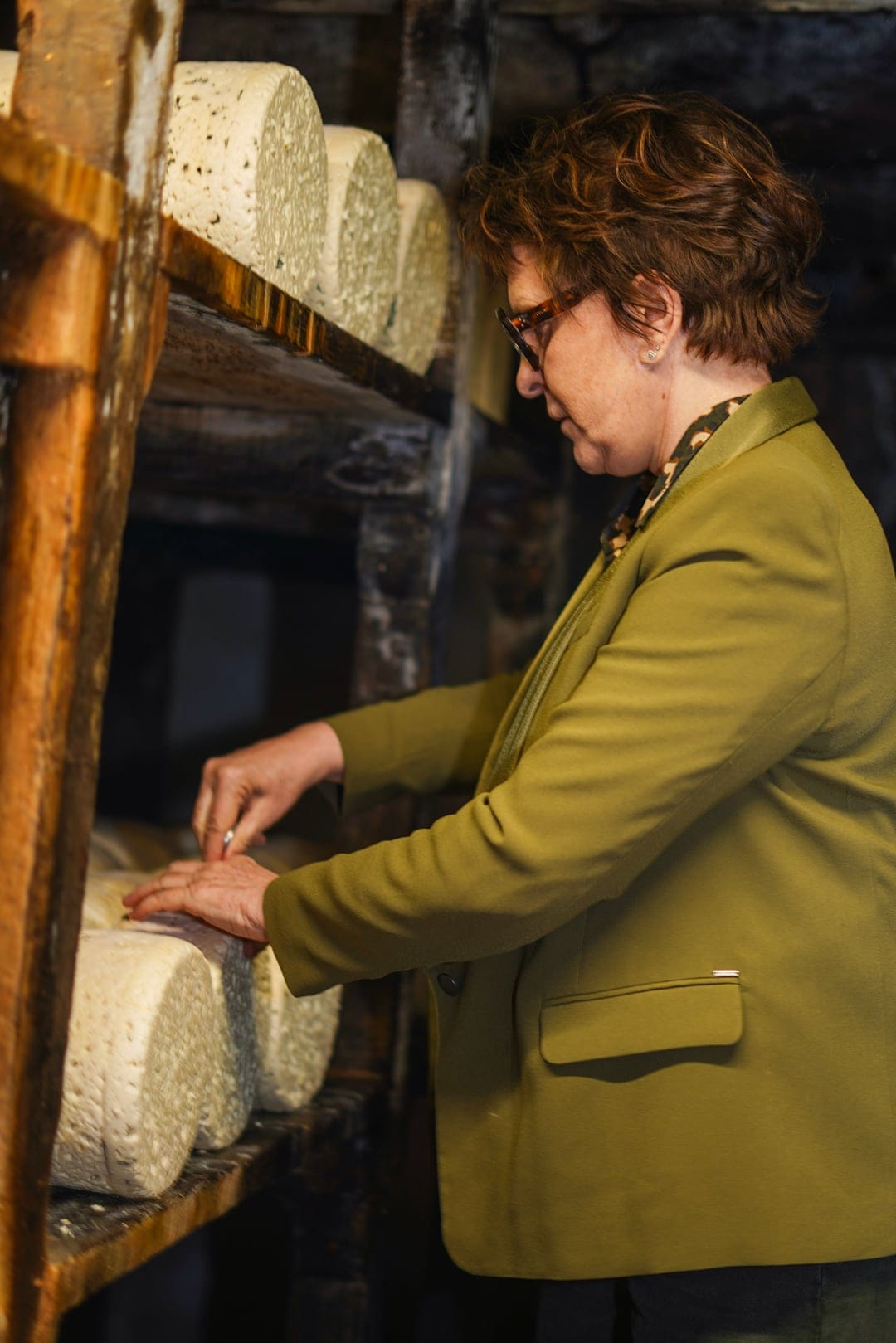
Cheesemaker inspecting wheels ageing on wooden shelves at the Carles dairy

Chapter IV · The cave

The dairy ends
inside a mountain

§ IV · Roquefort dairyCombalou
Wheels ageing on oak shelving in the natural cave of the Carles dairy

No cooling unit replaces what the rock does. The fleurines, those natural fissures of the Combalou, let the outside coolness and the inside humidity circulate; the dairy does not control this climate, it tunes itself to it. That is why a Roquefort cannot be aged anywhere else.

House founded in
1927

The same cave of the Combalou, never relocated.

Generations
3

One family, one gesture, passed from hand to hand.

Partner farms
13

Milk delivered on the very day of milking.

Focus · Why oak, and not steel

Oak breathes with the cave: it absorbs the humidity, releases it slowly and accompanies the natural rind of the wheel. Stainless steel would simply return a uniform cold, without dialogue. The dairy has kept the wood, because the wood keeps the cheese.

This is the whole difference between an artisan dairy and a generic ageing site: here, the wheel leaves the very cave that saw it take shape.

Chapter V · The ranges

Two readings of one savoir-faire

§ V · Roquefort dairyConvoitise & Élégance
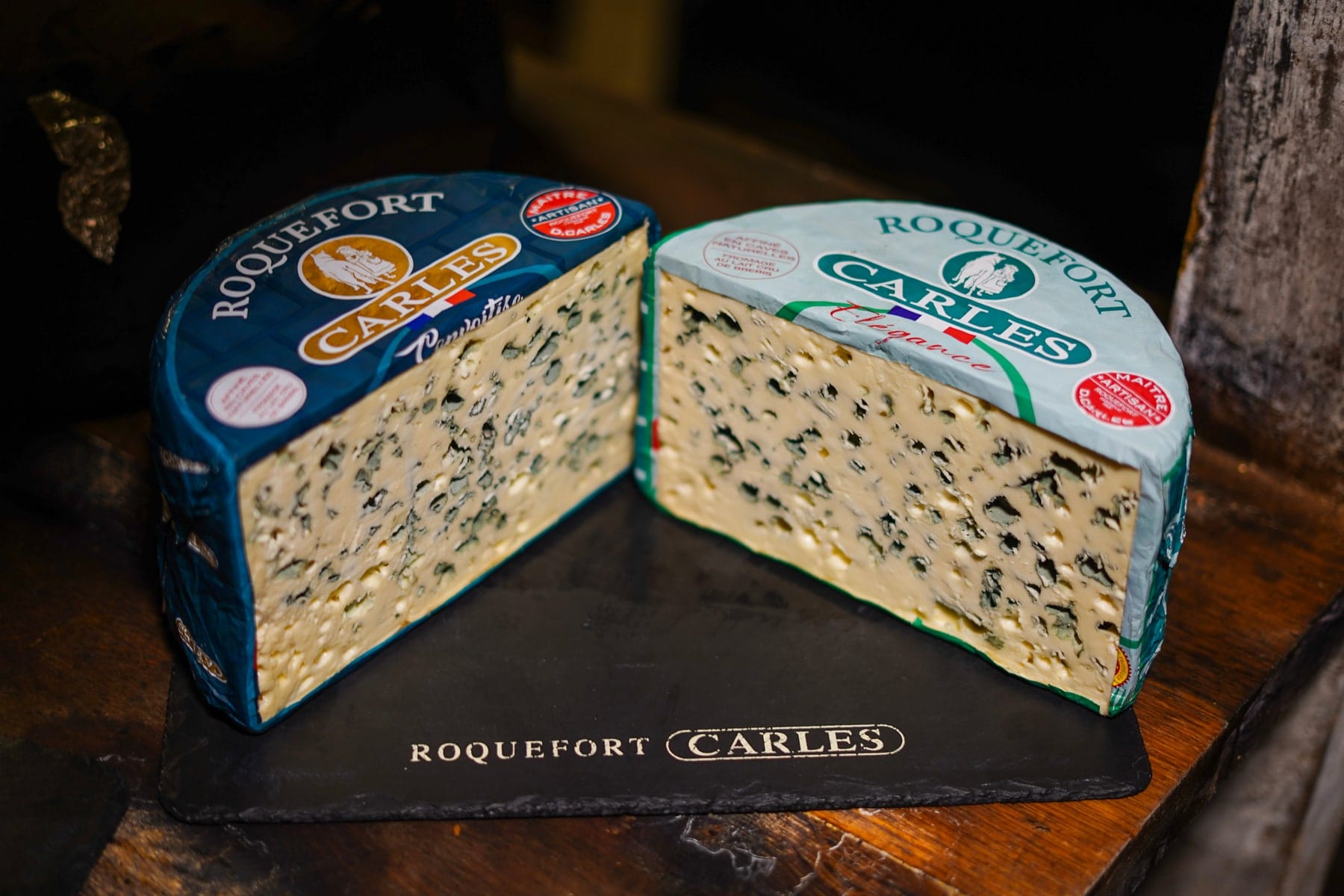
Two wheels of Roquefort Carles cut open on an engraved slate, showing the blue veining

Convoitise

Profile
The traditional Roquefort of the house: forthright, saline, faithful to the 1927 method.
At the table
The signature of an end-of-meal board, alongside assertive sweet wines and full-bodied reds.
Discover
The Convoitise range

Élégance

Profile
Wheels selected and followed for longer: more melting, more nuanced, without losing the house signature.
At the table
Prized by epicureans and starred chefs, for a more contemplative tasting.
Discover
The Élégance range

Chapter VI · The shop

Pushing open the dairy door

§ VI · Roquefort dairyRoquefort-sur-Soulzon
Inside the Carles dairy shop, shelves of regional produce and a slate announcing the Roquefort

The dairy is not a closed workshop. Its shop opens onto the village of Roquefort-sur-Soulzon, at the foot of the rock, and welcomes anyone who wants to see where the wheels come from before tasting them.

  • Shop and cave: 6 avenue de Lauras, 12250 Roquefort-sur-Soulzon
  • Open Monday to Friday, 8.15am to 5.30pm
  • Convoitise and Élégance ranges, straight from the ageing cave

Those who cannot come can find the same wheels in the Roquefort Carles shop, or write to the house directly through the contact page.

Frequently asked questions

The Roquefort dairy,
answered plainly

01.

What sets an artisan Roquefort cheese dairy apart?

An artisan Roquefort dairy works with raw sheep's milk delivered the very day it is milked, seeds the curd with its own Penicillium roqueforti and entrusts the ageing to the natural caves of the Combalou, on oak boards. At Carles, every wheel is still made by hand, with no standardisation, no artificial atmosphere and no pace dictated by an industrial calendar.

02.

How long has the Carles dairy been in operation?

Maison Carles was founded in 1927 at Roquefort-sur-Soulzon and has worked in the same Combalou cave ever since, never moving its workshop. Three generations of the same family have followed one another there, passing on the same gestures, the same eye for the paste and the same demands on the choice of milk.

03.

Where does the milk worked by the dairy come from?

The milk comes from thirteen partner farms within the Roquefort area, where the ewes graze the causse plateaus. This raw sheep's milk reaches the dairy on the day of milking: that freshness preserves the natural flora of the milk, and with it the aromatic richness of the Roquefort once aged.

04.

Does the dairy really cultivate its own ferment?

Yes. Roquefort Carles cultivates its house Penicillium roqueforti on bread, the old way, from two strains identified under the names Amandine and Maxime. This now rare practice gives the blue-green veining its own aromatic signature and immediately sets the dairy’s paste apart from those made with commercial ferments.

05.

Can the dairy and its ageing cave be visited?

The dairy shop welcomes visitors at 6 avenue de Lauras, Roquefort-sur-Soulzon, Monday to Friday from 8.15am to 5.30pm. There you can discover the Convoitise and Élégance ranges, the world of the house, and reach the natural caves where the wheels rest on their oak boards.

06.

Which ranges does the dairy offer?

The dairy offers two readings of one savoir-faire: Convoitise, the traditional Roquefort of the house, forthright and assertive; Élégance, a selection of wheels followed for longer, more melting, prized by epicureans and starred chefs. Same cave, same wood, same house Penicillium — only the finish changes.

Talk with the house

Come and see
where the Roquefort is made

A question about the dairy, a visit to Roquefort-sur-Soulzon, an order for a restaurant or a table project? The team answers from the shop, 6 avenue de Lauras, Monday to Friday from 8.15am to 5.30pm.