The notebook · Cave craft
Cheese affineur: what does the job really involve?
The affineur raises a young cheese to maturity. A portrait of the craft, and the example of a Roquefort cave.
The notebook · Cave craft
The affineur raises a young cheese to maturity. A portrait of the craft, and the example of a Roquefort cave.
Cheesemaker, cheesemonger, affineur: these are often confused, yet they are different jobs.
We define the affineur, the daily gestures, the skills and paths, then the Roquefort case. For cave work in detail, see our page on Roquefort making and ageing.
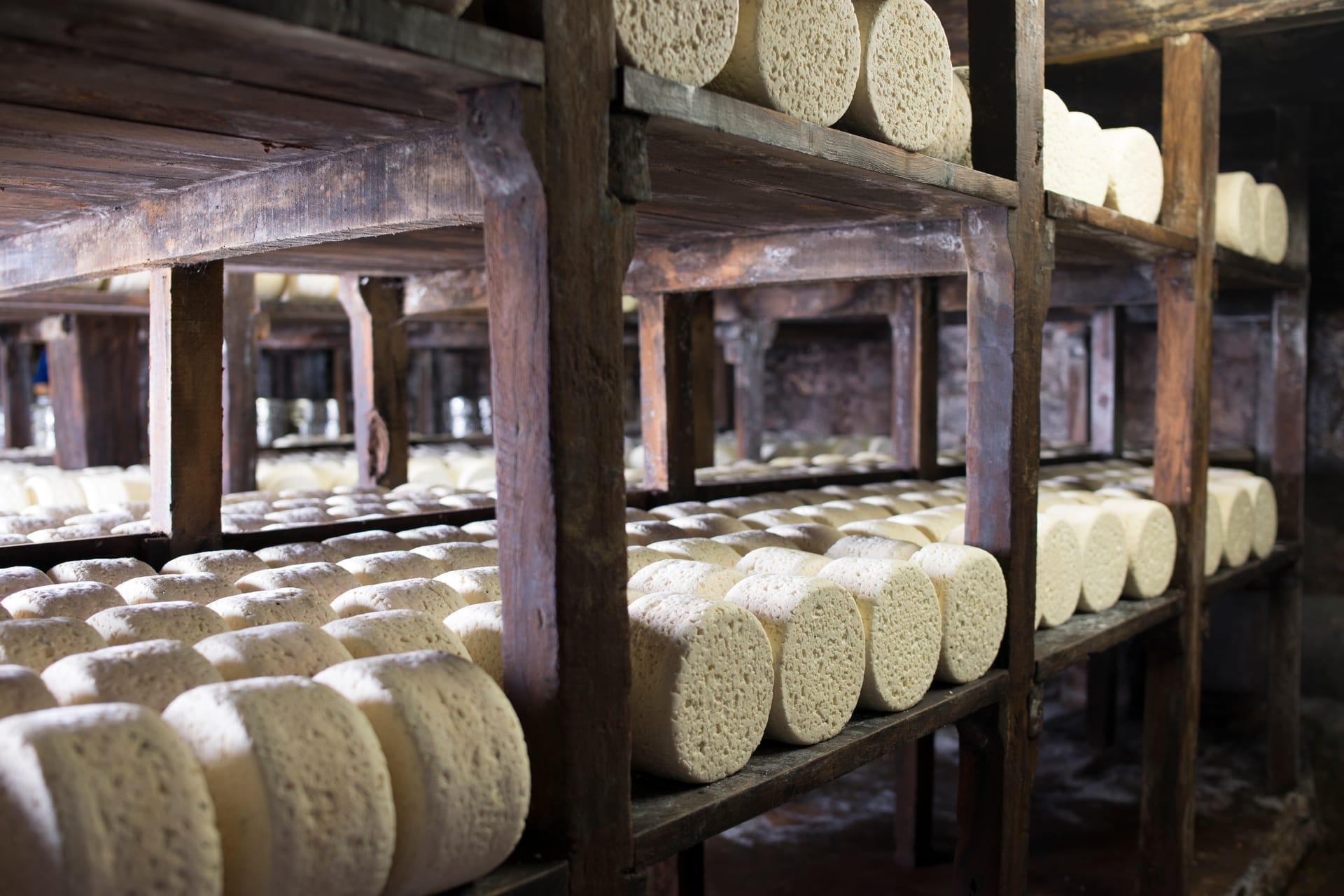
A cheese affineur raises young cheeses to maturity in a cave, turning, brushing, washing or piercing them while managing temperature, humidity and air. In Roquefort, the craft happens in natural caves ventilated by fleurines, with Penicillium roqueforti; at Maison Carles, three generations have worked in the same cave since 1927.
Chapter I
Ageing means guiding a young cheese until it fully expresses its character.
The affineur receives freshly made cheeses and gives them the conditions and care they need to mature.
They manage the cave, the care and the release date, shaping the final expression of each cheese.
Roles often overlap, but each has its core skill.
Time, temperature, humidity and microbial flora all work at once, and the affineur steers them.
It is a job of attention more than patience alone.
Chapter II
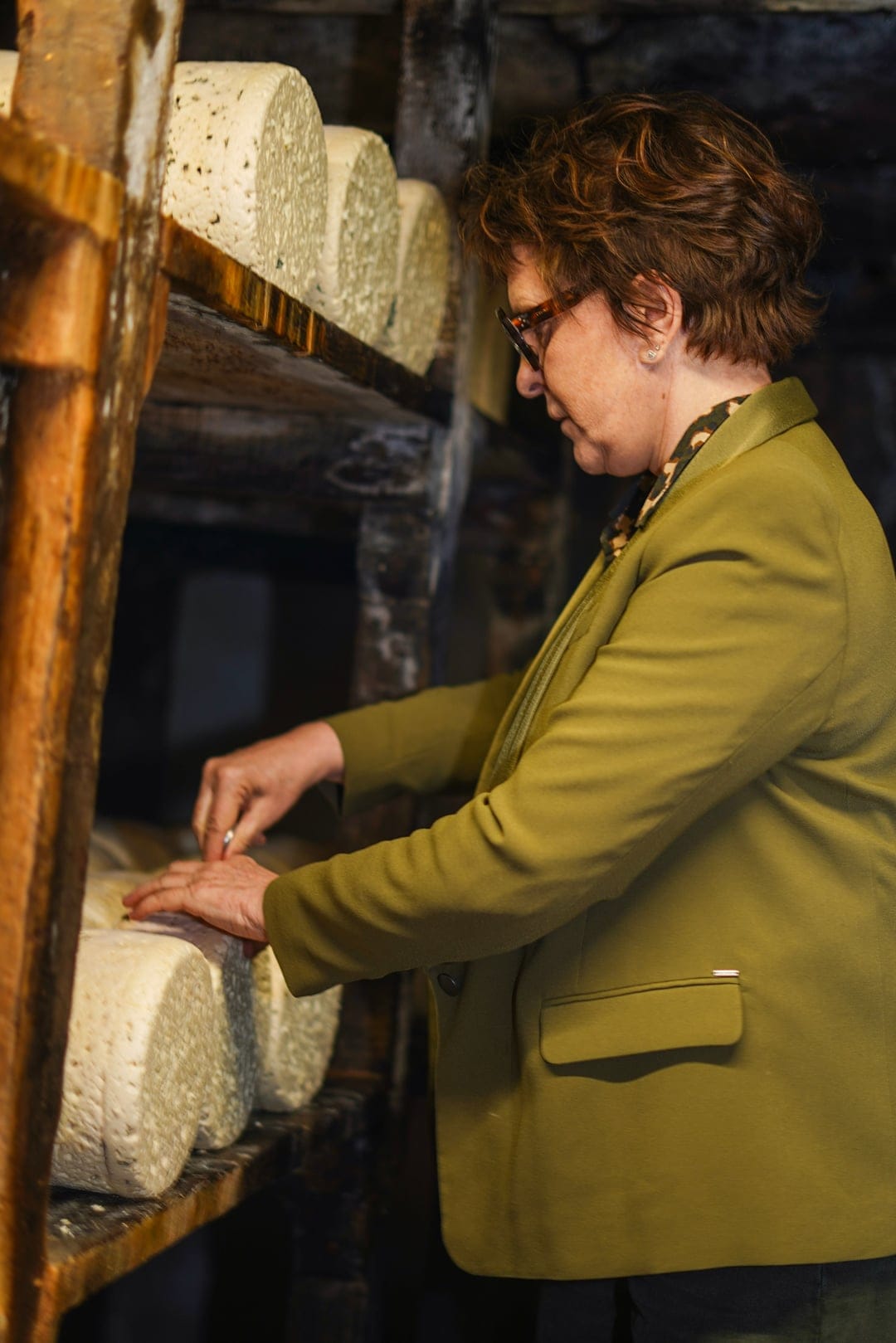
Each day begins by reading the cave: air, walls, humidity, temperature.
Whether the room is regulated or natural, the affineur’s eye decides.
Touch, rind and a core sample tell the affineur when a cheese is ready.
A calendar gives a minimum; the cheese gives the answer.
Each family of cheese calls for its own care.
Turned and brushed to control the rind.
Rubbed with brine for a supple, fragrant rind.
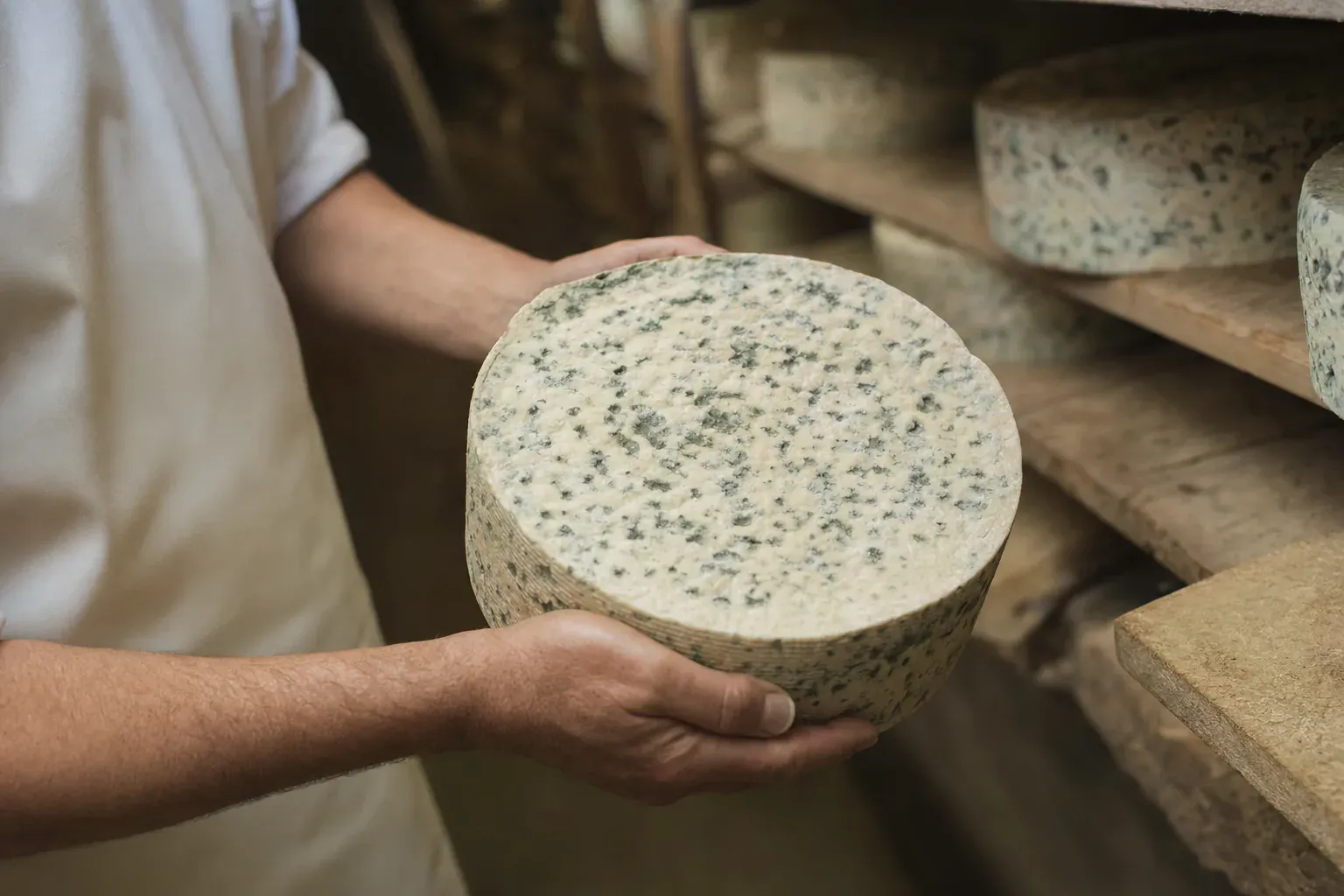
Pierced so air reaches the heart and the blue can grow.
Patience, a keen nose, strict hygiene and a taste for passing knowledge on.
Chapter III
Training, apprenticeship and family all lead to the craft.
The French CAP crémier-fromager is a common entry point, often followed by apprenticeship.
What matters most is time spent in a cave beside someone experienced.
The craft is learnt alongside those who came before.
In family houses, it passes down over generations in the same cave.
A cave is not understood in one season.
Chapter IV
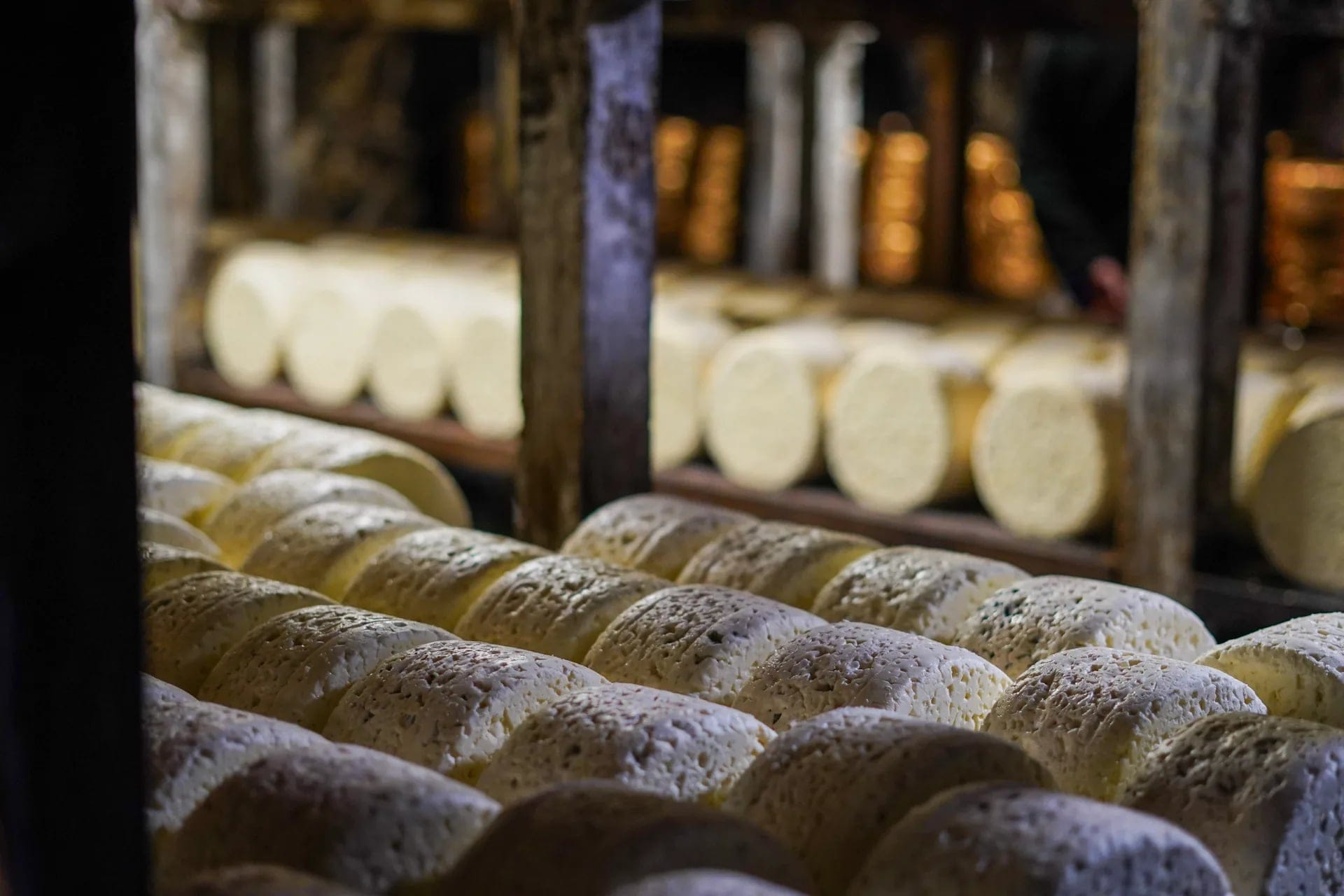
The Roquefort affineur works in the Combalou caves, ventilated by the fleurines, working with the climate the rock provides.
Key stages are summarised below; see Roquefort making and ageing and Roquefort making steps.
On time in the cave, see Roquefort ageing time.
We age on oak boards and grow our own Penicillium strains, “Amandine” and “Maxime”.
Learn more about Penicillium roqueforti.
Chapter V
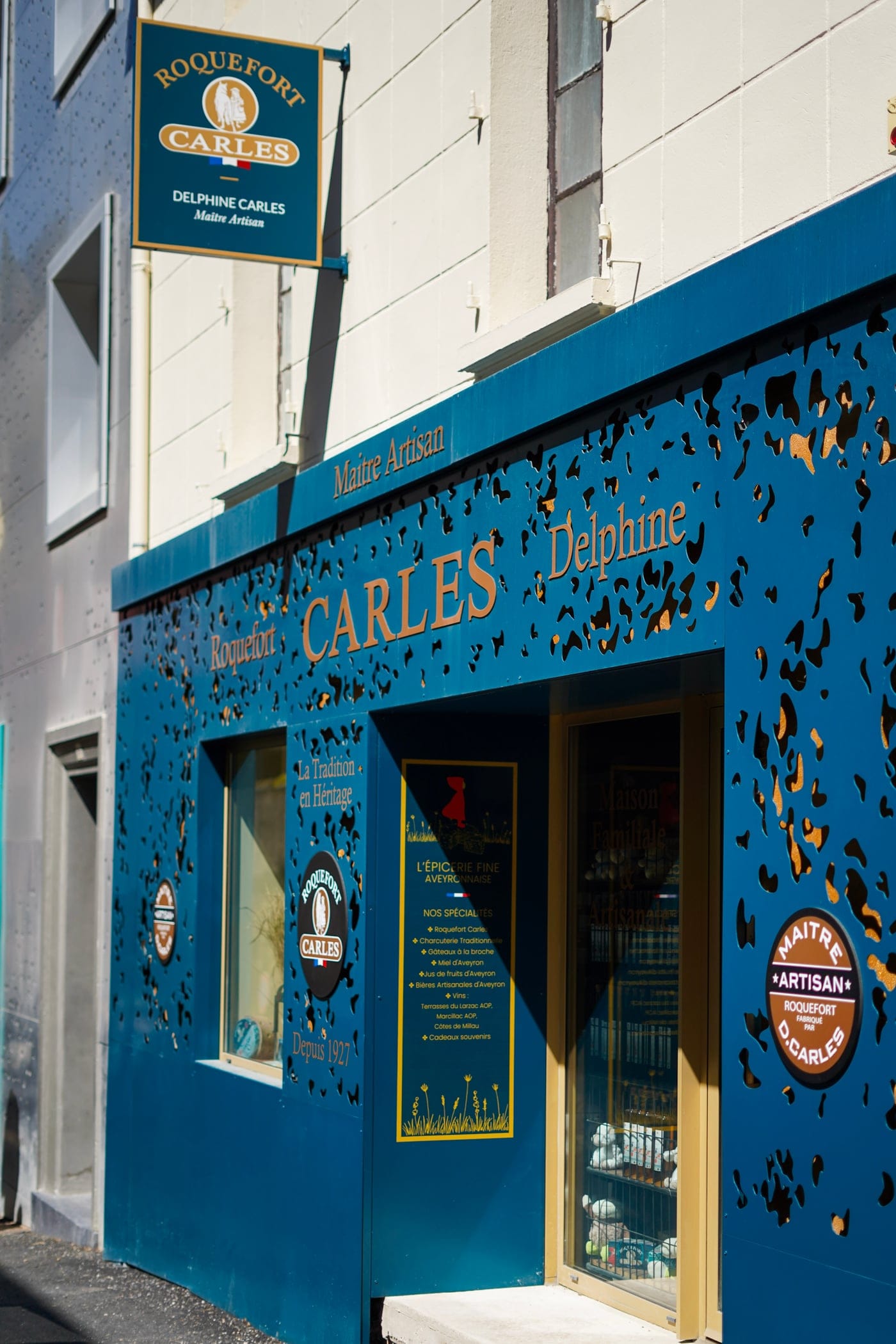
Founded in 1927 by François Carles, then Jacques and Delphine Carles: three affineurs, one cave.
Daily milk from thirteen partner farms, cheese made by hand.
Read our story.
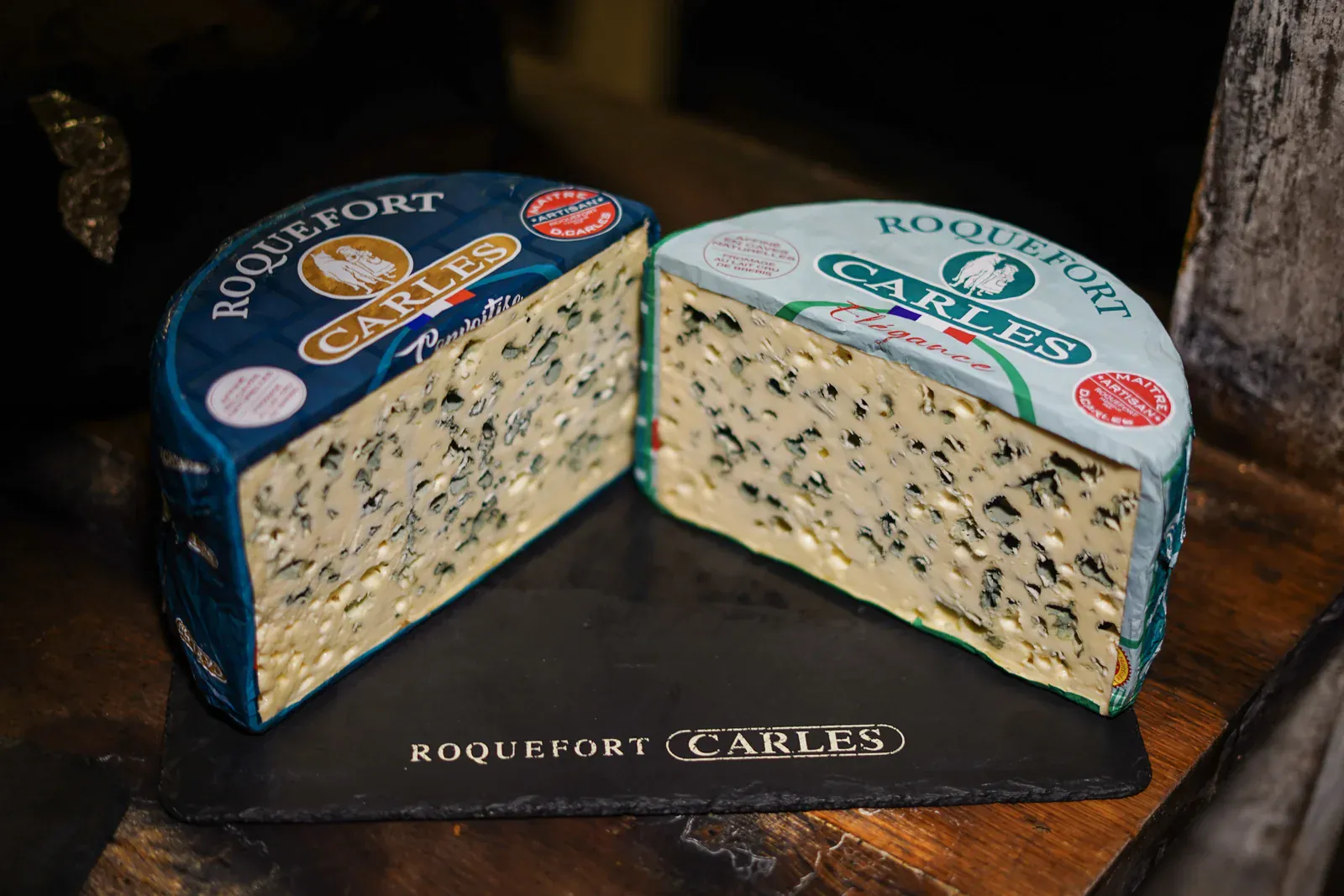
Two expressions of one craft, distinguished by the house-grown strain.
Frank and generous.
Subtler, from the “Maxime” strain.
FAQ
01.
The cheesemonger selects and sells; the affineur raises young cheeses to maturity in a cave.
02.
From weeks to many months depending on the cheese. For Roquefort, see our page on ageing time.
03.
Not always. At our house, making and ageing happen under one roof.
04.
Yes: our shop on avenue de Lauras is open Monday to Friday, 8:15 am to 5:30 pm. See also our cave visit guide.
05.
Patience, a keen nose and palate, strict hygiene and a will to learn.
06.
It happens in natural caves ventilated by fleurines, with Penicillium roqueforti.
In closing
The affineur makes cheese mature, with constant attention to air, humidity and flora.
See our cave work, then taste the result.
Read also
The craft of the fromager affineur makes full sense when you follow a Roquefort from milk to cave.