
Carles · The Roquefort Journal

Mild or strong Roquefort?
Understanding the intensity of an ewe’s-milk blue and choosing yours

Bite, salt, creaminess, blue veining: “mild” and “strong” hide several sensations. Here is how to read them, where they come from, and how to choose your Roquefort.
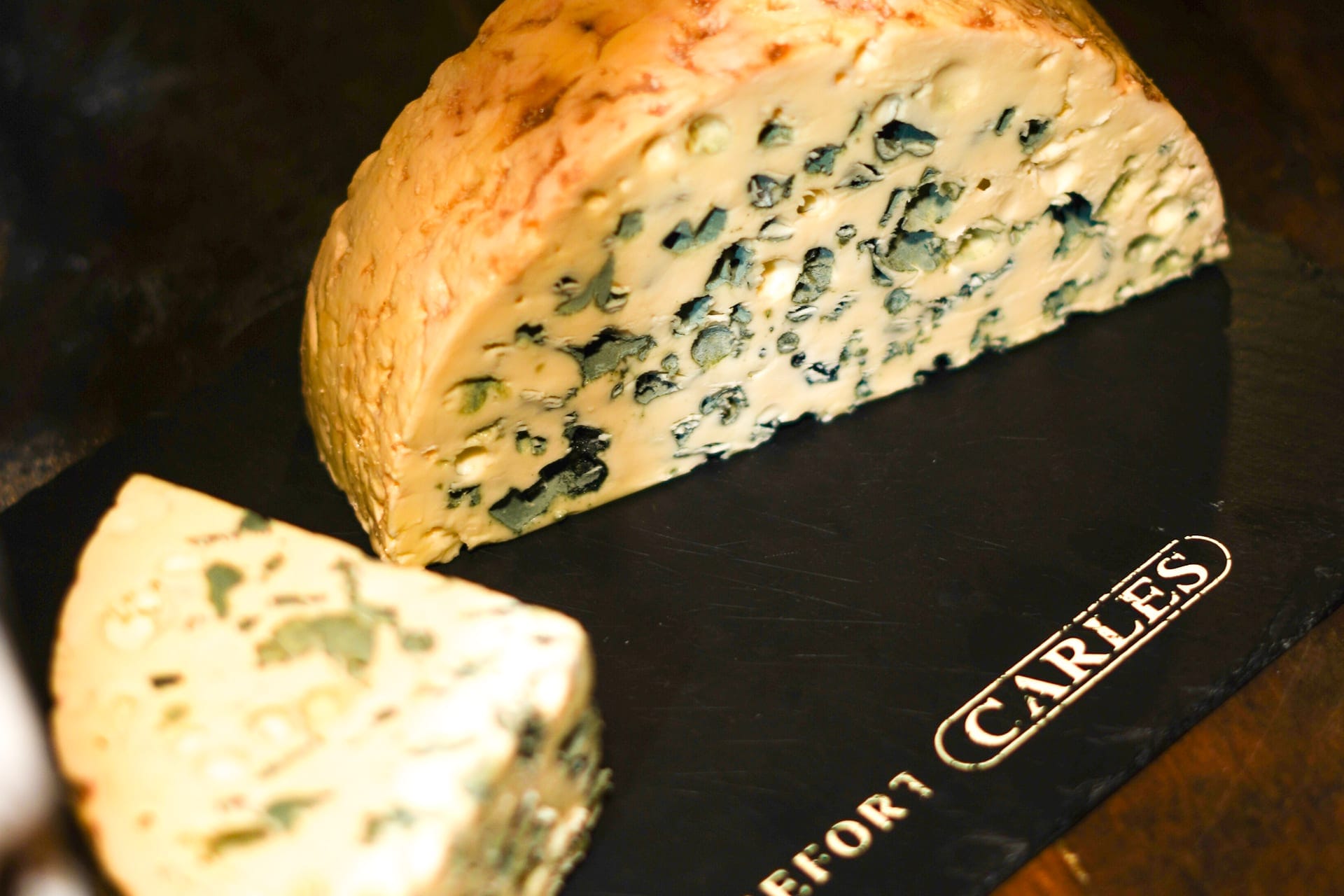
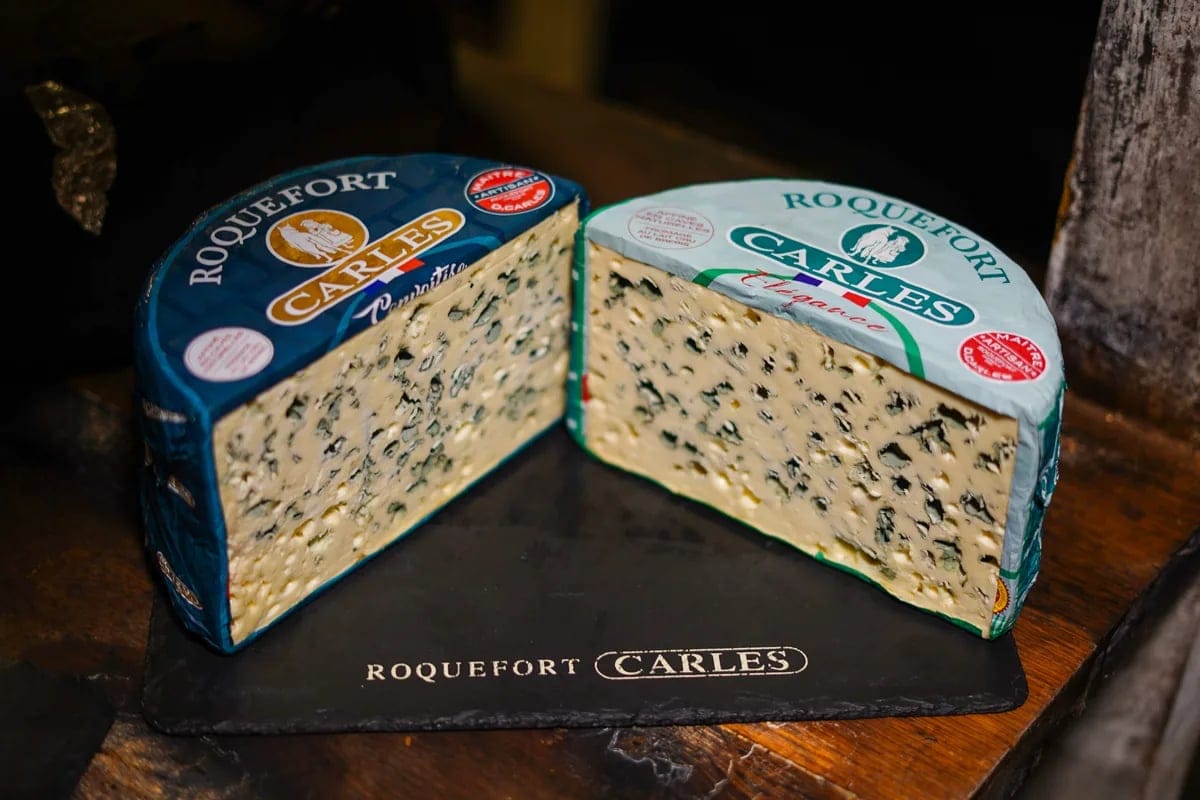
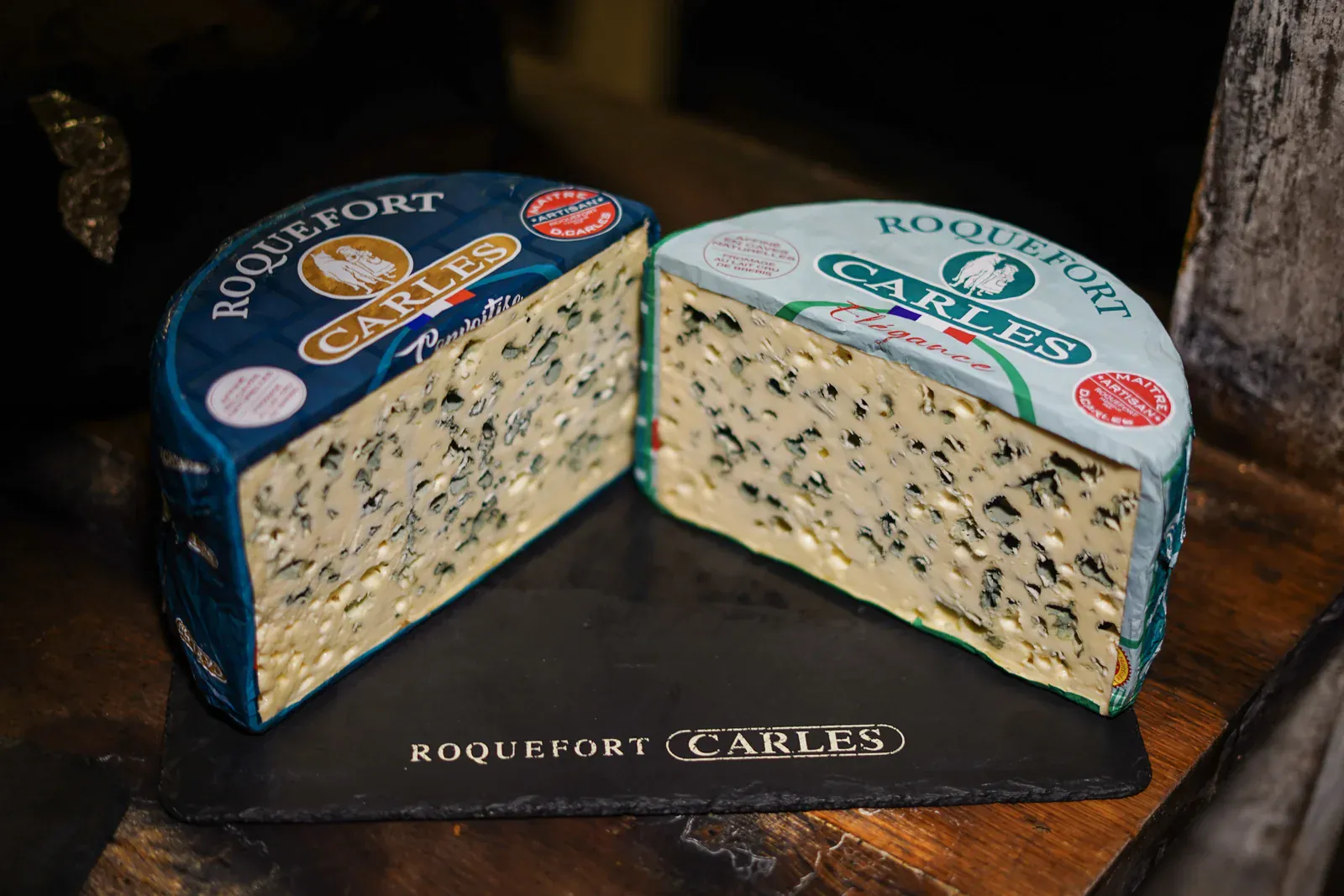
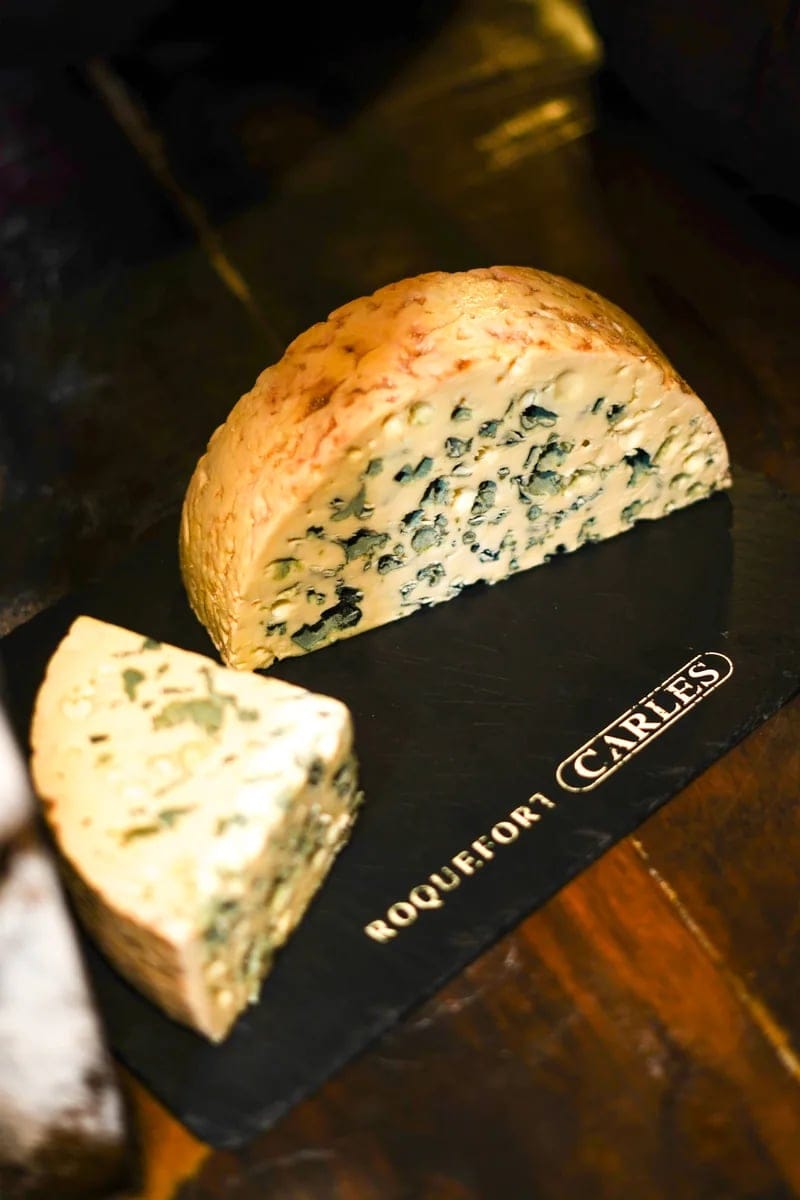
A cut wheel of Roquefort Carles on black slate, showing its blue-veined paste

The essentials

Mild or strong Roquefort, in short

Roquefort intensity blends salt, bite, richness and texture; more blue does not always mean stronger. It depends on the raw ewe’s milk, the Penicillium strain, ripening and where in the loaf you cut, and serving temperature changes it again. Choose a creamy, delicate profile (Élégance) to discover or cook, a bolder one (Convoitise) for a connoisseur’s board.

One name, Roquefort, yet very different sensations.

A living cheese, Roquefort varies with the house, the loaf, the cut and the moment it is served.

Since 1927, our family house has helped people read a Roquefort and choose their own.

Chapter I · Vocabulary

What “mild” and “strong” mean in a Roquefort

§ 01 · SensationsTelling them apart
Two halves of Roquefort Carles on an engraved slate, creamy paste veined with blue

“Strong” usually means bite, “mild” a melting paste — but on the palate these impressions overlap.

Bite, salt, richness: three sensations often confused

Salt comes first, bite later from the mould working on fats, and the richness of ewe’s milk rounds it all off.

Creamy, soft, crumbly: texture matters as much as taste

A creamy paste feels milder; a crumblier one releases flavour in bursts.

Blue veining: does more blue mean stronger?

Not necessarily: strain, ripening, salt and texture matter as much. Taste before judging.

Chapter II · Origins

Where a Roquefort’s
intensity comes from

§ 02 · Meadow to cellarFour levers
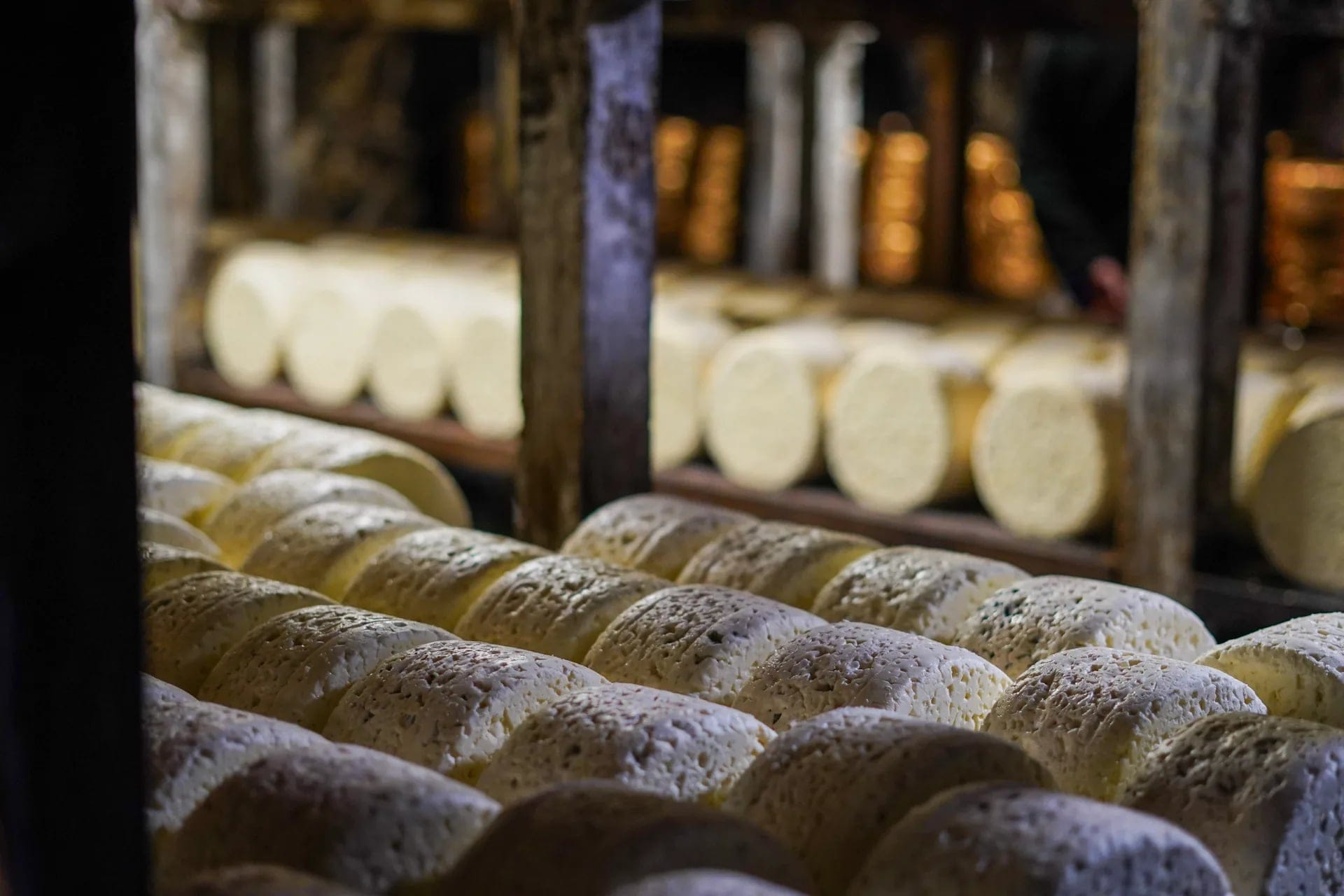
Rows of Roquefort ripening on wooden racks in a natural Combalou cellar

Intensity is built step by step, from meadow to cellar.

Raw ewe’s milk

Raw milk from 13 partner farms gives depth that varies with the seasons.

Raw ewe’s milk

Ripening time

Longer ripening concentrates aromas; shorter keeps a milky freshness.

Ripening time

Oak ripening

Oak boards support a slow, even evolution of the paste.

Oak ripening

Intensity is not decreed in the cellar.
It is guided, loaf after loaf.
Maison Carles · Three generations

Chapter III · The loaf

Within one loaf, more and less intense zones

§ 03 · Core & edgeA palette

A Roquefort loaf is not uniform — and that is part of its charm.

Core and edge

The core is creamier and rounder; the edge firmer and saltier.

Why the cut changes the tasting

A wedge from core to rind gives everyone the full range.

See our guide on how to taste Roquefort.

Two Roquefort Carles loaves cut in half, showing veining from core to edge

Chapter IV · Serving

Serving temperature: softening or waking up a Roquefort

§ 04 · At the tableCold, then time

Too cold, a Roquefort seems closed and salty — not stronger, just silent.

Take it out at least an hour before serving: the paste softens and the aromas open.

Read about Roquefort storage temperature.

Cellar tip · The two-bite test

Taste the same piece cold, then rested: the second bite is rounder and longer.

Too cold, a Roquefort stays silent;
tempered, it tells of its cellar.
Cellar notebook, Maison Carles

Chapter V · Uses

Mild or strong:
which Roquefort for which use?

§ 05 · The right momentTable, board, kitchen

No good or bad Roquefort — only ones better suited to a moment.

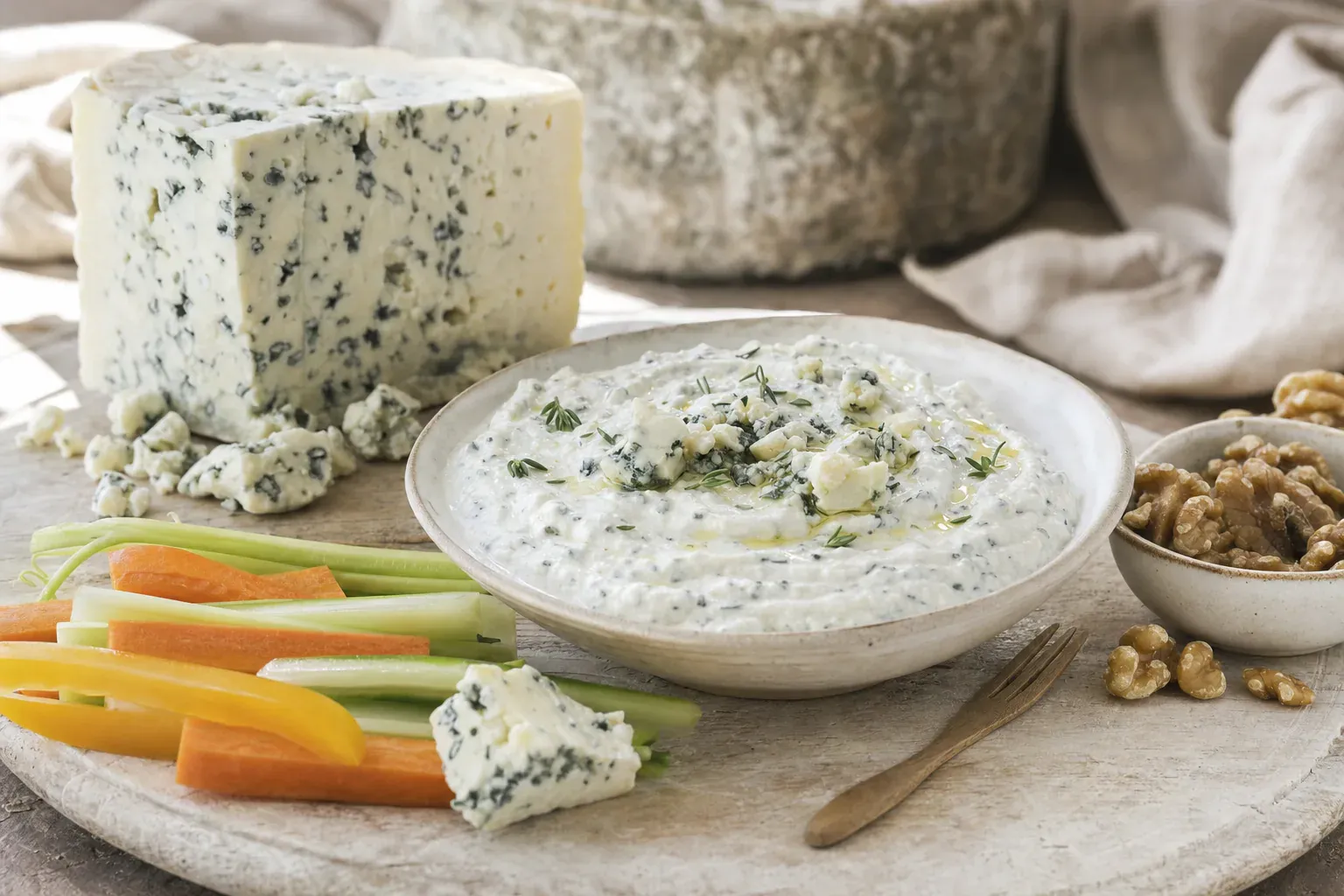
Illustration of a spreadable Roquefort cream, where the blue’s intensity softens

Mild or strong, the choice depends on the moment.

Chapter VI · Our ranges

Convoitise and Élégance: two characters for two moods

§ 06 · The houseTwo readings

Since 1927, over 3 generations, one craft yields two ranges.

Roquefort Carles Convoitise slate, the house’s traditional benchmark

Convoitise, the traditional benchmark

A rare balance between power and clarity: supple paste, clean blue, never aggressive.

Discover Convoitise
Blue-veined Roquefort Carles on slate, illustrating the creamier Élégance range

Élégance, accessible premium

More delicate, creamier and more melting on the palate.

Discover Élégance

Taste them side by side: discover our two Roquefort.

Frequently asked

Mild or strong: your questions

§ 07 · FAQIntensity explained

01.

Is Roquefort the strongest blue in France?

Not necessarily: its intensity varies with house, strain, ripening and loaf zone.

02.

Is an older Roquefort always stronger?

No. Longer ripening concentrates aromas but does not automatically add bite.

03.

Why is my Roquefort saltier than usual?

It may come from the edge, be served too cold, or simply reflect its loaf.

04.

Can you soften a very powerful Roquefort?

Serve it tempered, from the core, with bread, butter, fruit or honey — or cook it.

05.

Creamy or blue-veined Roquefort for a cheese board?

It depends on your guests; offering both side by side often works best.

06.

How can I tell if a Roquefort will be mild or strong before buying?

Only tasting truly tells — ask your cheesemonger or taste in our shop.

Going further

Choosing your Roquefort,
with full knowledge

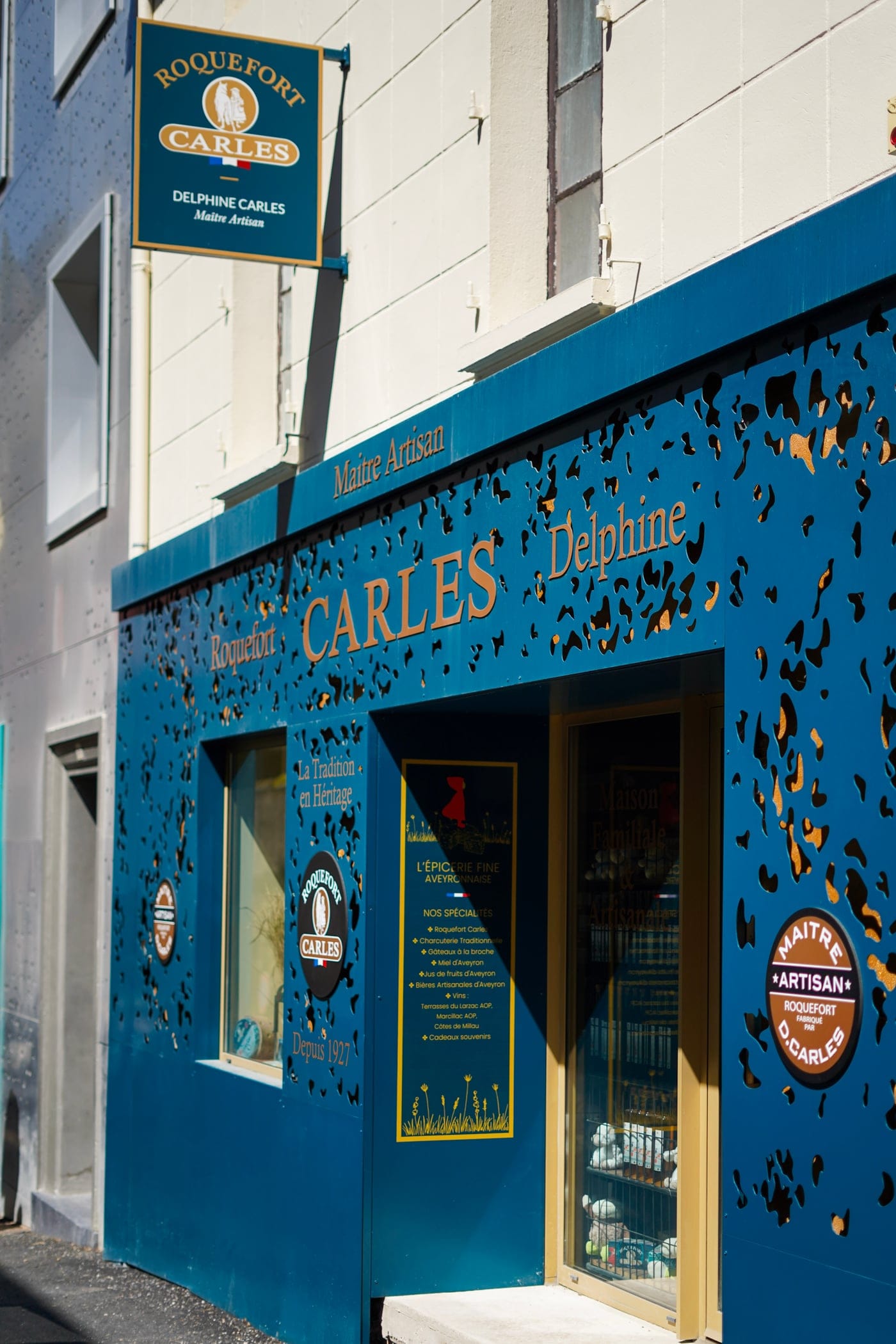
Blue façade of the Roquefort Carles shop in Roquefort-sur-Soulzon

Come and taste

Taste both characters
before choosing yours

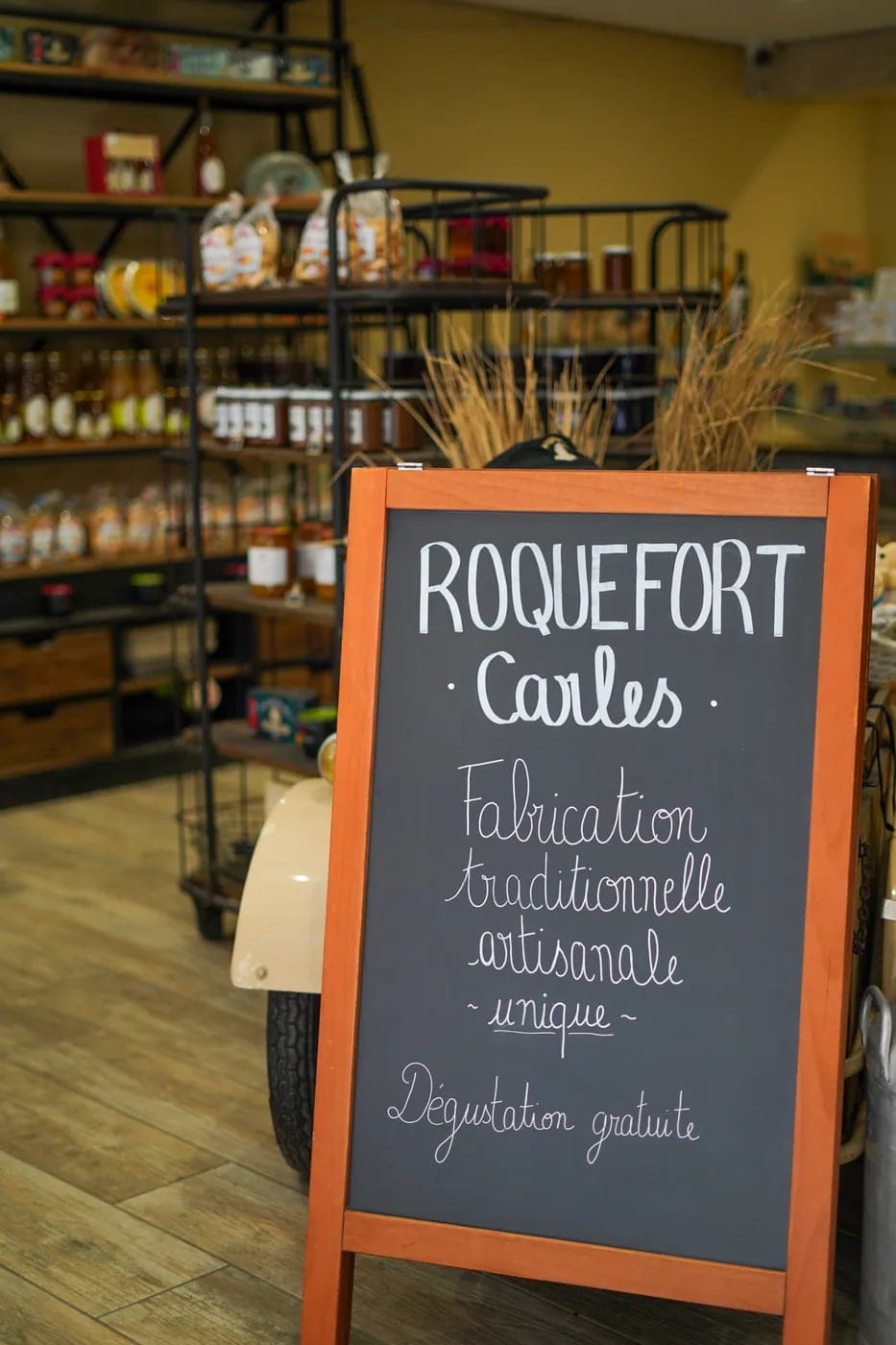
Taste Convoitise and Élégance side by side at our Roquefort-sur-Soulzon shop.

Roquefort Carles shop

Avenue de Lauras, Roquefort-sur-Soulzon

Monday to Friday, 8:15 am to 5:30 pm

Can’t visit? Both ranges can be ordered online.