Roquefort and lactose: can you eat it if you are lactose intolerant?
Short answer: most of the lactose leaves with the whey or is transformed during making and long ageing, so aged Roquefort contains very little. Tolerance remains individual.
In short
The essentials
Much of the lactose leaves with the whey; ferments and long ageing transform most of the rest.
Many lactose-intolerant people tolerate a moderate portion, but milk-protein allergy rules Roquefort out.
Our Penicillium is grown on bread: if you have coeliac disease, ask us and your doctor.
First of all: your health is a professional matter
This article is not medical advice. With severe intolerance, milk-protein allergy or coeliac disease, your doctor or dietitian comes first.
We publish no lactose or gluten figures.
Chapter I
Lactose, intolerance, allergy: what are we talking about?
§ i. · DefinitionsThree words often confused
Three notions are often mixed up.
Lactose, the sugar in milk
Lactose is milk’s natural sugar, digested by the lactase enzyme. Intolerance is largely a matter of dose.
Lactose intolerance and milk-protein allergy: two different things
Allergy involves the immune system and milk proteins, which Roquefort contains: it must then be avoided.
Chapter II
What happens to lactose while Roquefort is made?
§ ii. · MakingFrom fresh milk to cellar
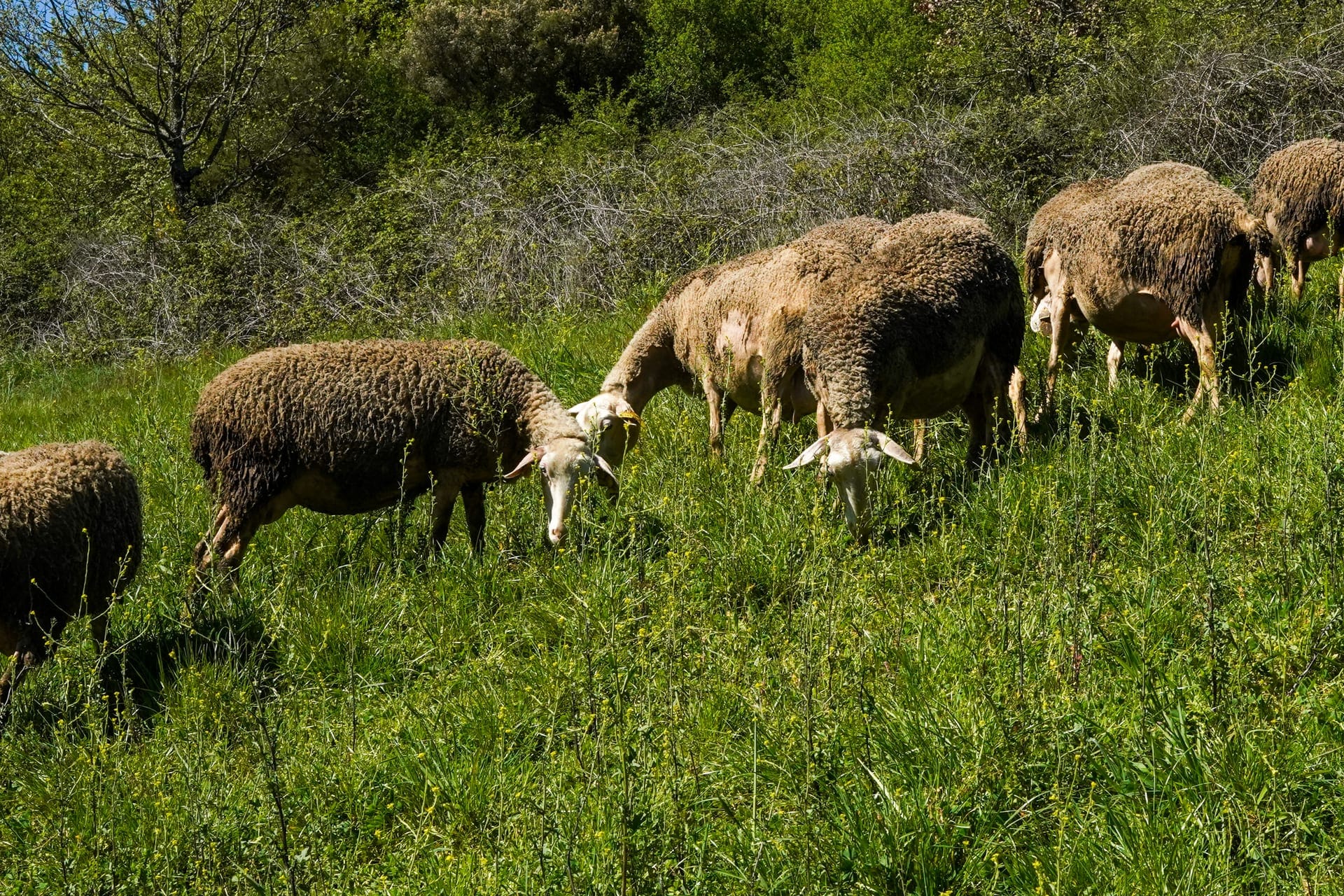
Fresh daily milk from our 13 partner farms, worked by hand: three steps reduce the lactose.
i.
Curdling and draining: much of the lactose leaves with the whey
Lactose is water-soluble and largely drains away with the whey.
ii.
Ferments and Penicillium roqueforti
Lactic ferments turn remaining lactose into lactic acid. Read about Penicillium roqueforti.
iii.
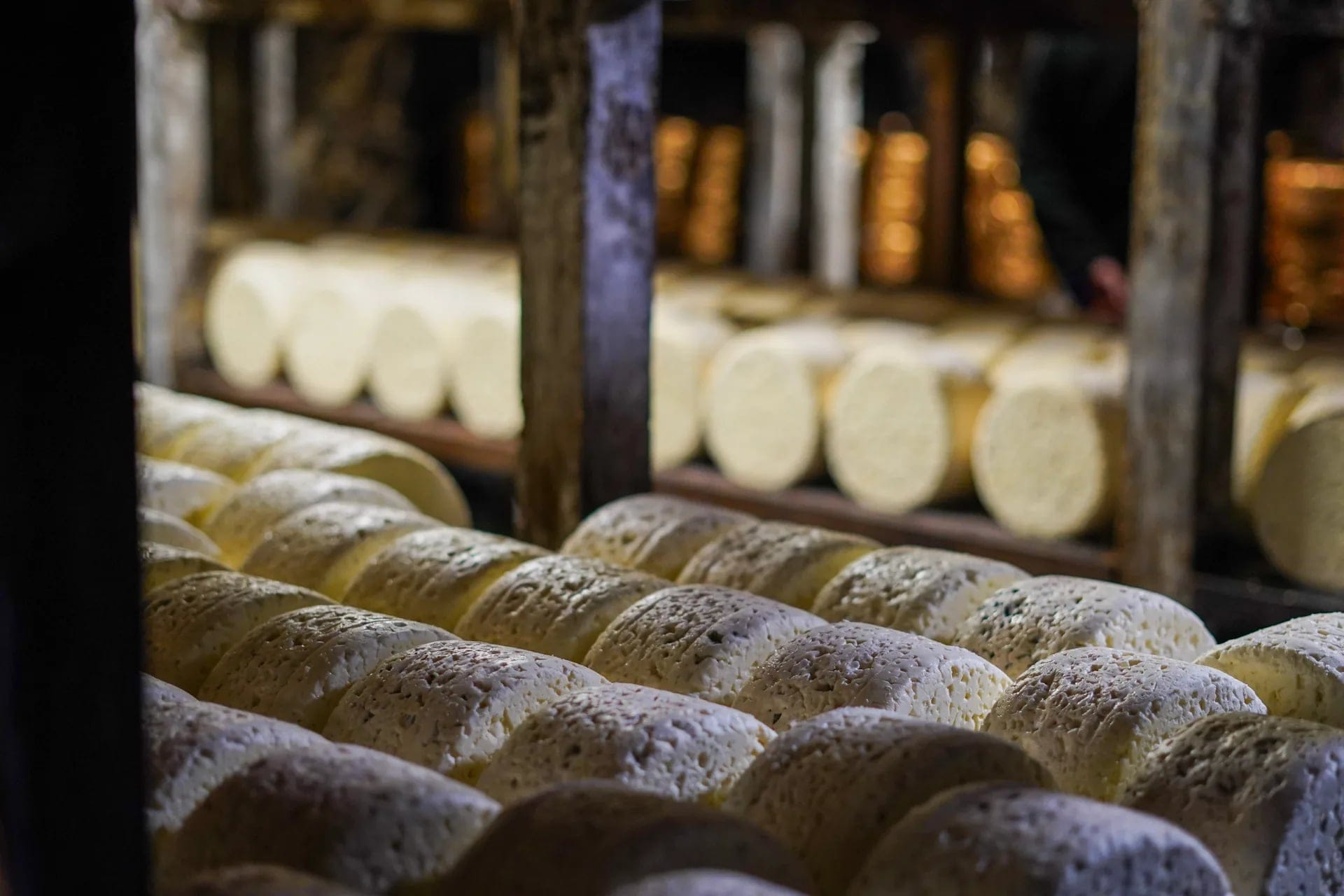
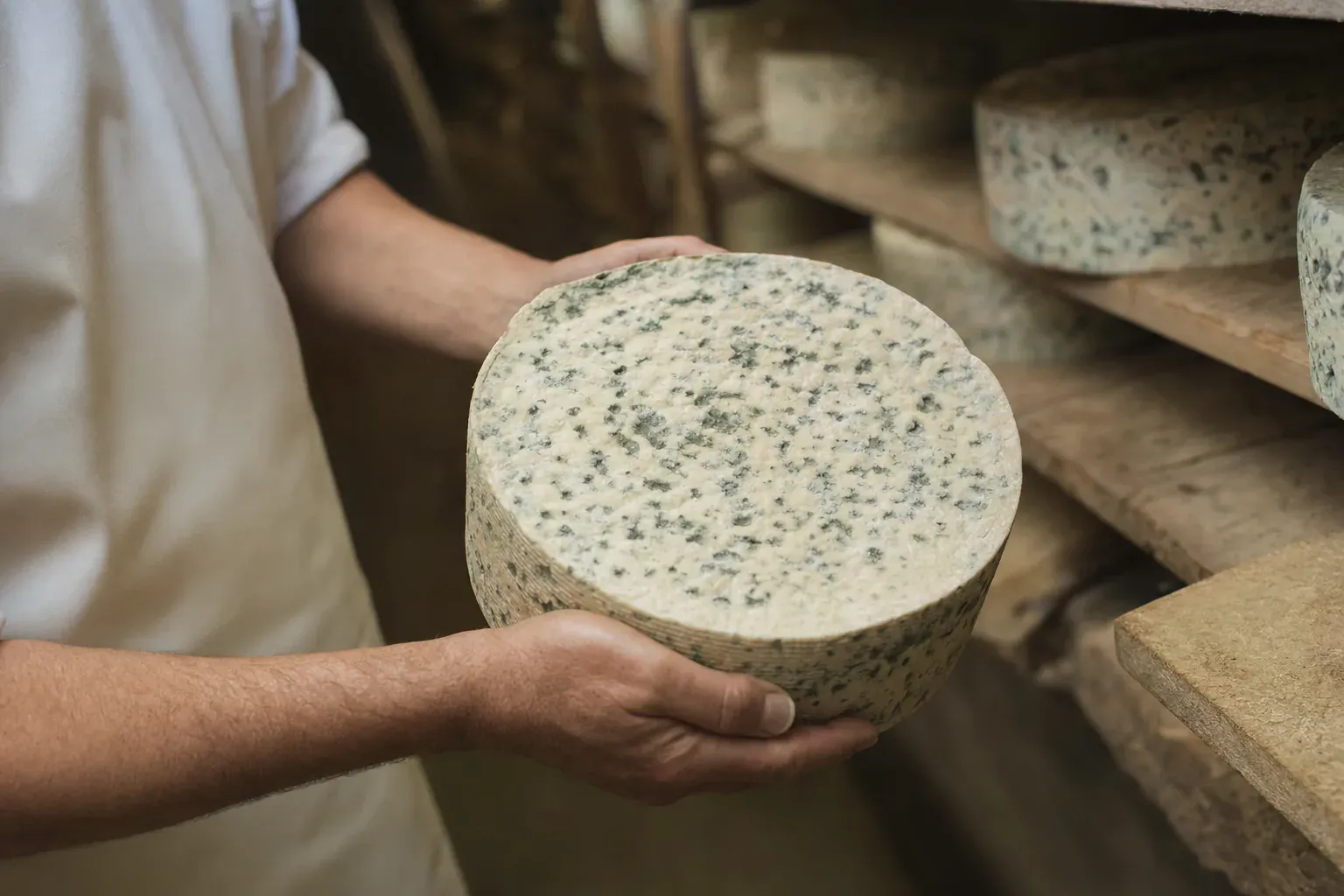
Long cellar ageing: why time helps
Ageing in the Combalou cellars consumes most residual lactose. See ageing time.
Aged Roquefort contains very little lactose. We give no figure.
« Cellar time is not only about taste: it changes the cheese’s very composition. »
Maison Carles · Combalou cellars
Chapter III
Ewe’s milk versus cow’s milk: a difference for digestion?
§ iii. · MilkSticking to facts
Ewe’s milk is not lactose-free.
It is richer in fat and protein, but making and ageing matter more. Compare [[Roquefort vs bleu d’Auvergne|roquefort-vs-bleu-d-auvergne]] and see our [[nutrition guide|blog/calories-roquefort]].
Chapter IV
Raw or pasteurised: pasteurisation has nothing to do with lactose
§ iv. · MythHeating removes no sugar
Key point
Raw or pasteurised, starting lactose is the same; making and ageing reduce it.
Pasteurised cheese is not better for the intolerant.